
Foldable Phones Finally Got Good in 2026, And Why Buyers Are Switching for Real This Time

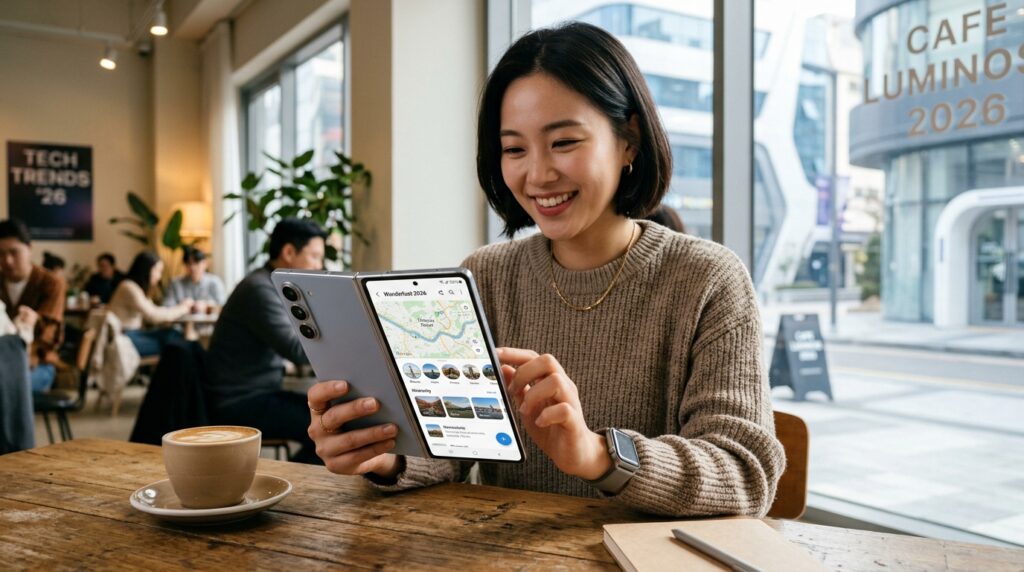
Foldable phones finally got good in 2026, and here’s why buyers are switching for real this time: the category crossed the line from novelty to practical daily device. Technically, a foldable phone is a handset built around a flexible OLED display, a hinge assembly, and a multi-layer protective stack that lets the device open and close without destroying the panel. In plain English: it is no longer a fragile demo unit you tolerate for the gimmick. It is a usable smartphone that happens to expand into a tablet-like screen when you need it.
That change matters because buyers do not adopt a new form factor just for specs. They switch when the trade-offs stop being annoying. In 2026, crease visibility dropped, hinge durability improved, battery life became more predictable, and software finally started treating the inner screen as a real workspace instead of a stretched phone view. That is why the shift feels different now. The market did not just improve; it matured.
There is also a timing factor. Apple has not shipped a foldable iPhone, but Google, Samsung, Honor, OnePlus, and Huawei have spent years normalizing the category. At the same time, panel suppliers such as Samsung Display and BOE pushed brighter, thinner, more efficient OLED stacks, while Android’s large-screen app behavior got better. The result is simple: by 2026, buyers are not asking whether foldables can work. They are asking which one makes the most sense.
Pontos-Chave
- Foldables gained mainstream credibility in 2026 because hardware, software, and battery efficiency improved at the same time.
- The biggest buyer shift is not about novelty; it is about getting a phone that also replaces some tablet use cases.
- The crease, hinge gap, and inner-screen fragility did not disappear, but they stopped dominating daily use for most buyers.
- For many professionals, the productivity gain from multitasking now outweighs the premium price.
- The best foldable is no longer the one with the most attention; it is the one with the most stable hinge, best cover screen, and least compromised software.
Foldable Phones Finally Got Good in 2026, And Why Buyers Are Switching for Real This Time
The Category Crossed from Experimental to Dependable
For years, foldables were defined by caveats. The hinge felt stiff on day one, the inner screen worried buyers, and software support lagged behind the hardware pitch. In 2026, the core experience changed because manufacturers treated reliability as a product requirement, not a marketing bonus. Hinge assemblies became more resistant to dust intrusion, folding cycles improved, and the half-open “tent” and “laptop” positions became stable enough for everyday use.
That matters because consumer adoption follows confidence, not curiosity. A buyer will forgive a camera that is merely good. They will not forgive a device that feels like it might age badly after twelve months. What changed in 2026 is that foldables started to feel like long-term electronics instead of tech prototypes. The warranty conversation also got quieter, which is a strong signal in this category.
Why the Old Objections Stopped Carrying as Much Weight
The classic objections were predictable: the crease distracts you, the battery is too small, the inner screen is too fragile, and the price is too high. In 2026, each of those objections was weakened enough to matter. Creases are still visible on many models, but they are less noticeable in normal viewing angles. Batteries improved through better silicon-carbon chemistries in some models and more efficient chipsets in others. And the outer cover screens became wide enough that many people no longer feel forced to unfold the phone for every task.
That last point is underrated. A good foldable is not judged only by its unfolded mode. It is judged by whether the closed phone is pleasant enough to live with. When that exterior display finally became wide, bright, and fast enough, the entire user experience improved. Buyers stopped thinking, “I’ll use the big screen when I can tolerate it,” and started thinking, “I can use this normally, then open it when the task deserves more space.”
What Changed in the Market Itself
Samsung’s Galaxy Z Fold line, Google’s Pixel Fold strategy, Honor’s slimmer book-style designs, and OnePlus’ more value-conscious approach all helped push the market forward. Even when one brand stumbled, another model proved the form factor could be refined. That competition forced the category to mature faster than many expected. Meanwhile, folding-panel supply chains stabilized enough that more OEMs could ship thinner devices with less dramatic compromises.
Consumers are responding to that accumulated progress. The decision is no longer driven by early adopter pride. It is driven by a practical read: if the device gives you a larger canvas without becoming a brick, and if it survives a normal workday without anxiety, then the premium starts to make sense.
What Actually Improved: Hinge Engineering, OLED Durability, and Software Fit
The Hinge is Now a Mechanical Product, Not a Party Trick
The hinge is the heart of the category. It determines thickness, weight distribution, long-term wear, and how confident a buyer feels every time the phone opens. The best 2026 hinges use tighter tolerances, better lubrication, and redesigned cam mechanisms that distribute stress more evenly. That reduces wobble and helps the display stay aligned across thousands of folds. It also reduces the “cheap toy” feel that used to kill first impressions.
Who works on these products knows that hinge engineering is where the real battle happens. A phone can have a beautiful display and still fail if the fold feels inconsistent. The better devices now open with a cleaner detent, stay open more securely, and close with less visible gap. It sounds minor until you use one every day. Then it becomes the difference between a device you show off and a device you trust.
The Display Stack Became Less Fragile in Real-world Use
Foldable OLED panels still require a protective polymer stack, but that stack improved. Manufacturers refined the ultra-thin glass layer, the impact-resistant top film, and the adhesive materials used to hold the stack together under stress. This is why newer devices feel less like they must be handled with extreme care. No foldable is as forgiving as a slab phone with a fixed glass sheet, but the gap narrowed enough for mainstream buyers to notice.
The key technical shift is not that foldables became indestructible. They did not. The shift is that the failure modes became less immediate and less dramatic. That changes behavior. Buyers stop babying the phone, which in turn makes the product feel more normal. Normal is what the category needed most.
Software Finally Respects the Large Screen
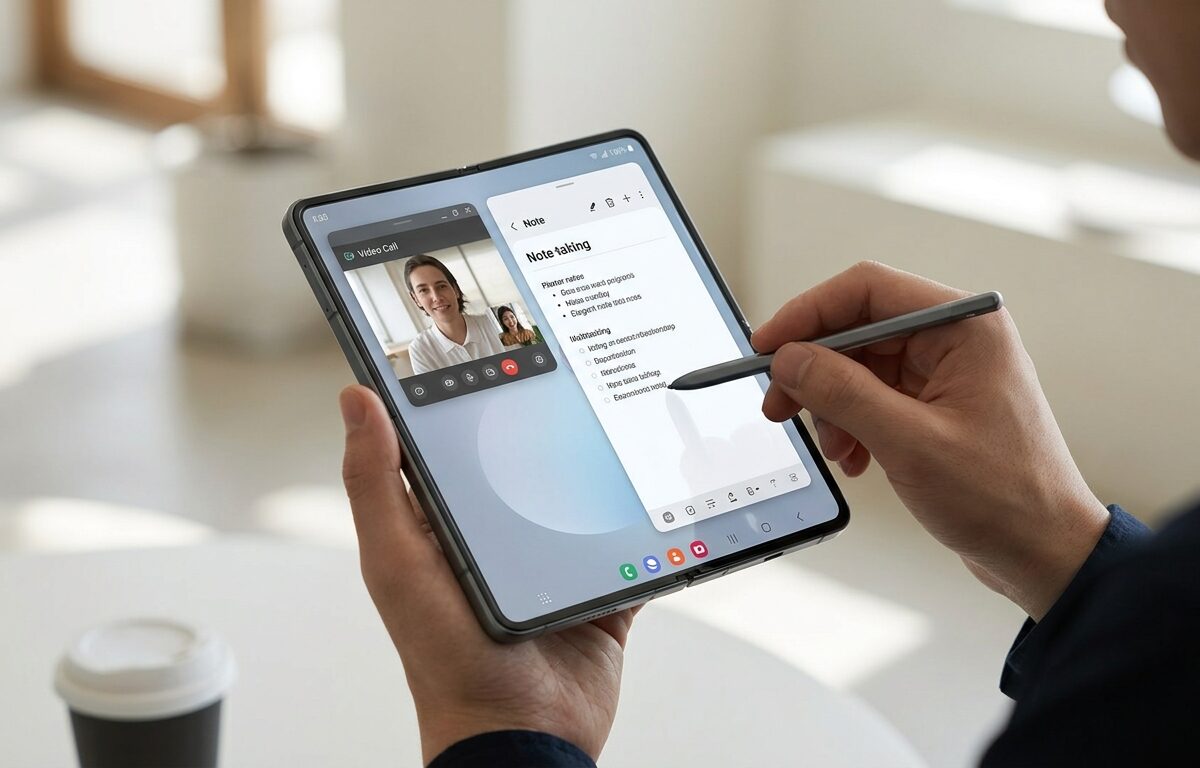
The software side used to be the weakest link. Apps either stretched awkwardly or duplicated phone layouts without using the extra space well. Android 15 and newer foldable-aware UI patterns improved split-screen behavior, task switching, drag-and-drop support, and continuity between the cover display and the main display. In practical terms, that means a foldable now behaves like a compact productivity machine rather than a stretched-out phone with a hinge.
This is where buyers feel the difference fastest. Messaging, email triage, document review, maps, calendar management, and light editing all benefit from a larger display in ways that flat phones cannot match. The software no longer wastes the hardware advantage. That was the missing piece for years.
| Area | What Changed by 2026 | Buyer Impact |
|---|---|---|
| Hinge | Improved tolerances, smoother opening, better dust resistance | Higher trust and longer perceived lifespan |
| Inner display | Better durability stack and reduced crease distraction | More comfortable daily use |
| Battery | More efficient chipsets and smarter power management | Less battery anxiety |
| Software | Better multitasking and app continuity | Real productivity gain |
Why the New Buyer Profile is Different from the Early Adopter Crowd
Professionals Want Utility, Not Spectacle
The first wave of foldable buyers wanted to own the future. The 2026 buyer wants to save time. That distinction changes everything. People in consulting, sales, content creation, operations, and field management now see clear value in having a device that can handle email, documents, Slack-like messaging, maps, and video calls without forcing them to jump between devices. The larger canvas is not a luxury feature in those contexts. It is a workflow advantage.
In practice, what happens is that the phone becomes the first screen for more tasks. A commuter can review a deck, a manager can compare two documents side by side, and a traveler can keep a boarding pass open while navigating a city. That kind of multiuse behavior is what turns a premium gadget into a legitimate tool.
The Cover Screen Solved the “too Cumbersome” Problem
One of the most important design changes in the newer foldables is the outer display. Earlier models often had narrow, awkward cover screens that made the phone feel constrained when closed. In 2026, better aspect ratios and wider front screens gave buyers a normal phone experience without unfolding every time. That made the device far less cumbersome in pockets, at checkout, in cars, and during quick replies.
This is the reason many buyers now report using the inner screen less often than they expected, but liking the device more than they thought they would. The foldable becomes valuable because it is a good small phone first and a strong large phone second. That hierarchy is what fixed the old usability trap.
Price is Still High, but the Value Equation Changed
Let’s be blunt: foldables are still expensive. For many buyers, the premium over a standard flagship remains hard to ignore. Yet pricing now competes with what the device replaces. If a user buys a phone plus a tablet, or if the larger screen reduces the need for a laptop in light workflows, the math starts to shift. That does not make foldables cheap. It makes them defensible.
There is a limit here, and it matters. If you only text, scroll, and take casual photos, a foldable still makes little financial sense. The value case works best when the extra screen space is used daily. That is why this category is moving faster in professional and power-user segments than in pure mainstream mass market.
How Foldables Stack Up Against Slab Phones in 2026
The Comparison is About Behavior, Not Raw Specs
A spec sheet alone does not tell you whether a foldable is worth buying. A flat flagship may still win on camera consistency, battery endurance, water resistance, and price. Foldables win when the user’s behavior rewards the larger internal display. That means multitasking, document handling, reading, media consumption, and split-screen workflows. The question is not “Which phone is better?” The real question is “Which device matches how you actually work?”
That is why many comparisons are misleading. They treat the foldable like a slab phone that opens. That framing misses the point. A foldable is closer to a hybrid device with a different usage curve. If you evaluate it like a regular phone, you will overstate its weaknesses. If you evaluate it like a portable workspace, you will miss the compromises that still exist.
Where Slab Phones Still Win
Standard smartphones still hold the edge in several areas. They are usually thinner, lighter, cheaper, and more straightforward in terms of long-term durability. Their cameras often have more room for larger sensors because they do not need to accommodate a folding mechanism. They also tend to offer higher water resistance and fewer mechanical concerns. For buyers who care most about simplicity, slab phones remain the safer choice.
This is why foldables do not replace all smartphones. They carve out a bigger share of premium usage. The best buying decision depends on whether the user values versatility enough to accept added cost and complexity. There is no universal winner.
Where Foldables Now Win Decisively
Foldables win in task density. They let you do more without switching devices or rotating between tiny windows. They also improve reading, note-taking, media viewing, and side-by-side comparisons in ways that a 6.7-inch slab simply cannot match. For buyers who spend serious time in calendars, spreadsheets, long threads, PDFs, or social media management, the larger inner display starts to pay off every single day.
That payoff is why the category feels “good” now. Not because the engineering is perfect. Because the trade-off finally became sensible.
What Smart Buyers Should Check Before Choosing a Foldable
Look at the Hinge, Not Just the Launch Event
Buyers often focus on screen size and ignore the mechanism that determines the phone’s lifespan. That is a mistake. Check how the hinge opens, whether the device stays flat, whether there is visible wobble, and how the phone closes. Also pay attention to dust resistance claims and the manufacturer’s servicing policy. These details matter more than a marketing video ever will.
Samsung, Google, and Honor have each taken different approaches to hinge design, and the differences show up after weeks of use. A good hinge disappears into the background. A bad one announces itself every time you open the device. That is the test that matters.
Inspect the Software for Large-screen Maturity
Not all foldables deliver the same software quality. Look for apps that support multi-window, continuity, taskbar-style switching, and drag-and-drop. Also check whether the device handles video playback, photo editing, and note apps without forcing awkward scaling. A brilliant display is wasted if the software cannot use it.
Many buyers underestimate this and regret it later. The hardware gets attention at launch; the software affects satisfaction every day. That is why some models with respectable specs still feel incomplete, while others with less dramatic hardware feel polished and easier to live with.
Use-case Fit Should Drive the Purchase
The right foldable depends on what you do most. If you travel constantly, read a lot, and work from your phone more than the average user, a book-style foldable makes a strong case. If you want a compact device that fits in small pockets, a flip-style design may be better. If your top priority is camera quality above all else, a conventional flagship may still be smarter.
Sources such as Consumer Reports’ smartphone coverage, Google’s Android platform resources, and Samsung Display’s panel technology information help ground those decisions in actual product capabilities rather than hype. The most reliable path is to match the device to your daily workflow, not to a spec leaderboard.
Próximos Passos Para Implementação
If you are evaluating a foldable in 2026, start with your actual usage pattern. Count how often you would use split-screen tasks, document review, reading, video, and multitasking. If those activities happen daily, the category has likely crossed your personal threshold. If they do not, the premium price will probably frustrate you more than it rewards you. That is the central filter buyers should use now.
The market has reached a point where foldables deserve serious consideration, but not blind enthusiasm. The right purchase is the one whose hinge, display, software, and battery fit a real routine. The wrong purchase is a beautiful device bought for novelty. In 2026, the winning move is to treat foldables as a productivity form factor first and a status item second.
Expect the next cycle to push even harder on durability, thinner chassis design, and better app scaling. The category is no longer trying to prove that foldables can exist. It is trying to prove which implementation deserves to become the default premium choice for specific buyers. That is a much stronger position than the industry had a few years ago.
FAQ
Are Foldable Phones Actually Reliable Enough for Everyday Use in 2026?
Yes, for many buyers they are. The best 2026 models have better hinge engineering, improved dust resistance, and more refined display stacks than earlier generations. They are still mechanically more complex than slab phones, so reliability depends on the specific model and the user’s handling habits. If you want absolute simplicity, a standard flagship still carries less risk.
Do Foldable Phones Still Have a Noticeable Crease?
Usually yes, but the visibility has dropped on the better devices. The crease is easier to see at sharp angles or under direct light, yet it is less distracting during normal reading, video, and multitasking. In practice, most buyers stop noticing it after a short adjustment period. The real question is whether the crease affects your use case enough to matter.
Is the Battery Life on Foldables Still Worse Than on Regular Phones?
Not always, but the margin is still there on many models. Some 2026 foldables gained efficiency through newer chipsets, smarter power management, and, in certain cases, higher-density battery designs. Even so, they often have less internal space than slab phones, so battery optimization matters more. Heavy inner-screen use will usually drain faster than casual outer-screen use.
Which Type of Foldable Makes More Sense: Book-style or Flip-style?
It depends on the use case. Book-style foldables make more sense for productivity, reading, multitasking, and media consumption because the inner screen is larger. Flip-style foldables are better if you want a compact phone that folds down smaller and feels more pocket-friendly. The choice is less about prestige and more about whether you value screen space or portability.
Are Foldable Phones Worth the Higher Price Compared with Flagship Slab Phones?
They are worth it only if the larger display changes your behavior. If you regularly multitask, read long documents, manage work on your phone, or want a device that partially replaces a tablet, the premium can make sense. If you mainly use social apps, camera features, and basic messaging, the extra cost is hard to justify. The value case is real, but it is not universal.
Editorial Notice
This content was structured with the assistance of Artificial Intelligence and subjected to rigorous curation, fact-checking, and final review by Editor-in-Chief Nivailton Santos. TechTool Judge reaffirms its unyielding commitment to journalistic ethics, ensuring that editorial judgment and data validation remain entirely under human responsibility and final editorial oversight.