
RGB TVs Just Stole the Show at CES 2026, And They Might Make Your OLED Look Outdated

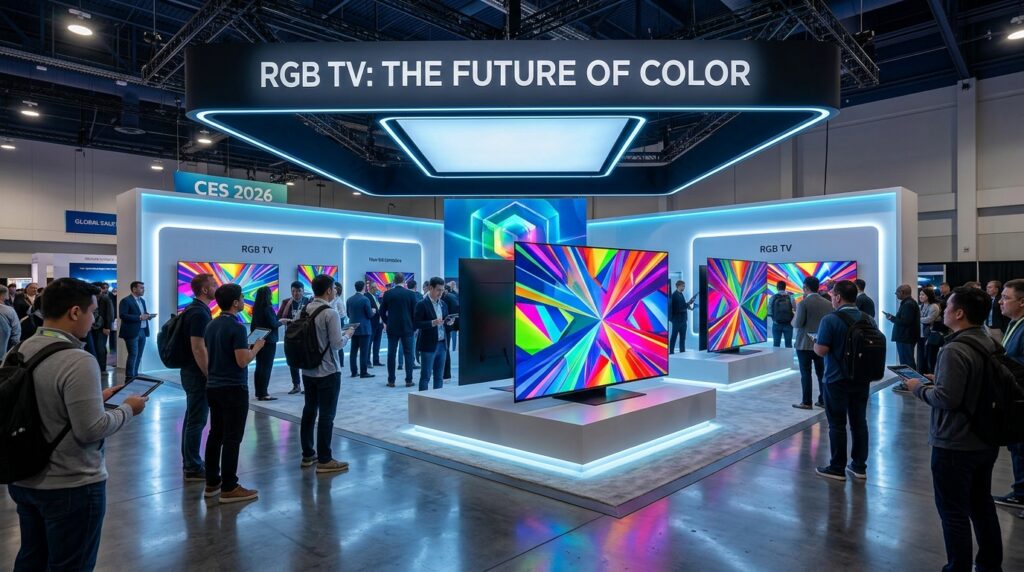
RGB TVs just stole the show at CES 2026, and they might make your OLED look outdated because they represent a real shift in display architecture, not just another marketing refresh. In technical terms, RGB mini-LED televisions use individually controlled red, green, and blue light emitters or subpixel-level backlight elements to produce color with far wider gamut coverage and higher spectral purity than conventional white-led LCD systems. In plain English: they can generate more saturated color without relying as heavily on color filters, which is exactly where many current panels lose energy and accuracy.
This matters now because the TV market has spent years converging on a familiar tradeoff: OLED still wins on black levels and viewing angles, while high-end LCDs keep chasing brighter highlights and lower burn-in risk. RGB backlight and RGB LED-based designs threaten to change that balance. If manufacturers can scale the technology with stable color volume, efficient thermal management, and sane pricing, OLED will no longer own the premium conversation by default.
That is the part worth paying attention to. CES 2026 did not merely show a prettier prototype; it highlighted a path toward displays that may combine LCD-level brightness with color performance that starts to challenge OLED’s long-standing advantage in perceived richness. The catch is that lab demos and show-floor units are not the same as shipping products. A display can look breathtaking under controlled lighting and still stumble on uniformity, processing, or manufacturing yield once it reaches retail scale.
Pontos-Chave
- RGB TV systems aim to improve color purity and color volume by using red, green, and blue light generation more directly than conventional white-backlit LCD designs.
- The biggest reason they drew attention at CES 2026 is not peak brightness alone; it is the possibility of pairing high brightness with a wider, cleaner color palette.
- OLED still has the strongest black-level performance, but RGB-based approaches can narrow the visual gap in bright rooms where OLED’s advantage is less decisive.
- The real test is not the demo floor. Mass production, calibration consistency, and cost per panel will decide whether this becomes a premium category or a niche showcase.
- For buyers, the practical question is no longer “Is OLED best?” but “Which display architecture fits my room, content, and tolerance for tradeoffs?”
RGB TVs Just Stole the Show at CES 2026, And They Might Make Your OLED Look Outdated
What “RGB TV” Means in Technical Terms
In display engineering, RGB refers to the primary colors used to reproduce the visible spectrum: red, green, and blue. In an RGB TV context, the term usually points to a backlight or emission system that uses discrete RGB elements rather than a single white source filtered into color afterward. That distinction matters because every color filter wastes some light, and wasted light becomes heat, power draw, or both.
Compared with a standard LCD using a white LED backlight and quantum dots, an RGB system can, in principle, improve spectral efficiency and color purity. It can also reduce the distance between the source of light and the final color seen by the viewer. The result is not magic. It is a smarter light path with fewer compromises.
That is why engineers get interested when a prototype like this appears at a major show. They are not chasing a gimmick. They are looking for a display stack that can push color volume upward without forcing the panel into the usual tradeoff between brightness and saturation.
Why CES 2026 Changed the Conversation
CES often rewards the loudest concept, but every so often it surfaces a technology shift that starts in the booth and ends in the product roadmap. RGB TVs drew attention because they addressed a genuine weakness in current premium displays: bright scenes often lose color intensity as luminance rises. This is one reason some ultra-bright LCDs still look less cinematic than OLED in side-by-side viewing, despite having more measured nits.
Who works with displays for a living knows this problem well. I have seen demos where a panel measured beautifully on paper and still looked flat next to a much darker screen, because color saturation collapsed under highlight load. That is where RGB-based lighting paths can matter. If they preserve saturation at high output, they do more than compete with OLED; they redefine what “premium” means in a bright living room.
That said, trade-show success does not guarantee consumer impact. Many technologies look transformative in a controlled demo and then face setbacks in power efficiency, mass yield, or image processing once the panel needs to ship at scale.
Why OLED is Suddenly Under Pressure
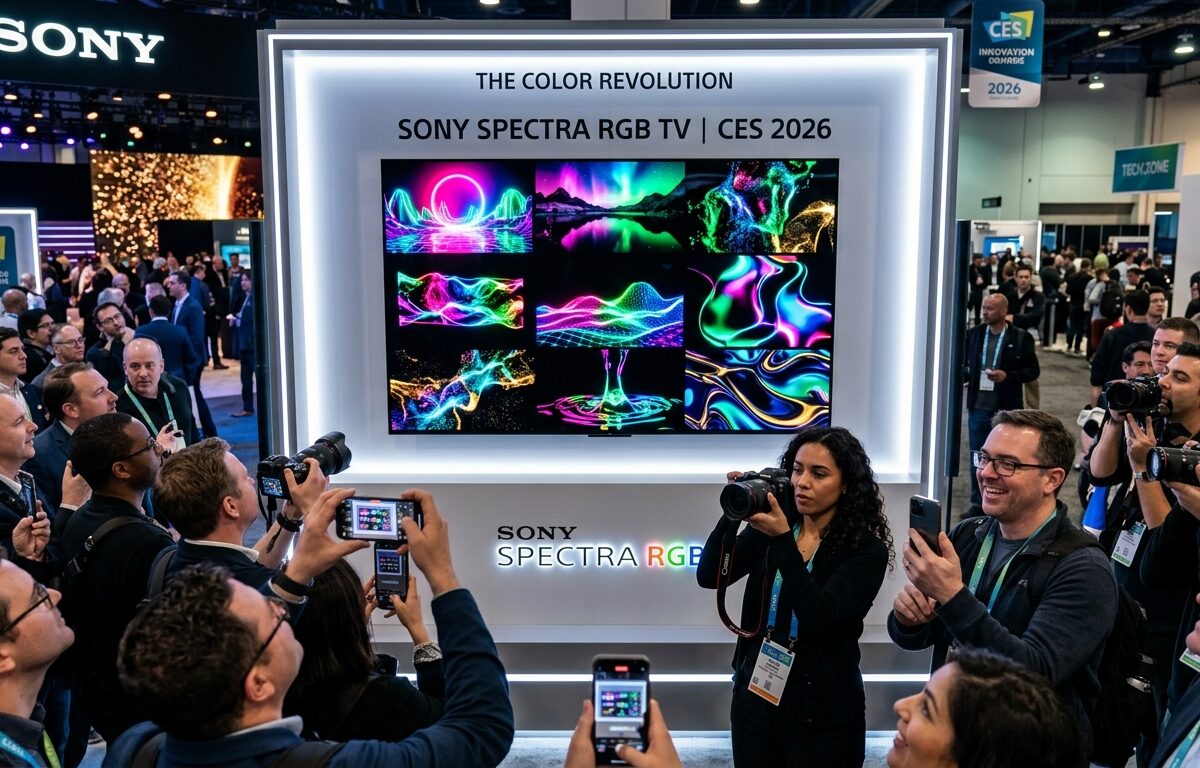
OLED’s biggest strengths are well known: pixel-level emissive control, near-infinite contrast, and excellent off-angle performance. Its main weaknesses are also clear: peak brightness constraints in many implementations, static-image wear risk, and higher production costs for large panels. RGB TVs do not erase those strengths, but they attack the parts where OLED has been easiest to challenge in the premium living-room market.
If RGB systems can deliver high brightness without washing out color, the traditional OLED advantage becomes more situational. In a dark home theater, OLED may still feel unmatched. In a sunlit family room, the picture may change. That is the practical reason buyers, calibrators, and reviewers are paying attention.
There is a nuance here, though. No honest analyst should pretend OLED is suddenly obsolete. Black-level performance, motion behavior, and mature production pipelines still favor OLED today. RGB displays look promising, but promise is not yet proof.
How RGB Light Architecture Works Compared with OLED and Conventional LCD
From White Backlight to Direct Primary-color Control
Traditional LCD TVs depend on a white backlight, liquid crystals that modulate light, and color filters that remove unwanted wavelengths. That design is efficient enough for mass market, but it is inherently subtractive. You create white light first, then throw away much of it to produce color. RGB architectures reduce that waste by shaping the emitted spectrum more directly.
OLED works differently. Each pixel emits its own light, so the screen can turn individual pixels fully off. That gives OLED a structural contrast advantage that no backlight-based LCD can fully replicate. Still, RGB-based LCD designs can narrow the perceptual gap by improving brightness control and hue purity in high-luminance scenes.
The important distinction is that RGB TVs are not trying to be OLED clones. They are trying to get closer to OLED’s perceived image quality while retaining LCD’s strengths in brightness, longevity, and large-screen manufacturability.
Color Volume Matters More Than Raw Color Gamut
A lot of marketing language throws around “wide color gamut,” but that is only half the story. Gamut is the range of colors a display can produce at a given luminance. Color volume adds brightness into the equation. A screen that can show vivid red at low brightness is useful; a screen that can keep that red vivid at 1,000 nits is much more impressive.
That distinction is where RGB systems could become disruptive. If the display maintains chromatic purity as brightness rises, HDR content looks more convincing. Fireworks, neon signage, reflections on chrome, and animated highlights all benefit. This is one reason HDR10 and Dolby Vision demos are so revealing when a panel is well tuned.
There is still no free lunch. Better color volume usually demands tighter thermal control, more sophisticated driving electronics, and more expensive manufacturing tolerances. The panel may look extraordinary, but the bill of materials will remind everyone that physics still exists.
Where Quantum Dots Still Fit In
Quantum dot enhancement films have been crucial in premium LCD development because they convert blue backlight energy into purer red and green output, which improves color performance. In many current mini-LED TVs, quantum dots are part of the reason the screen looks more vivid than older LCD generations.
RGB systems may reduce reliance on that conversion step, but they do not automatically make quantum dots obsolete. Some product designs may combine both approaches to maximize efficiency or tune color response for different content pipelines. The best architecture will depend on cost, heat, and panel type, not ideology.
This is one area where the industry has healthy disagreement. Some engineers prefer a cleaner native RGB source. Others argue that hybrid designs will dominate because they are easier to manufacture at scale. Both views have merit.
| Attribute | OLED | Conventional Mini-LED LCD | RGB TV Concept |
|---|---|---|---|
| Black levels | Excellent | Good to very good | Depends on local dimming and panel design |
| Peak brightness | Moderate to high | High to very high | Potentially very high |
| Color purity at high brightness | Strong | Variable | Potentially excellent |
| Burn-in risk | Present | Low | Low, if LCD-based |
| Manufacturing maturity | High | High | Early-stage |
Why Image Quality May Look Better Than OLED in Bright Rooms
Brightness is Only Valuable If Color Survives It
Many buyers assume a brighter TV automatically looks better. That is not true. High brightness helps only when the display preserves contrast and saturation at the same time. Otherwise, highlights look blown out and colors lose depth. RGB TVs are interesting because they may hold onto richer color as output climbs, which is exactly where many LCDs start to flatten.
In practice, the difference shows up in real scenes rather than spec sheets. Sports broadcasts, daytime news, animated content, and HDR films with strong specular highlights are the kinds of material that expose weaknesses fast. A panel that keeps skin tones stable under changing light has already won half the battle.
For buyers, that means the best picture is not always the one with the most dramatic black level in a dark demo room. Room lighting, content mix, and seating distance can matter just as much.
OLED Still Owns Some Critical Advantages
OLED remains the reference for emissive uniformity, near-zero blooming, and excellent off-axis performance. If you watch movies in a dark room and care about shadow detail, OLED still sets the standard. RGB-based LCDs cannot fully duplicate the way an OLED pixel shuts off independently.
That is why claims that RGB makes OLED “obsolete” should be treated with caution. Obsolete implies replacement, and replacement requires superiority across a broad set of use cases. That threshold has not been crossed yet. The more accurate statement is that RGB may force OLED to defend its pricing and its default status in the premium tier.
This is one of those cases where the right answer depends on the room. A bright open-plan space changes the ranking. A dedicated theater keeps OLED firmly in the conversation.
What Video Reviewers Will Test First
When these sets reach independent labs, reviewers should focus on a few measurable areas instead of headline claims. First, color volume under sustained HDR load. Second, uniformity across large bright fields. Third, local dimming behavior in complex scenes with subtitles or star fields. Fourth, power draw, because thermal constraints often reveal how hard the panel is being driven.
Calibrators will also watch how the display handles grayscale tracking and near-black detail. New architectures can produce eye-catching color and still stumble in the lowest 5% of the signal chain. That is where a lot of “premium” displays lose credibility.
Outside lab conditions, consumers should ask one blunt question: does the panel look better after 30 minutes of mixed content, or only during the first five minutes of a showroom loop? That difference matters more than any launch slogan.
The Engineering Hurdles That Will Decide Whether RGB TVs Scale
Thermal Management and Efficiency Are the First Gate
More direct color control can cost energy, and energy becomes heat. Heat then affects panel stability, brightness retention, and component lifespan. That is why thermal design is not a side issue. It is central to whether RGB TVs become real products or expensive demonstrations.
Whoever designs the backlight driver, diffuser stack, and cooling path has to balance brightness with efficiency. If the system runs too hot, color drift and throttling appear. If it runs too conservatively, the display loses the very advantage it was supposed to deliver.
That tradeoff is familiar in high-end TVs, but RGB systems make it sharper. The technology can look brilliant in short bursts and still fail in long-duration tests.
Manufacturing Yield Will Shape the Price
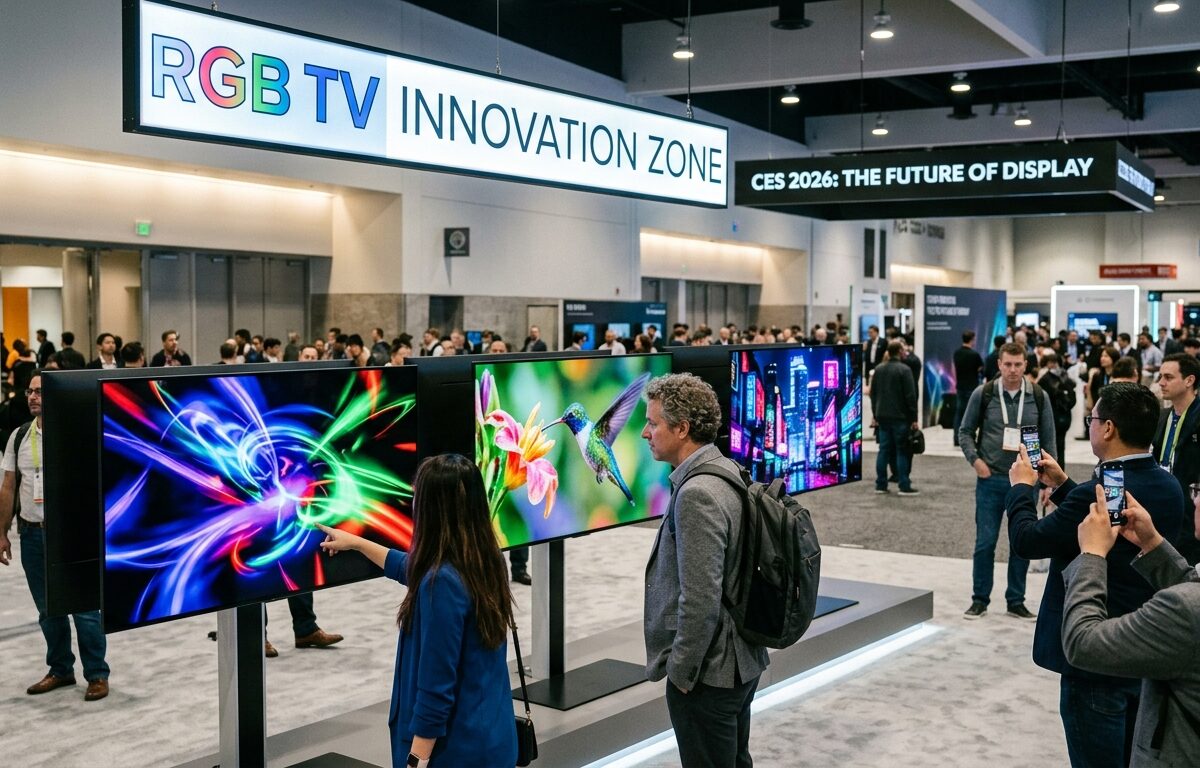
Consumers often think display prices rise because companies want premium margins. Sometimes that is true. More often, early pricing reflects low yield, complex assembly, and tight quality tolerances. RGB systems are likely to face all three problems at once.
Large TVs are unforgiving. Tiny defects become visible across a 65- or 77-inch panel. Alignment issues, color non-uniformity, and subpixel inconsistency can turn a promising prototype into a costly return. That is why production maturity matters more than launch hype.
It also explains why the first wave of RGB TVs may stay expensive. Early adopters always pay for engineering risk.
Processing and Calibration Still Matter
Even a strong panel needs solid video processing. Tone mapping, motion interpolation, source upscaling, and calibration profiles can dramatically change the final result. A display with excellent native color capability can still look mediocre if its factory settings are wrong or its processing chain is lazy.
That is why brands matter here. Samsung, Sony, TCL, Hisense, and LG each approach image tuning differently, and those choices affect real-world perception as much as the hardware stack. A technically impressive panel can be undermined by poor out-of-box balance.
The most useful buyers will think in systems, not panels. The screen, the processor, and the tuning profile form one product.
How Buyers Should Evaluate RGB TVs Against OLED in 2026
Use-case First, Spec Sheet Second
Start with the room. Bright room, mixed content, family viewing, and gaming all favor different strengths. If the TV will live in a sunlit living room, RGB TVs may deserve serious attention because they promise stronger visible punch without sacrificing as much color intensity at high brightness. If the room is dark and movie-focused, OLED still has the cleanest cinematic result.
Gaming adds another layer. Low latency, VRR support, HDMI 2.1 bandwidth, and heat management matter more than a single headline number. A display can have stunning color and still disappoint if its game mode weakens too much under dynamic refresh.
Buyers should also look at longevity concerns. OLED burn-in anxiety is overblown for many households, but it is not imaginary. Static UI elements still deserve respect.
A Practical Comparison Framework
Instead of asking whether RGB TVs are “better,” compare them across the traits that matter in daily use. The table below is a better buying tool than any booth demo.
| Decision Factor | OLED Advantage | RGB TV Advantage | Who Should Care Most |
|---|---|---|---|
| Dark-room movie watching | Yes | Not yet decisive | Home theater buyers |
| Bright-room viewing | Mixed | Potentially strong | Living room users |
| Burn-in risk | Higher | Lower if LCD-based | News, sports, and UI-heavy users |
| Peak HDR impact | Strong | Potentially very strong | HDR enthusiasts |
| Price stability | Mature | Uncertain | Value-driven buyers |
What to Wait for Before Upgrading
Do not buy the first announcement. Wait for independent measurements, long-term ownership reports, and firmware updates. A launch model can be a different product by the time it reaches stores, and that often cuts both ways. Sometimes it improves. Sometimes it loses the magic from the demo floor.
Reliable signals include ANSI contrast, full-field brightness, sustained HDR output, and color accuracy after calibration. Reviews from outlets like RTINGS TV measurements are useful because they track repeatable metrics over time. For display standards context, the SMPTE standards organization remains a credible reference for imaging terminology and production norms.
If you want a broader market view, the Consumer Technology Association is worth watching for category shifts and manufacturing momentum. Those sources do not tell you which TV to buy, but they help separate real progress from launch-week theater.
Próximos Passos Para Implementação
The smart response to RGB TVs is not to crown a winner too early. It is to treat CES 2026 as an inflection point and evaluate the category on shipping evidence, not exhibition floor polish. For buyers, that means comparing new RGB models against OLED using the same three filters every time: room light, content type, and tolerance for tradeoffs. Those criteria will tell you more than a glossy spec sheet ever will.
For manufacturers, the challenge is harsher. They have to prove that color purity, brightness, thermal stability, and cost can coexist in a mass-market chassis. If they succeed, OLED will not disappear, but it will lose some of its automatic premium aura. That is the real story here: not replacement, but pressure.
The next six to twelve months should reveal whether this is a durable shift or a sophisticated preview. The display industry has a history of promising revolutions. Only a few survive calibration labs, supply chains, and retail floors.
FAQ
What is the Main Technical Advantage of RGB TVs over Standard Mini-LED LCDs?
The main advantage is more direct control over the red, green, and blue light used to form the image, which can improve color purity and color volume. Standard mini-LED LCDs still rely heavily on a white backlight and color filters, which waste some light and reduce efficiency. If RGB TVs are implemented well, they can preserve saturation better at high brightness levels. That makes HDR content look more vibrant without the washed-out effect that some bright LCDs still show.
Do RGB TVs Replace OLED for Film Watching in Dark Rooms?
Not yet. OLED still has the cleanest black levels, the best pixel-level control, and a long track record for cinematic viewing in low light. RGB TVs may close the gap in brightness and color richness, but they do not automatically beat OLED in contrast or off-axis performance. For dark-room movie use, OLED remains the safer choice until RGB systems prove themselves in shipping products over time.
Are RGB TVs Likely to Have Burn-in Problems Like OLED?
If the RGB implementation is LCD-based, burn-in risk should be far lower than OLED because the panel is not relying on organic emissive pixels in the same way. That said, the exact risk profile depends on the final architecture, panel stack, and electronics. Buyers should still examine static-logo behavior, local dimming performance, and long-duration stress tests. Lower burn-in risk does not mean zero risk; it means a different engineering profile.
Why Do Reviewers Keep Emphasizing Color Volume Instead of Only Brightness?
Brightness alone does not guarantee good image quality. A display can measure very high peak luminance and still lose color intensity as output rises, which makes HDR highlights look artificial or flat. Color volume captures both brightness and saturation together, so it is a more complete measure of what the eye actually sees. That is why RGB TVs are interesting: they may improve the part of HDR that many current displays still struggle to maintain.
Should Buyers Wait Before Choosing an RGB TV over OLED?
Yes, unless you are comfortable paying early-adopter pricing and accepting product uncertainty. The category needs independent testing, long-term reliability data, and proof that factory tuning remains consistent across units. OLED is a known quantity with mature performance, while RGB TVs are still proving whether their CES promise survives production. Waiting a cycle or two is the more rational move for most buyers.
Editorial Notice
This content was structured with the assistance of Artificial Intelligence and subjected to rigorous curation, fact-checking, and final review by Editor-in-Chief Nivailton Santos. TechTool Judge reaffirms its unyielding commitment to journalistic ethics, ensuring that editorial judgment and data validation remain entirely under human responsibility and final editorial oversight.