
Transfer Ban: Complete and Practical Guide

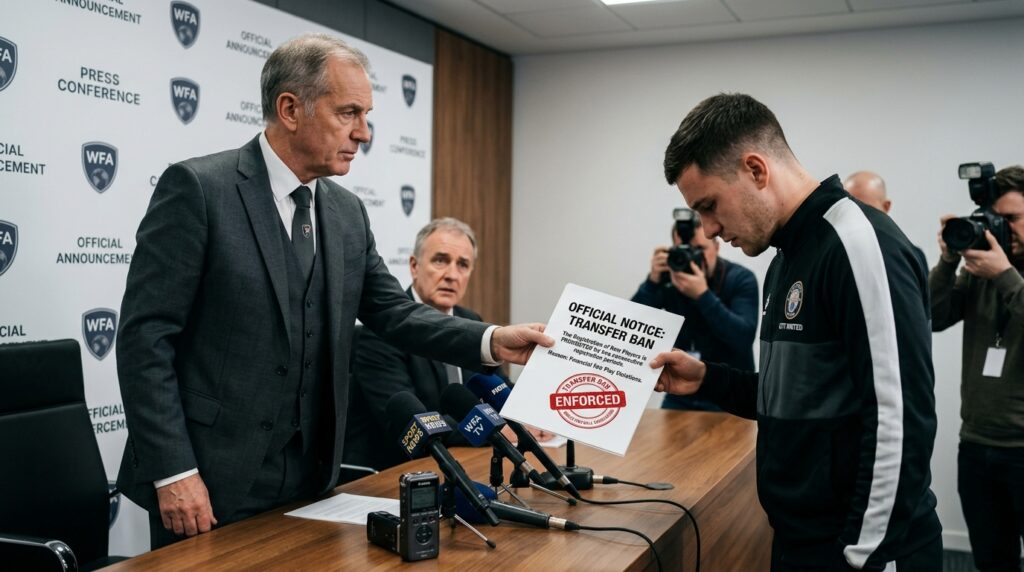
Under the Transferban: How Sanctions Reshape a Football Club's Strategy is a study in constraint management: when a club is barred from registering new players, leadership must protect competitive output using only the squad, academy, contract planning, and financial discipline already in place. A transfer ban is not just a recruitment problem. It is a strategic shock that changes wage allocation, loan policy, player development, succession planning, and even the tempo of matchday decision-making.
That matters now because modern clubs live on thin margins of sporting and financial tolerance. One sanction can expose weaknesses that were hidden by constant roster churn. If a club has over-relied on short-term fixes, the ban forces the issue immediately. If its academy, medical team, and data department are strong, the same sanction can become a catalyst for internal renewal rather than decline.
In practice, what happens is more nuanced than “sign fewer players.” A transfer ban compresses the club’s margin for error. It changes how a sporting director values depth, how a coach rotates the lineup, how contract renewals are timed, and how the club explains risk to ownership. UEFA and FIFA disciplinary frameworks treat sanctions as compliance tools, but their strategic impact reaches the pitch, the balance sheet, and the dressing room at the same time. See the official context in FIFA’s legal framework, UEFA’s disciplinary materials, and the jurisprudence tracked by the Court of Arbitration for Sport.
Pontos-Chave
- A transfer ban is a strategic constraint, not just a recruitment restriction, because it affects squad planning, contract timing, and competitive risk simultaneously.
- Clubs that invest in academy pathways, loan returns, and internal succession planning absorb sanctions better than clubs built around constant external buying.
- The best response to a ban is usually structural: reduce roster inefficiency, protect wage flexibility, and accelerate minutes for players already under contract.
- Sanctions expose governance quality. Poor documentation, weak compliance, and panic-driven recruitment are the usual reasons a ban becomes a sporting crisis.
- A ban can preserve long-term discipline if the club treats it as a reset, but it can also accelerate decline if leadership keeps chasing short-term stability through bad renewals and hidden costs.
Under the Transferban: How Sanctions Reshape a Football Club’s Strategy
What a Transfer Ban Changes in Football Operations
Formally, a transfer ban prevents a club from registering new players for a set period or under specific conditions. In plain terms, the club loses its easiest lever for fixing performance problems. If the left side of the squad is weak, the club cannot simply buy a replacement. If aging defenders need succession, the answer must come from internal development, contract management, or tactical adaptation.
That is why the ban hits operations before it hits results. Recruitment stops being the center of planning and becomes a backup instrument. The football department must ask harder questions: Which positions are fragile? Which players can survive heavy minutes? Which prospects are ready for first-team duty? Who can be renewed early to avoid a later crisis? Those questions matter even more under sanctions because the wrong answer is locked in for a season or longer.
Why Sanctions Punish Weak Planning More Than Strong Planning
Clubs with thin squads and reactive leadership suffer the most because they have no buffer. They often carry too many specialized players, too many high wages, and too little internal mobility. When the transfer market closes to them, they cannot repair their own mistakes. A club with strong planning, by contrast, may already have two players for each role, several adaptable profiles, and a youth pipeline capable of filling gaps.
This is where sporting philosophy becomes a form of insurance. Teams that build around role flexibility—full-backs who can invert, midfielders who can play multiple zones, forwards who can press or hold up play—adapt better under a ban. A rigid squad with narrow roles collapses faster. The difference is not luck. It is design.
The Compliance Trigger Behind the Sanction
Transfer bans usually emerge from regulatory breaches: unpaid obligations, registration irregularities, protected-minor rules, agent disputes, or repeated contractual non-compliance. The legal reason matters because it determines how much latitude the club has for appeal, settlement, or mitigation. A ban triggered by administrative failure creates a different recovery path than one attached to broader financial misconduct.
Who works in this field knows that the sanction is often the visible symptom, not the disease. The real problem is usually governance: poor contract archiving, weak legal review, late payments, or a sporting structure that pushes risk downstream until the regulator intervenes. Once that happens, the club has to manage both punishment and reputation damage at the same time.
Squad Planning Under Constraint: Depth, Roles, and Internal Promotion
Depth Charts Replace Transfer Targets
When external recruitment is blocked, depth charts become the primary planning tool. A serious football operation will map not only starters and backups, but also emergency alternatives, age curves, injury exposure, and minutes tolerance. This is where the ban reveals whether a club had a real squad plan or just a shopping list.
The useful question is not “Who can we buy?” but “Who can we trust for 2,000 more minutes?” That change forces a more sober review of the roster. Clubs often discover that three expensive options at one position are less useful than one reliable starter and two players capable of covering adjacent roles. Under a transfer ban, balance beats accumulation.
Academy Graduates Become Tactical Assets, Not Symbolic Ones
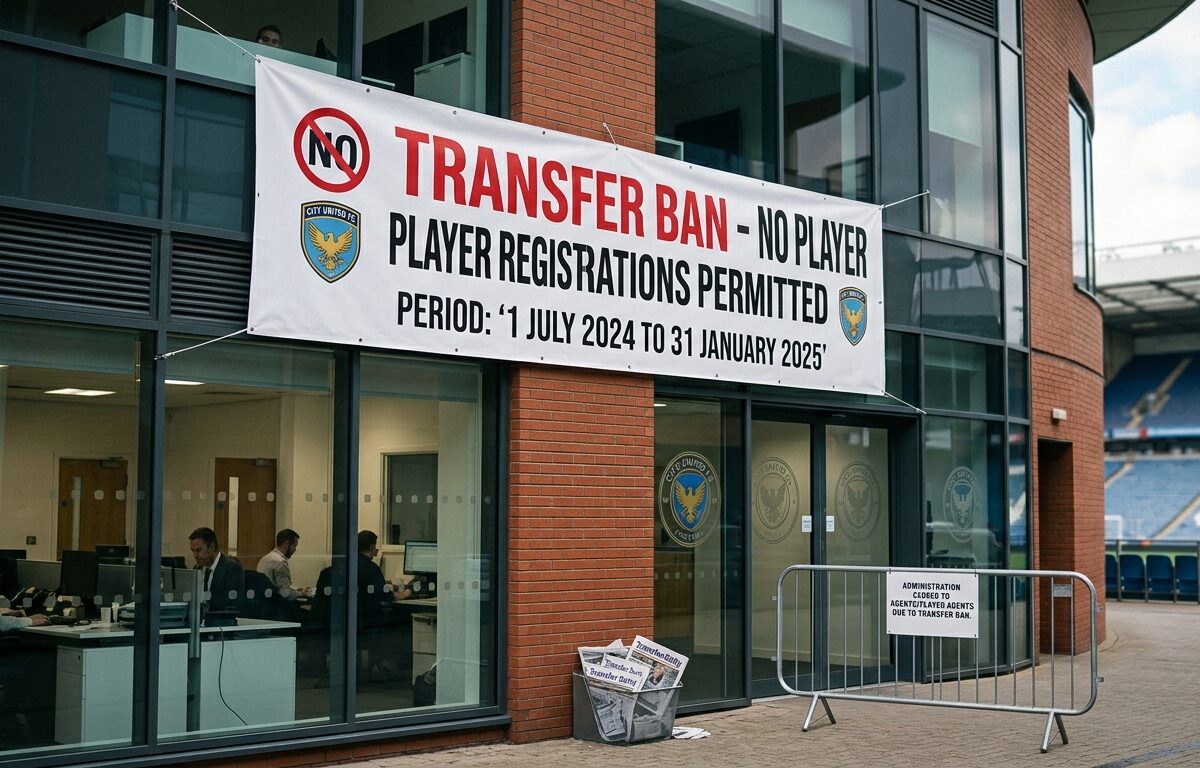
In many clubs, the academy is treated as a branding tool until the first-team market shuts down. Under sanctions, that changes fast. Youth players become functional resources who can cover low-risk positions, absorb minutes in cup matches, and preserve wage space for core veterans. The best clubs do not promote youngsters out of desperation; they promote them because the pathway was built years earlier.
The development staff, therefore, becomes part of the competitive model. Individual training plans, physical periodization, and technical benchmarks all matter more because a player who is “promising” in ordinary conditions must become “usable” under pressure. That is a different standard. It requires honesty from coaches and patience from supporters.
Loan Strategy and Contract Timing Become Decisive
Loans are often the hidden release valve in a ban environment. A club can sometimes recall a player, extend a loan, or shape next season’s roster through pre-existing agreements, even when new registrations are blocked. That makes contract calendars strategic documents, not administrative paperwork. The timing of expiry clauses, buy options, and recall rights can determine whether a club keeps its competitive structure intact.
The same logic applies to renewals. If key contracts are allowed to enter the final year during a ban, the club loses leverage and invites future instability. Good operators renew early, not because it feels safe, but because it preserves future optionality. Bad operators wait, then discover they have no room to maneuver when the market reopens.
| Strategic Area | Normal Market Conditions | Under a Transfer Ban |
|---|---|---|
| Recruitment | Primary lever for fixing weaknesses | Unavailable, so internal solutions dominate |
| Squad planning | Can be reactive across windows | Must be multi-year and role-based |
| Academy usage | Supplementary pathway | Core competitive resource |
| Contract policy | Can be delayed | Needs early renewals and clean expiry management |
| Risk tolerance | Higher, because market fixes exist | Lower, because errors are harder to correct |
Financial Discipline, Wage Structure, and the Hidden Costs of Sanctions
Why the Wage Bill Often Matters More Than Transfer Fees
A transfer ban can expose a club’s real financial problem: not spending on players, but overspending on wages relative to output. Once the market closes, a club cannot hide inefficiency with another signing. The wrong contracts sit on the books longer. The wrong age profile gets older. The payroll starts to shape sporting decisions more than coaching does.
That is why the finance and sporting departments must work as one unit. If a club freezes recruitment but keeps overpaying marginal veterans, it has not solved anything. It has just postponed the bill. Smart clubs use the ban to reprice the squad, reduce dependence on injury-prone profiles, and reallocate wage headroom toward the few players who actually change matches.
The Cost of Panic Renewals and Short-term Fixes
Under stress, clubs often make the wrong kind of commitment: a longer contract for a declining player, a higher salary for a useful-but-replaceable piece, or a rushed extension to stop fan criticism. I have seen cases where leadership treated the ban as a reason to secure “stability,” only to lock in avoidable costs for three more seasons. That is how a temporary sanction becomes a long strategic hangover.
There is a limit, though. Not every contract should be cut, and not every experienced player is dead money. The mistake is not loyalty; the mistake is paying for the past as if it were the future. Clubs need a clear line between core assets, supporting veterans, and legacy obligations.
Financial Control as Sporting Protection
Good financial discipline under a sanction does more than protect the balance sheet. It protects the team’s competitive clarity. If the club avoids cluttering the payroll, it can preserve harmony in the dressing room and keep decision-making focused on performance. Wage structure sends signals. Players notice when the club rewards utility, leadership, and durability rather than name value alone.
This is also where ownership discipline matters. Some owners react to sanctions by injecting cash into the wrong places, chasing a quick reputational recovery. Others impose austerity so harsh that the football side cannot function. The better path sits between those extremes: hold the line on wage inflation, keep compliance clean, and finance the club so the next market window is usable rather than panicked.
Sporting Performance Under Pressure: Coaching, Tactics, and Dressing-Room Management
Coaches Must Simplify Without Becoming Predictable
A squad under a transfer ban rarely has the luxury of tactical complexity for its own sake. Coaches need a structure that reduces error, protects tired players, and makes the most of repeatable automatisms. That usually means a narrower game model, clearer pressing triggers, and a smaller set of roles that players can execute with confidence.
But simplification has a trap. If the coach strips the team down too far, opponents can read it easily. The best managers under sanctions keep the system lean, not flat. They protect the team’s identity while removing unnecessary fragility. That usually means a compact defensive shape, disciplined rest defense, and a few well-drilled attacking patterns rather than constant improvisation.
Injuries Become Strategic Events, Not Just Medical Ones
When there is no transfer market safety net, an injury to one starter can ripple through the entire season. Medical teams therefore become central to strategy. Load management, return-to-play thresholds, and recovery calendars are not support functions; they are performance decisions. A club under sanction needs sharper availability planning than a normal one.
This is especially true in positions with low redundancy, such as center-back, holding midfield, and striker. A single injury there can force the coach to change the shape of the team, not just the lineup. The difference between a stable season and a collapsing one often comes down to how well the club protected those high-leverage positions in advance.
Dressing-room Leadership Carries More Weight
Under pressure, veteran leaders become operational assets. They absorb uncertainty, keep younger players organized, and reduce the emotional cost of the ban. That role is often underestimated because it does not appear in data dashboards. Yet anyone who has worked around a restricted squad knows that leadership can preserve points that tactics alone cannot.
There is also a communication issue. Clubs should not pretend the ban is irrelevant, and they should not dramatize it every week. Players need clarity, not slogans. The staff must define the season’s priorities, explain why rotation matters, and set realistic performance targets. Silence creates rumors. Overstatement creates anxiety.
Recovery Architecture: How Clubs Exit the Ban Stronger, Not Just Lighter
The Best Recovery Plans Start Before the Sanction Ends
The smartest clubs do not wait for the ban to expire before planning the rebuild. They use the restriction period to clean up contracts, map future needs, and narrow the list of positions that truly require investment. That way, when registration opens again, the club moves with purpose instead of panic. This is where sanction management becomes an exercise in sequence, not emotion.
Recovery should begin with a hard audit: squad age profile, injury history, expiring deals, and minute distribution. Then comes prioritization. A club does not need six new players if two high-quality additions solve the real problem. Restraint here is a strength. Buying for the sake of signaling recovery often recreates the same mistakes that caused the sanction in the first place.
The Market Reset Must Match the Club’s Identity
Once the ban lifts, clubs often face a temptation to overcorrect. They may chase expensive names to show that the crisis is over. That is usually a mistake. The market should fit the club’s model, not the mood of the fanbase. If the ban exposed weak succession planning, the answer is structural depth. If it exposed an age problem, the answer is targeted rejuvenation. If it exposed compliance failures, the answer is governance reform first, signings second.
Here is the hard truth: a transfer ban can improve a club if leadership uses it to remove waste and sharpen discipline. But it can also damage a club for years if executives mistake temporary survivability for strategic health. There is divergence among specialists on how much a ban changes long-term trajectory, because the effect depends on the quality of the club’s underlying processes. The sanction itself is not destiny.
What Strong Clubs Institutionalize After the Ban
Strong clubs turn the experience into policy. They formalize contract controls, improve registration workflows, tighten legal review, and create clearer decision gates between finance and football operations. They also document lessons on academy readiness, loan utilization, and roster redundancy so the same error does not recur two seasons later.
The most durable lesson is that resilience is built before the crisis. A club with an integrated sporting director, a disciplined CFO, a responsive legal team, and a coach who trusts development pathways can survive a ban with minimal long-term harm. The clubs that fail usually did not fail at the moment of sanction; they failed in the years that made the sanction possible.
Próximos Passos Para Implementação
If a club is operating under a transfer ban, the strategic response should be immediate and cross-functional. Start with a squad audit, then align the wage bill, contract calendar, and academy pipeline around the same set of priorities. The aim is not to mimic normal market behavior with fewer tools. The aim is to build a temporary operating model that makes the team more stable, more available, and less dependent on emergency fixes.
The clearest recommendation is to treat the ban as a forced governance test. Clubs that emerge well do three things consistently: they keep compliance clean, they promote role flexibility inside the squad, and they refuse to spend future freedom on short-term optics. That discipline matters more than any single signing. When the market reopens, the club should already know where it is weak, what it can afford, and which parts of the roster deserve investment first.
For leadership teams, the real objective is not survival alone. It is to exit the sanction with better structure than the one that existed before it. That is the difference between a club that merely gets through the ban and a club that uses the ban to reset its competitive model.
FAQ
What is the Technical Definition of a Transfer Ban in Football?
A transfer ban is a disciplinary or regulatory restriction that prevents a club from registering new players for a defined period or under specific conditions. It can apply to domestic, international, or both types of registrations depending on the governing body and the violation. In practice, the club may still manage existing contracts, sell players, or promote youth, but it loses the normal ability to replace weaknesses through the market.
Why Do Some Clubs Cope Better with Sanctions Than Others?
The best-prepared clubs usually have stronger squad depth, clearer role redundancy, and a functioning academy pathway. They also manage contracts earlier and keep the wage bill aligned with actual performance value. Clubs that rely on constant buying to solve structural problems tend to suffer the most because the ban removes their main corrective tool.
Does a Transfer Ban Always Hurt On-field Results?
Not always, but it usually increases volatility. If the squad already has quality depth and strong internal promotion options, performance may hold steady or even improve through better coherence. If the roster is thin, aging, or badly balanced, results often decline quickly because injuries, fatigue, and form drops cannot be patched through recruitment.
What Role Does the Academy Play During a Ban?
The academy becomes a core part of competitive planning, not a backup plan. Youth players can cover minutes, preserve wages, and give the coach tactical flexibility in less exposed roles. However, promotion works only if the pathway was built before the sanction; rushing underprepared players into the first team usually creates more instability than value.
Can a Club Use Loans to Work Around a Transfer Ban?
Sometimes, but only within the rules and only if the relevant registrations or agreements were already in place. Loan recalls, extensions, and existing options can provide some flexibility, yet they are not a substitute for new signings. Clubs should treat loans as a tactical buffer, not a permanent workaround, because every sanction has its own legal boundaries.
Editorial Notice
This content was structured with the assistance of Artificial Intelligence and subjected to rigorous curation, fact-checking, and final review by Editor-in-Chief Nivailton Santos. TechTool Judge reaffirms its unyielding commitment to journalistic ethics, ensuring that editorial judgment and data validation remain entirely under human responsibility and final editorial oversight.