
PS5 Sales Drop 50% In the UK: What the Number Actually Means

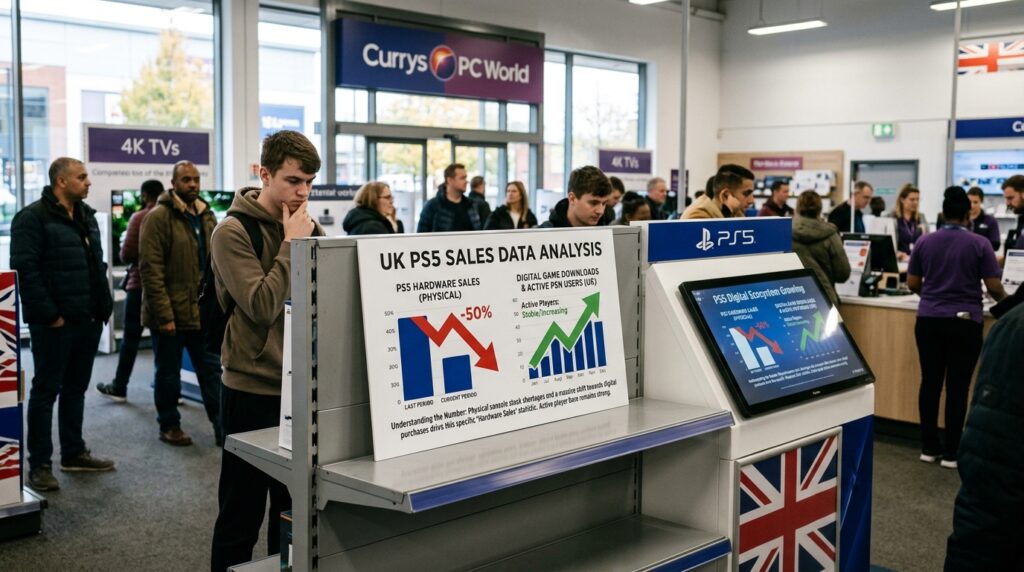
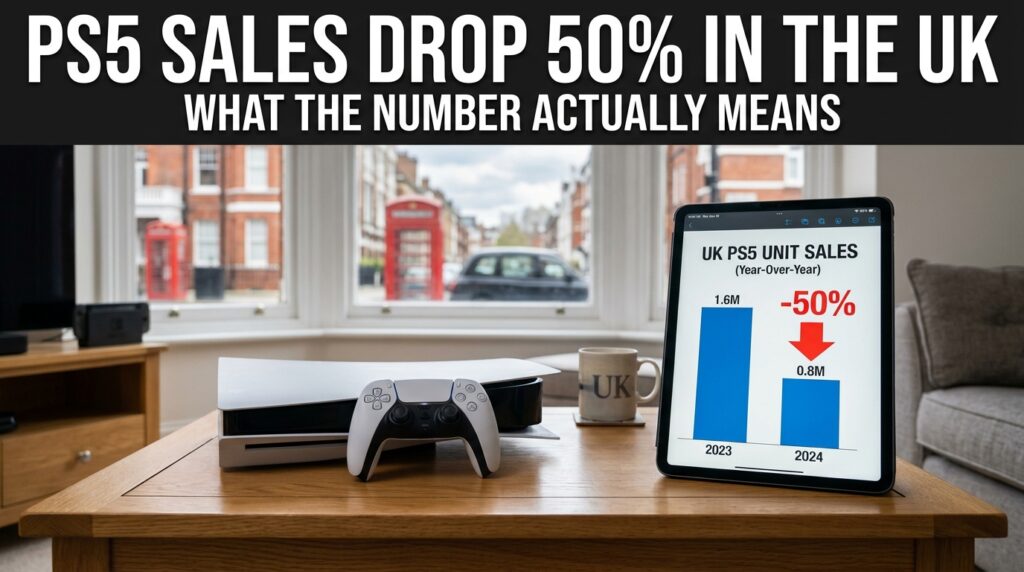
PS5 sales drop 50% in the UK is a market signal, not just a headline. In formal terms, it refers to a year-over-year or comparable-period contraction in unit shipments or retail sell-through for Sony’s PlayStation 5 across the United Kingdom, usually measured by trade data, retailer movement, or industry tracking such as GfK/NIQ-style panels. In plain English: far fewer consoles are moving through UK stores and online channels than before, and that matters because console sales are a leading indicator for platform momentum, accessory attach rates, and software demand.
This matters now because console markets are cyclical, and a sharp decline often reflects more than one cause at once. Pricing, supply normalization, a mature installed base, and consumer fatigue after an early adoption surge can all hit at the same time. For Sony, the UK is not the whole world, but it is a highly visible, strategically important market where retail trends often foreshadow broader European demand patterns.
There is also a practical lesson here for publishers, accessory makers, and investors: a falling hardware number does not automatically mean a platform is weakening in every commercial dimension. In practice, what happens is that hardware sales can cool while digital spending, subscription usage, and first-party engagement stay resilient. The real question is whether the decline is a temporary normalization or the start of a longer demand plateau.
Key Takeaways
- A 50% decline in PS5 sales usually reflects a mix of demand normalization, pricing effects, and comparison against a stronger prior period, not a single isolated problem.
- The UK matters because it is a mature, high-visibility console market where retail sell-through trends can reveal broader European demand shifts.
- Hardware sales alone do not tell the full story; software, PlayStation Plus, and accessories often remain healthier than the console headline suggests.
- Supply constraints are no longer the main explanation in most mature-console phases, so demand-side and macroeconomic factors deserve more attention.
- The most useful interpretation is strategic: watch whether Sony’s installed base, engagement, and monetization per user keep rising as unit sales cool.
PS5 Sales Drop 50% In the UK: What the Number Actually Means
Unit Sales, Sell-through, and Why Context Matters
When analysts say console sales fell 50%, they are usually talking about unit sell-through over a comparable period, not Sony’s factory output. Sell-through is the number that leaves retailers and reaches buyers; it is closer to real demand than shipment data, which can be distorted by inventory timing. That distinction matters because one month of weak retail movement can be a stocking issue, while multiple months point to softer consumer demand.
The UK market is especially sensitive to comparison effects. A strong prior year can make a later period look severe even when the platform is still healthy in absolute terms. That is why headline percentages should be read alongside the base they compare against, the launch cycle, and the console’s age. A mature system often posts lower growth rates even while remaining commercially important.
The PS5 is Moving from Scarcity to Maturity
Early in the lifecycle, the PS5 was constrained by supply bottlenecks, semiconductor shortages, and freight disruptions. Once those frictions eased, sales patterns shifted from scarcity-driven demand to a more normal hardware replacement and late-adopter curve. That transition is not a failure; it is what a successful console does after the launch rush.
The technical term here is console lifecycle normalization. The market moves from launch acceleration to a steadier equilibrium, where demand depends more on exclusives, pricing, and ecosystem value than on pure availability. If the UK sales chart looks weaker now, that may simply mean the platform has entered a mature phase rather than a collapse phase.
Why the UK is a Useful Signal, Not the Whole Verdict
UK retail is informative because it is transparent, competitive, and heavily tracked by industry analysts. But it is still one regional market. A decline in the UK does not automatically imply the same magnitude in the United States, Japan, or continental Europe. Cross-market differences in consumer income, promotional intensity, and retailer mix can produce very different trajectories.
That is why serious analysis should include multiple data points. UK sell-through, European retailer promotions, software chart performance, and Sony’s own quarterly reports together create a more accurate picture than a single country headline. If you want one sentence that holds up: the UK drop is meaningful, but it is evidence, not a final verdict.
The Main Drivers Behind Weakening Console Demand
Price Sensitivity is Doing More Damage Than Many Admit
The PS5 launched into an inflationary environment, and the cost of living has changed how households evaluate discretionary purchases. Consoles are not groceries; they are postponed purchases. When energy bills, rent, and interest rates rise, even passionate gamers delay a console upgrade or choose to wait for a bundle, discount, or holiday promotion.
This is where retail psychology matters. A higher sticker price does not only reduce impulse buys; it changes the perceived value of the whole ecosystem. If the buyer expects a few months of waiting to produce a better offer, conversion slows. That effect is visible across the UK market, especially among buyers who already own a PS4 and are not under pressure to upgrade immediately.
Software Cadence Influences Hardware More Than Casual Observers Think
Console hardware demand is often driven by a handful of tentpole releases. When the cadence of must-play exclusives softens, the hardware loses urgency. Sony’s platform still benefits from strong franchises, but the absence of constant breakout releases can reduce the “I need the console now” effect that lifts quarterly numbers.
Who works in this market knows that software and hardware are coupled. A strong game slate does not merely sell copies; it pulls console units, accessory sales, and subscription adoption with it. That coupling explains why a platform can appear flat in hardware while still performing well inside its ecosystem.
Competition Has Changed Shape, Not Disappeared
The PS5 is no longer fighting only Xbox and Nintendo. It is also competing with PC upgrades, mobile spending, streaming subscriptions, and simply the consumer’s attention budget. The modern entertainment stack is fragmented, and each additional dollar spent elsewhere reduces headroom for a console purchase.
That does not mean the PS5 is losing its category position. It means the category itself is more contested. As the UK communications regulator’s gaming research has repeatedly shown, consumers spend across multiple devices and services. A console therefore has to win not just against rival hardware, but against an entire entertainment basket.
How Sony’s Ecosystem Cushions the Blow
Hardware is Only One Revenue Engine
Hardware sales are visible and easy to headline, but they are not the whole business. Sony monetizes through software royalties, first-party games, digital add-ons, PlayStation Plus subscriptions, and peripheral attach rates. A console sold once can generate recurring revenue for years if the user stays engaged.
That is why a decline in UK unit sales does not automatically translate into a proportional revenue collapse. The installed base can remain large, active, and monetizable even as new console purchases slow. For platform economics, the quality of the user base matters as much as the raw number of new boxes sold.
Accessories and Digital Content Can Offset Slower Hardware Turnover
Controllers, headsets, storage expansions, and digital purchases often benefit from an existing installed base. Once a household owns a PS5, the spending relationship shifts from one-time acquisition to recurring ecosystem use. In many cases, accessory and content revenue is less volatile than hardware because it depends on engagement rather than new buyer conversion.
That pattern is visible across the broader console industry. A mature platform often sees lower unit growth but better monetization per user. Sony’s challenge is not to sell every household a new machine all over again; it is to keep existing owners active and spending. That is a very different commercial problem, and one the company understands well.
Digital Distribution Reduces Some but Not All Pressure
Digital storefronts improve margins and strengthen retention, but they do not solve hardware weakness by themselves. A player must still own the console before digital spend starts. So digital growth can soften the impact of lower unit sales, yet it cannot fully replace fresh hardware demand.
There is a limit here, and that limit matters. If new console adoption slows too much, the future addressable base for digital sales shrinks. That is why Sony watches both console volume and engagement metrics. The first tells you how wide the funnel is; the second tells you how productive it is.
Metric What It Measures Why It Matters Console sell-through Units purchased by consumers Shows real demand at retail Installed base Total active consoles in market Drives software and subscription revenue Attach rate Games or accessories per console Signals ecosystem monetization efficiency PlayStation Plus adoption Subscription uptake and retention Stabilizes recurring revenue
What the Decline Means for Retailers, Publishers, and Investors
Retailers Should Watch Inventory, Not Panic over One Quarter
Retailers in the UK need to distinguish between slower demand and a temporary promotion lull. If inventory is high and sell-through is weak, discounting may be necessary. If inventory is lean and sales are weak, the issue is more likely consumer hesitation or a weakened release calendar. Those are very different operational situations.
In practice, the best operators track weeks of supply, promotional elasticity, and attachment to bundles. A plain console box may move slowly, while a well-structured bundle with a major title or accessory package can restore conversion. The mistake is treating every decline as the same problem.
Publishers Care About the Shape of the Installed Base
For game publishers, what matters is not only how many consoles are sold this month, but how many engaged users are available to buy the next title. A large, sticky installed base can support strong software sales even when hardware growth cools. That is why release scheduling, catalog depth, and franchise strength remain central.
This is also where platform exclusivity still has power. A well-timed first-party release can re-accelerate hardware demand for a while. But if the content pipeline goes quiet, the platform has to lean harder on brand loyalty and price promotions. That tradeoff is familiar across the industry.
Investors Should Separate Cyclical Weakness from Structural Decline
Investors often overreact to a headline like “sales down 50%” because the number feels definitive. It is not. The better question is whether the decline reflects a normal post-launch maturity curve or a loss of platform relevance. Those two scenarios lead to very different valuation outcomes.
For a Sony-style platform business, structural decline would show up in several places at once: shrinking software engagement, weaker subscription retention, and poor response to major releases. If only hardware softens while ecosystem metrics hold up, the business remains in good shape. That distinction is the core analytical task.
What to Watch Next in the UK Console Market
Track Price Moves, Bundles, and Retailer Promos
Pricing is the quickest lever that can reverse weak hardware movement. When the PS5 gets bundled with a top-tier title, a second controller, or a storage upgrade, the effective value proposition changes fast. UK retailers often use these bundles to smooth out demand across seasons and clear inventory without resorting to blunt discounting.
If the next few promotional windows produce only modest lifts, then the market is probably dealing with demand saturation rather than temporary hesitation. That would suggest the platform has entered a more stable, lower-growth phase. If promotions create sharp rebounds, the issue is likely affordability rather than appeal.
Watch Sony’s First-party Release Calendar
The release cadence from Sony Interactive Entertainment remains one of the best forward indicators for console momentum. A concentrated slate of tentpole games can pull forward purchases, while a sparse calendar usually cools demand. Timing matters as much as quality.
This is where the conversation around PS5 sales drop 50% in the UK becomes more useful than alarming. It forces the right question: what happens when the next major release wave arrives? The answer will tell you whether this is a short-cycle dip or a longer plateau.
Check Broader Consumer Conditions Before Drawing Conclusions
Consumer confidence, wage growth, and interest-rate pressure all shape discretionary purchases. A console is often bought when households feel comfortable with future spending, not just current income. That means macro data should sit beside gaming data in any serious analysis.
For a reliable backdrop, analysts often cross-check retail trends with official consumer statistics from the UK Office for National Statistics and platform-level reporting in Sony’s investor materials, such as the company’s earnings presentations. Pairing those sources reduces the risk of mistaking a cyclical slowdown for a platform-wide failure.
Practical Implications for Understanding the Market Right Now
The most defensible reading of the UK decline is this: the PS5 is transitioning from a scarcity-era growth story into a mature platform story. That change brings lower unit expansion, tougher comparisons, and more dependence on pricing and content cadence. It also means the market should stop treating hardware alone as the core indicator of success. The business is broader than that.
If the next wave of releases performs well and the ecosystem metrics stay healthy, the sales decline will look like normalization. If software underperforms too, then the problem is deeper and more strategic. That is why the right response is not hype or panic, but disciplined monitoring of sell-through, attach rate, and subscription behavior. The headline matters, but the structure behind it matters more.
For stakeholders evaluating the UK market, the next step is to track retail movement, promo intensity, and content timing together rather than in isolation. That is the only way to tell whether the console is cooling in a healthy way or losing momentum at the ecosystem level.
FAQ
Does a 50% Drop in PS5 Sales Mean the Console is Failing?
No. A large percentage decline can happen when a platform is comparing against a very strong prior period or moving from launch scarcity into maturity. The more important question is whether software sales, PlayStation Plus subscriptions, and the installed base remain strong. If those stay healthy, the business can still be performing well even when new console units slow.
Is the UK Decline Caused Mainly by Lower Demand or by Pricing?
It is usually a mix of both, with pricing often playing a bigger role than casual observers think. Households are more selective when living costs and borrowing costs rise, and consoles are easy to postpone. The best way to judge the balance is to compare sales with promotional periods, bundle offers, and major release windows.
How Should Retailers React to Weaker PS5 Sell-through?
Retailers should first check inventory levels, weeks of supply, and bundle performance before cutting prices aggressively. A well-designed bundle can improve conversion without eroding margin as much as a direct discount. If demand remains weak across several cycles, then the issue is likely more structural and needs a different merchandising strategy.
What Metrics Matter More Than Console Units for Sony?
Installed base, attach rate, digital spend, and PlayStation Plus retention are often more informative than monthly unit sales. Those metrics show whether the platform is producing recurring value after the initial purchase. A mature console business can remain highly profitable if engagement and monetization per user stay strong.
Can a New Game Release Reverse the Trend Quickly?
Yes, but only temporarily unless the release calendar stays strong. Major exclusives and blockbuster third-party titles can create a demand spike, especially when paired with bundles or promotional pricing. The effect is strongest when consumers have been waiting for a reason to upgrade, not when the market is already saturated.
Editorial Notice
This content was structured with the assistance of Artificial Intelligence and subjected to rigorous curation, fact-checking, and final review by Editor-in-Chief Nivailton Santos. TechTool Judge reaffirms its unyielding commitment to journalistic ethics, ensuring that editorial judgment and data validation remain entirely under human responsibility and final editorial oversight.