
Crowdfunding is reshaping startup funding in the United States

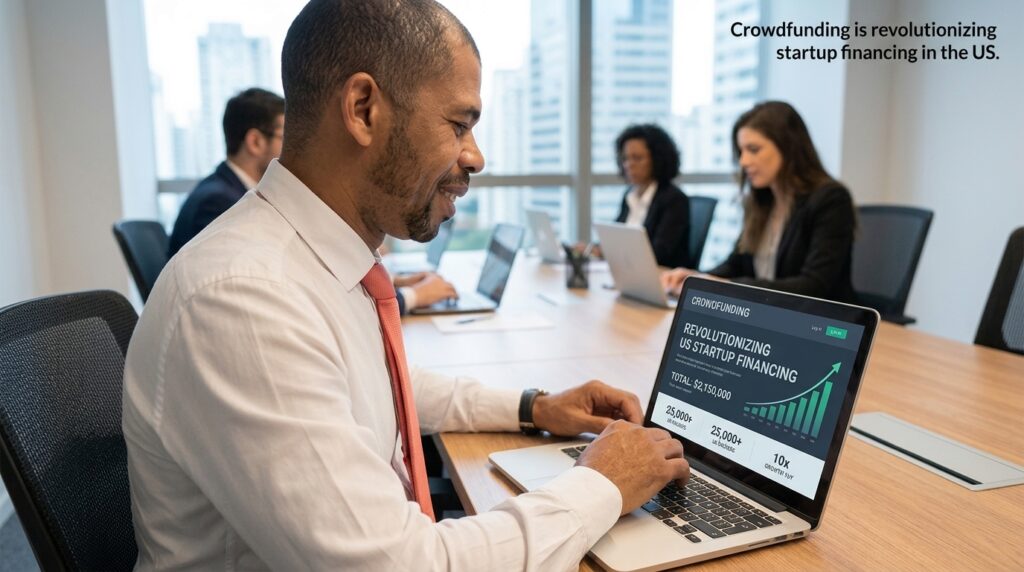
Crowdfunding is reshaping startup funding in the United States because it changes who gets to back a company, how fast capital can be raised, and which early-stage businesses can survive long enough to prove demand. In technical terms, startup crowdfunding is the collective financing of a company by many individuals through regulated online platforms, usually in exchange for rewards, debt terms, equity, or simply support. In plain English: instead of waiting for one venture firm to say yes, founders can validate the market and raise money from a broad crowd at the same time.
This matters now because the U.S. startup market has become more selective, while distribution and community have become more valuable. A company with a compelling story, a credible product, and a loyal audience can now raise seed capital without fitting the classic venture-backed pattern. The shift is not cosmetic. It affects capital formation, customer acquisition, and even product design. In practice, what happens is that a campaign can become both a funding event and a market test, which is why crowdfunding is reshaping startup funding in the United States in ways many founders still underestimate.
That does not mean crowdfunding replaces venture capital, angel syndicates, or institutional seed rounds. It does mean the funding stack has become more modular. Founders can use Regulation Crowdfunding, Rule 506(c) offerings, or reward-based platforms such as Kickstarter and Indiegogo depending on what they are building and how much ownership they are willing to give up. The winners are often teams that understand the compliance layer as well as the marketing layer.
Key Points
- Crowdfunding works best when a startup has a clear customer problem, a visible product, and a narrative that ordinary investors can evaluate quickly.
- Equity crowdfunding under SEC rules is not the same as reward crowdfunding; the legal obligations, investor rights, and fundraising ceilings differ materially.
- A successful campaign can validate demand, reduce customer acquisition costs, and strengthen later fundraising, but it does not guarantee product-market fit or long-term capital efficiency.
- Founders who treat the campaign like a securities offering, not just a marketing launch, avoid the most common compliance mistakes.
- The strongest use cases are consumer products, climate tech, hardware, and mission-driven startups with an engaged audience or community.
Crowdfunding is Reshaping Startup Funding in the United States: What Changed and Why It Matters
From Gatekept Capital to Distributed Capital
The old model of startup financing concentrated power in a narrow set of hands: angel investors, venture capital funds, banks, and a few strategic insiders. Crowdfunding distributes that power across thousands of smaller participants. The result is not just more people writing checks; it is a different funding logic. Founders no longer need to convince a single investment committee that their business matches a fund thesis. They can prove that the market itself is willing to support the company.
That distinction matters. Venture capital tends to optimize for outlier scale and portfolio math. Crowdfunding, by contrast, often rewards clarity, trust, and direct resonance with buyers. A startup with a smaller total addressable market may still raise successfully if it has an intense community and a product people can understand immediately. That is one reason consumer-facing hardware, sustainability products, and creator-adjacent startups often outperform abstract software plays on crowdfunding platforms.
The Legal Infrastructure Made the Shift Possible
The modern U.S. crowdfunding market exists because regulators created pathways that allow capital formation without fully abandoning investor protections. The key framework is Regulation Crowdfunding, adopted under the JOBS Act and overseen by the U.S. Securities and Exchange Commission. It lets eligible companies raise from both accredited and non-accredited investors through SEC-registered funding portals or broker-dealers, subject to offering limits, disclosure rules, and ongoing reporting requirements.
For the formal rulebook, the SEC’s own overview is the best starting point: the SEC’s Regulation Crowdfunding resource. The agency also explains how offerings differ from private placements and what issuers must disclose. That regulatory scaffolding is why crowdfunding can scale without becoming a legal free-for-all. It also explains why good campaigns are usually built by teams that respect compliance from day one.
Why Timing Favors This Model Now
Several trends converged at once. Retail investors became more comfortable funding companies online. Social platforms made audience building cheaper. And founders learned that community can be a financial asset, not just a branding exercise. At the same time, higher interest rates and stricter venture selection pushed many early-stage founders to look for alternative capital. Crowdfunding stepped into that gap.
The shift is not universal. It works best when trust can be built quickly and when the product can be explained without a 40-slide deck. It is weaker for deep-tech companies with long research timelines, heavy regulatory complexity, or business models that require large institutional checks before commercialization. That is one of the boundaries of the model, and ignoring it leads to wasted campaigns.
The Main Crowdfunding Models Founders Use in the U.S.
Reward Crowdfunding: Validation Before Ownership
Reward crowdfunding, used on platforms like Kickstarter and Indiegogo, offers backers a product, perk, or early access instead of equity. Technically, this is not a securities offering. It is a pre-sale or support-based campaign, which makes it simpler from a legal standpoint but far less useful for raising growth capital in the traditional sense. Its strength lies in demand validation and audience building.
Who works with this model knows that execution matters more than aesthetics. A beautiful page with weak manufacturing assumptions fails fast. Viable campaigns usually have a prototype, a believable timeline, and a clear explanation of what backers are funding. Viable is the operative word. Many founders assume the crowd will forgive incomplete logistics if the idea is good. It usually won’t.
Equity Crowdfunding: Selling a Stake to the Crowd
Equity crowdfunding is the model that most directly intersects with startup finance. Under Regulation Crowdfunding, founders can raise money in exchange for securities, giving investors a financial stake in the company. The offering must be hosted on a registered intermediary, and the startup must disclose business information, financial statements, use of proceeds, capitalization details, and risks. Depending on the raise size, financial statement requirements become more demanding.
The tradeoff is clear. Founders gain access to a wider investor base, but they also take on cap table complexity, reporting obligations, and a more formal relationship with non-institutional shareholders. This model is powerful for companies that need meaningful seed capital and already have a loyal audience. It is less attractive if a founder wants to keep the ownership structure extremely clean for a future VC round.
Debt Crowdfunding and Revenue-based Variants
Debt crowdfunding uses the crowd as lenders rather than owners. In some cases, repayment terms are fixed; in others, financing is tied to revenue. This can make sense for companies with predictable cash flow and lower dilution tolerance. The appeal is obvious: raise capital without issuing equity. The risk is equally clear: debt still needs to be repaid, and weak operating performance can turn flexible capital into a burden.
There is no single “best” model. The right structure depends on the company’s stage, margin profile, customer acquisition dynamics, and future fundraising plans. A subscription software startup and a hardware startup should not be forced into the same financing mold. That sounds obvious, yet founders do it all the time when they chase a fashionable channel instead of a fit-for-purpose one.
Model What Backers Receive Best Fit Main Tradeoff Reward crowdfunding Product, perk, or early access Consumer products, hardware, creative launches No equity capital; execution risk is high Equity crowdfunding Ownership stake Startups with audience traction and compliance readiness Cap table complexity and reporting burden Debt crowdfunding Principal plus repayment or interest Cash-flowing businesses with predictable revenue Repayment pressure if growth slows
Why Crowdfunding Works Better for Some Startups Than Others
Audience Quality is More Important Than Raw Reach
A large following does not guarantee a successful campaign. A focused audience that trusts the founder often converts better than a broad, disengaged one. That is because crowdfunding is not only a capital event; it is a persuasion event. People back what they understand, what they believe will ship, and what they feel socially connected to.
Startups with strong customer identity usually do well: specialty consumer goods, climate products, fitness devices, and mission-driven brands. The campaign becomes an extension of the product’s community. In those cases, the backers are not just financing the company; they are signaling identity and helping spread the story. That social layer is a real financing advantage.
Complex B2B or Deep-tech Companies Face a Different Math
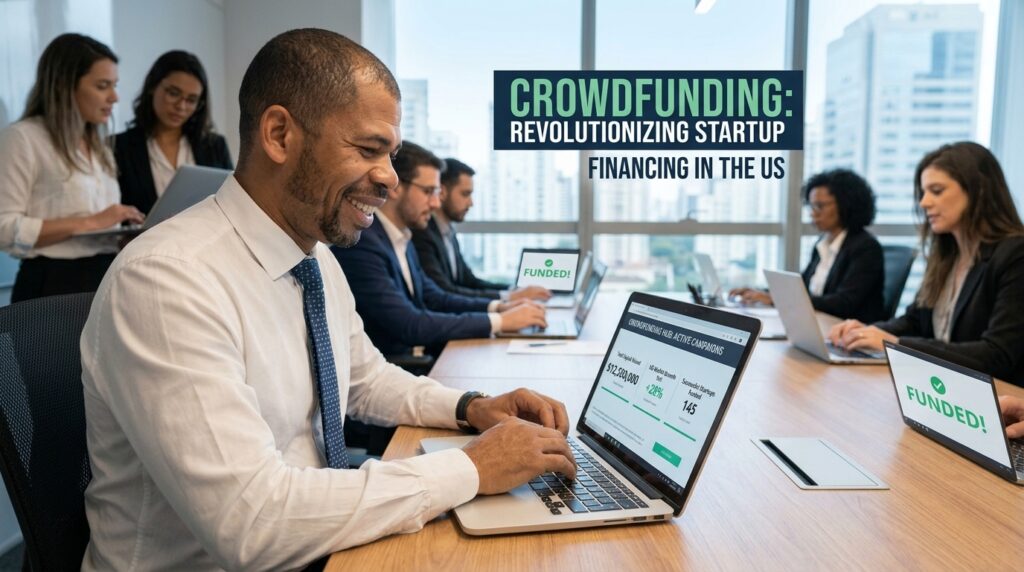
Not every startup should go to the crowd. Enterprise software, biotech, semiconductors, and advanced AI infrastructure often need institutional support because the technical diligence is specialized and the time to revenue is long. The crowd may appreciate the vision, but it usually will not underwrite the risk in the same way a specialist fund can.
That does not make crowdfunding irrelevant for those sectors. It can still support community education, grant-like preorders, or early signal generation. But as a primary financing strategy, it often fails where the value proposition cannot be compressed into a short, compelling, and credible public story. That limitation is structural, not tactical.
What a Strong Campaign Usually Has in Common
Across categories, successful campaigns tend to share a few traits: a working prototype, transparent milestones, a realistic use-of-funds plan, and a believable founder voice. Overpromising kills credibility faster than modest ambition. In practice, the market rewards precision. Backers want to know what will ship, when it will ship, and why the team is the one to make it happen.
There is a pattern I have seen repeatedly: founders who treat crowdfunding like a storytelling contest often underperform founders who treat it like a disciplined operating plan. The latter group usually knows its margins, its fulfillment costs, its legal obligations, and its post-campaign investor communication requirements. That discipline shows up in conversion rates.
The Compliance Layer: What Founders Cannot Afford to Ignore
SEC Rules Are Part of the Product, Not an Afterthought
For equity crowdfunding, compliance is not paperwork at the end. It is part of the campaign architecture. The SEC requires disclosures that touch the company’s business, ownership, financial condition, and use of proceeds. Issuers also have to watch advertising rules, intermediary requirements, and investor limits. The campaign may look like a marketing launch on the surface, but legally it is a securities offering.
The SEC’s small business pages provide a useful public reference: the SEC’s small business and capital raising hub. It is worth reading before any founder publishes a campaign deck. The mistake that causes the most pain is assuming that a “friendly” community campaign can be improvised. It cannot.
Disclosure Quality Affects Both Legality and Trust
Investors in crowdfunding offerings are often less sophisticated than institutional buyers, which raises the burden on clarity. Risks should be explained in plain language, not hidden in legal fog. Financial statements, cap table information, and use of proceeds should align. If the public narrative and the securities filings tell different stories, the campaign loses trust quickly.
Universities and policy researchers have tracked how disclosure affects retail participation and outcomes. The broader lesson is consistent: when information is incomplete or overly promotional, funding quality deteriorates. That is why high-performing issuers usually keep their legal, financial, and marketing teams tightly aligned from the beginning.
Secondary Consequences Can Shape Future Fundraising
A crowdfunding round can help or hurt the next raise. If the campaign creates a messy cap table, unrealistic valuation expectations, or poorly managed investor communications, later institutional investors may see it as a warning sign. On the other hand, a clean campaign with disciplined reporting can strengthen credibility. It tells future investors that the company can handle public pressure and operational complexity.
The nuance here matters: crowdfunding is not “cheap money.” It is visible money. That visibility can be useful, but it also creates accountability. Founders should assume that every public promise made during the campaign will be remembered later by customers, investors, and even journalists.
How Crowdfunding Changes Startup Economics, Not Just Fundraising
It Can Lower Customer Acquisition Costs
When a campaign works, the audience that funds the company often becomes the first distribution engine. That creates a financing effect and a marketing effect at the same time. A startup that raises from customers or early fans may spend less on paid acquisition because the campaign itself generates word-of-mouth, media attention, and social proof.
This is one reason crowdfunding is attractive for brands with strong product-market narratives. The initial raise helps the launch, and the launch helps the company recruit more users. In a world where customer acquisition costs can erode early margins, that is not a minor benefit. It is a strategic one.
It Can Pressure the Company Into Better Product Discipline
Backers expect delivery. That expectation forces a startup to clarify timelines, manufacturing realities, and support obligations earlier than it might otherwise. For some teams, that pressure is healthy. It exposes weak assumptions before they become expensive mistakes. A founder who cannot explain fulfillment, margin structure, and post-launch support probably is not ready to raise publicly.
At the same time, this discipline can become a trap if the team underestimates complexity. Crowdfunding creates a visible promise to many small stakeholders, which can make product changes harder. That is the tradeoff: faster validation, but less room to pivot silently.
It Changes the Ownership of the Story
Traditional financing often places the company’s story in the hands of a few insiders. Crowdfunding spreads that story outward. Backers talk, share, critique, and sometimes defend the company. The startup is no longer just selling a product; it is managing a public narrative. That can be a strength when the team values transparency and cadence.
Public ownership of the story has another consequence: founders must communicate more carefully. The strongest campaigns explain not only the upside, but also the constraints. That honesty usually performs better than hype. The crowd can tolerate risk. It does not tolerate fantasy for long.
How Founders Should Use Crowdfunding in a Real Funding Strategy
Use It for Validation, Leverage, or Capital Efficiency
The best founders do not ask whether crowdfunding is fashionable. They ask what role it should play in the capital stack. For some startups, it is a primary seed source. For others, it is a validation engine that improves terms in a later angel or VC round. For another group, it is a way to finance inventory or first production runs without over-diluting equity.
The right answer depends on what the startup needs most: proof, cash, or leverage. If the company already has traction, crowdfunding can extend runway and deepen customer commitment. If the company lacks proof, the campaign may expose that weakness faster than a private process would. That is useful, but only if the founders are willing to learn from it.
Build the Campaign Backwards from the Funding Goal
Founders should start with the minimum viable capital required to hit the next meaningful milestone. Then they should design the campaign around that milestone, not around a vanity number. That means matching the offering type, audience, messaging, and timeline to the actual business constraint. The goal is to fund the next inflection point, not to maximize attention for its own sake.
A disciplined campaign plan usually includes a pre-launch list, conversion benchmarks, a clear fulfillment path, and contingency scenarios. If the campaign hits only half the target, what changes? If it exceeds the target, what operational bottlenecks emerge? Those questions belong in the plan before the first public post goes live.
Expect Tradeoffs, Not Miracles
Crowdfunding can be an excellent financing tool, but it is not a cure-all. It works best in companies with explainable products, credible execution, and some form of built-in trust. It fails when founders confuse attention with demand or community with due diligence. That distinction is where many campaigns break down.
There is also divergence among experts about how much crowdfunding should influence a later venture valuation. Some investors treat a strong campaign as proof of demand; others see it as noisy and discount the signal. Both views have merit. The correct interpretation depends on the company’s category, the quality of the backers, and whether the raise produced repeatable behavior or a one-time burst of enthusiasm.
Próximos Passos Para Implementação
Founders who want to use crowdfunding well should treat it as a financing system, not a content sprint. Start by choosing the right model: reward-based for product validation, equity crowdfunding for capital formation, and debt-based structures only when cash flow can support repayment. Then align the legal, financial, and operational workstreams before launch. That alignment is what separates a credible raise from a public experiment that damages the next round.
The strategic move is to design the campaign around a measurable business milestone. If the raise is supposed to fund inventory, define production constraints. If it is supposed to validate demand, define conversion targets and customer retention expectations. If it is supposed to improve later fundraising, define the evidence a future investor would consider meaningful. That level of discipline makes crowdfunding a financing advantage rather than a distraction.
For U.S. startups, the direction of travel is clear: distributed capital is no longer a side channel. It is part of the mainstream funding architecture. The founders who win will not be the loudest. They will be the ones who can combine compliance, narrative, product readiness, and operational realism in one coherent campaign.
FAQ
What is the Difference Between Reward Crowdfunding and Equity Crowdfunding?
Reward crowdfunding gives backers a product, perk, or access benefit, while equity crowdfunding gives them a securities stake in the company. The legal burden is much lighter on reward platforms because no ownership is sold. Equity crowdfunding is governed by SEC rules and requires disclosures, intermediary support, and ongoing compliance. Founders should choose based on whether they need validation or actual capital formation.
Can a Startup Raise from Both Accredited and Non-accredited Investors Through Crowdfunding?
Yes, under Regulation Crowdfunding, startups can raise from both accredited and non-accredited investors, subject to the SEC’s rules and investor limits. That inclusiveness is one of the model’s main advantages. It expands the funding base beyond a small circle of wealthy individuals. The tradeoff is that the company must communicate risk and financial information more carefully than in a private deal.
Does a Successful Crowdfunding Campaign Help with Venture Capital Fundraising Later?
It can, but only if the campaign proves something meaningful: customer demand, founder credibility, unit economics, or community pull. A polished campaign with weak operating evidence will not impress sophisticated investors for long. Venture firms care about traction and signal quality, not just headline numbers. A clean, disciplined campaign can improve leverage in the next round, but it is not a substitute for venture-scale fundamentals.
What Types of Startups Fit Crowdfunding Best?
Consumer products, hardware, climate-tech brands, creator tools, and mission-driven companies tend to fit best because their value proposition is easier to explain and visualize. Startups with an existing community also have an edge because trust lowers conversion friction. Highly technical B2B or deep-tech companies can still use crowdfunding, but usually as a supplemental channel rather than the primary funding engine. The model rewards clarity and public resonance.
What is the Biggest Mistake Founders Make with Crowdfunding?
The biggest mistake is treating the campaign like marketing only and ignoring the securities, operations, and delivery side of the business. That leads to vague disclosures, unrealistic timelines, and fulfillment problems. The crowd is more forgiving of risk than of inconsistency. A founder who cannot explain how the money turns into a shipped product is not ready for a public raise.
Editorial Notice
This content was structured with the assistance of Artificial Intelligence and subjected to rigorous curation, fact-checking, and final review by Editor-in-Chief Nivailton Santos. TechTool Judge reaffirms its unyielding commitment to journalistic ethics, ensuring that editorial judgment and data validation remain entirely under human responsibility and final editorial oversight.