
Xbox loses hundreds of dollars per console sold

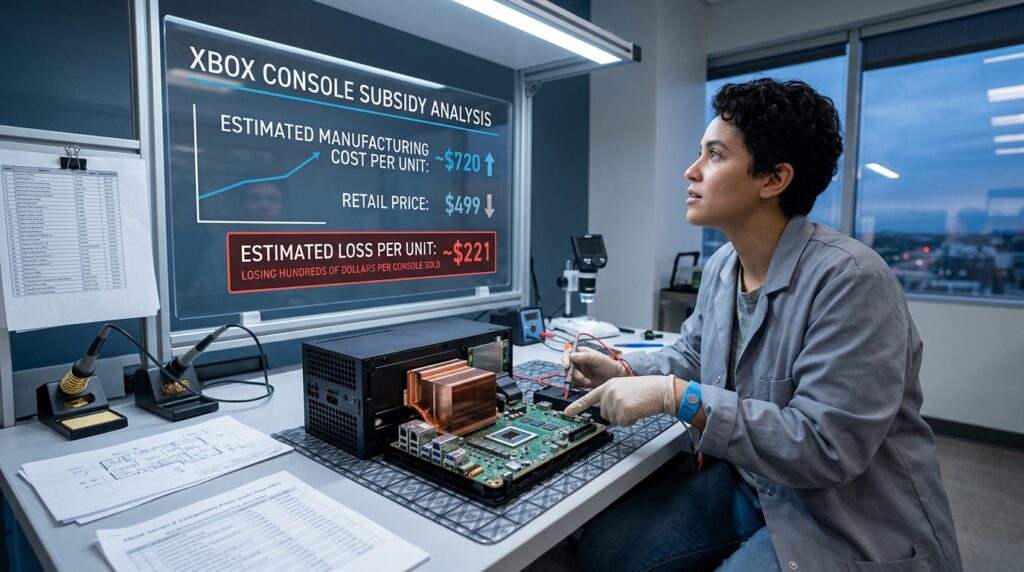
Xbox loses hundreds of dollars per console sold is a shorthand way of describing a hardware-subsidy model: the console is priced below its full bill of materials, manufacturing, logistics, marketing, and channel costs, so the platform holder accepts a loss or razor-thin margin on each unit in exchange for future software, subscription, and ecosystem revenue. In practice, the console is not treated as a standalone profit center; it is the entry point into Xbox Live, Game Pass, digital game sales, accessories, and services that can more than compensate over time.
This matters now because console economics have changed. Component prices move, supply chains tighten, and consumers compare a $499 box not only with a rival machine, but with PCs, cloud gaming, and mobile entertainment. A platform like Xbox can survive hardware losses only if it converts enough households into recurring spenders. That is a much harder equation than selling a console at a profit, and it explains why Microsoft’s gaming strategy increasingly revolves around lifetime value, not one-time hardware margin.
Seen from the outside, the phrase sounds dramatic. Inside the industry, it is a familiar tradeoff. The real question is not whether Microsoft absorbs a loss on hardware; it is how large that loss is, how long it can sustain it, and whether the attached ecosystem revenue is strong enough to justify the subsidy. That is where the strategy becomes both defensible and risky.
Key Points
- Console subsidies are a deliberate market-entry tactic, not a sign that the business is broken; the hardware often functions as a customer-acquisition channel for recurring digital revenue.
- The unit economics depend on bill of materials, semiconductor pricing, manufacturing scale, logistics, retailer margins, and post-sale monetization through Game Pass, first-party software, and accessories.
- Xbox’s model works best when software attach rates, subscription retention, and digital storefront usage remain high enough to offset hardware losses over the console’s lifecycle.
- The strategy becomes weaker when consumers delay upgrades, buy fewer full-price games, or shift gaming time toward PC and cloud alternatives.
- Microsoft’s gaming business should be evaluated on ecosystem lifetime value, not on console margin alone.
Xbox Loses Hundreds of Dollars Per Console Sold: What That Means in Business Terms
Hardware Subsidy is a Distribution Strategy, Not an Accounting Oddity
In formal terms, a hardware subsidy occurs when a company sells a device below its fully loaded unit cost in order to expand an installed base. The loss is not accidental; it is an investment. For Xbox, that means the console becomes the gateway to a wider monetization stack: subscription revenue from Game Pass, transaction revenue from the Microsoft Store, network effects from Xbox Live, and downstream sales of controllers, headsets, and digital add-ons.
That model has precedent. Sony, Nintendo, and Microsoft have all used variations of it at different times, though they do not execute it in identical ways. The important distinction is whether the platform holder can turn each buyer into a high-value account over several years. A console sold at a loss can still be rational if the user spends enough on content and services afterward.
Why the Loss Can Reach the Hundreds-of-Dollars Range
The phrase is plausible because console hardware sits at the intersection of expensive components and competitive retail pricing. A custom AMD APU, GDDR memory, SSD storage, cooling, enclosure, controller, packaging, freight, and distribution all have hard costs. Add retailer cuts and marketing, and the economics tighten quickly, especially early in a product cycle when component pricing is less favorable and scale has not fully kicked in.
Who works in hardware knows the pattern: the launch window often hurts most, and later revisions improve margins as chip yields rise and component contracts mature. That is why one leaked estimate or analyst model should never be treated as a universal truth across the whole generation. Still, the broad direction is well understood. A platform can lose money on the box and still make money on the customer.
The Lifetime Value Logic Behind Xbox
Microsoft’s gaming strategy depends on lifetime value, or LTV: the expected revenue a user generates over the entire period they remain active. A buyer who subscribes to Game Pass for years, purchases DLC, and stays inside the Microsoft ecosystem can be worth far more than the hardware loss on day one. That is the core logic behind subsidized consoles, and it is why the company cares so much about retention, engagement, and cross-sell.
This is also where the business gets fragile. If the average user buys a console but never converts into a recurring spender, the subsidy turns into a pure loss. That is why platform owners spend aggressively on exclusive releases, cloud saves, achievement systems, and identity layers. They are not decorative features. They are retention mechanisms.
How the Economics Break Down Across the Xbox Ecosystem
Bill of Materials, Manufacturing, and Channel Costs
The bill of materials is the starting point: the sum of physical components inside the console. But real unit economics are broader. Microsoft also has to account for assembly, testing, freight, warranty reserves, warehousing, and the retailer margin if the unit moves through consumer electronics channels. If a console retails at $499, the company does not receive $499 of usable revenue.
That detail is often missed in casual debate. A console can appear “near cost” on a whiteboard and still lose money after the full distribution stack is applied. Margins can improve over time, but launch economics are shaped by the market price Microsoft must hit to stay competitive with PlayStation and, increasingly, with the broader entertainment budget of the household.
Where the Make-Good Revenue Actually Comes From
The offset comes from recurring monetization. Game Pass is the clearest example because it converts a one-time hardware sale into a subscription relationship. Add first-party content, multiplayer access, downloadable expansions, and storefront commissions, and the console begins to resemble a platform membership device more than a piece of consumer electronics.
Accessory sales matter too. Controllers, premium headsets, charging kits, and replacement parts produce higher-margin revenue than the box itself. In many platform businesses, accessories quietly stabilize the economics. They are one reason why management teams care so much about attachment rate, which measures how many add-ons each console owner buys.
Revenue Layer Role in the Xbox Model Why It Matters Console hardware Customer acquisition Creates the installed base Game Pass Recurring subscription Improves lifetime value Digital games and DLC High-margin content sales Captures spend after acquisition Controllers and headsets Accessory attach Raises per-user margin Online services Ecosystem lock-in Reduces churn and increases retention
Why Analysts Care About Attach Rate More Than the Box Itself
Hardware margin tells only part of the story. Analysts track attach rate because it reveals whether the ecosystem is monetizing properly. A console with a deep content catalog and active subscription base can tolerate weaker hardware economics. A console with poor software conversion cannot. That is why the same unit loss can look acceptable in one generation and dangerous in another.
In practice, what happens is that the hardware decision is made with a view toward software and services. Viable platform economics require a portfolio approach: even if the console line is weak, gaming content, cloud distribution, and subscription ARPU can still deliver an acceptable return. That tradeoff is central to Xbox and to Microsoft’s broader gaming ambition.
Why Microsoft Accepts the Loss Instead of Raising Console Prices Aggressively
The Installed-Base Race is Real
Consoles are network businesses disguised as boxes. The more households inside a platform, the more attractive it becomes to developers, publishers, and players. That matters because a strong installed base lowers content distribution friction and increases the odds that a consumer will keep buying within the same ecosystem. For Microsoft, walking away from that race would concede too much strategic ground to Sony and Nintendo.
There is a strategic cost to pricing too high. If Xbox becomes materially more expensive than competing hardware, the platform can lose market share faster than it gains margin. That is one reason companies often prefer to subsidize hardware and recover value later. They would rather own a larger active base than maximize short-term console profit.
Game Pass Changes the Incentive Structure
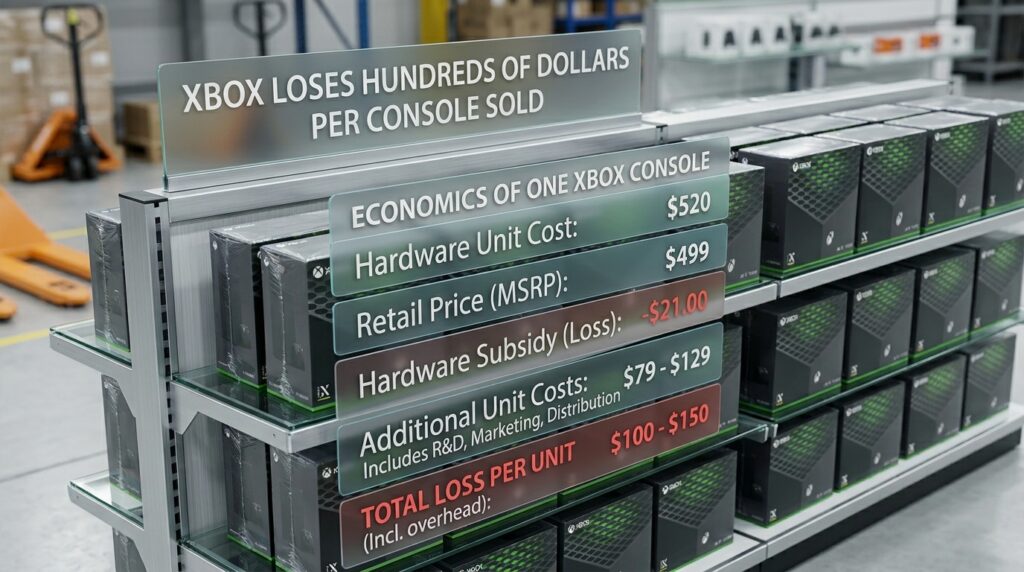
Game Pass is the biggest reason the old console logic has shifted. A customer who subscribes to a service behaves differently from one who buys a few retail games per year. Microsoft gets a recurring revenue stream, stronger retention signals, and a more predictable monetization profile. That changes the economics of every console sold, because the device becomes the front end of a subscription funnel.
Sources like Microsoft’s own investor relations materials make clear that the company evaluates gaming as a long-term services business, not just a hardware line. See Microsoft Investor Relations for the company’s reporting framework. For broader hardware market context, Circana’s market commentary is a useful reference point on console spending patterns and category demand.
Competitive Pressure from Sony and Nintendo Keeps the Floor Low
Console pricing is shaped by competition, not by a company’s preferred margin target. Sony’s PlayStation line sets a powerful benchmark in the premium console category, while Nintendo competes on a different proposition altogether: portability, exclusive franchises, and family appeal. Microsoft has to price Xbox in a way that is credible against both, even if that means absorbing losses.
This is where the tradeoff becomes visible. A higher price could improve hardware margin, but it might also depress sales volume and weaken Game Pass adoption. That tension is the heart of Xbox’s console strategy. The box is not the product; the relationship is.
What This Says About the Health of Xbox as a Business
Hardware Losses Are Not the Same as a Weak Business
Investors often confuse unit margin with business quality. That is a mistake. A platform company can lose money on hardware while still producing a strong economic return through software and services. The key is whether each new user expands the ecosystem enough to cover the acquisition cost over time.
Microsoft’s gaming segment should therefore be assessed on several signals at once: active users, subscription growth, content engagement, and cross-platform monetization. A narrow focus on console margin misses the strategic design of the business. The line item may look ugly. The overall funnel may still be healthy.
The Model Works Best When Engagement Stays High
The subsidy strategy depends on usage density. If the console becomes a weekly entertainment hub, the economics improve. If it sits idle after a few purchases, the economics deteriorate fast. That is why platform owners invest in live services, cloud sync, social graphs, and recurring content drops. They are trying to keep the machine relevant after the purchase.
There is also a generational nuance. Launch-era hardware subsidies are easier to justify when content pipelines are strong and the service layer is maturing. If exclusive game output slows or consumer interest shifts elsewhere, the economics can weaken. This is one reason analysts monitor first-party studio performance and subscription churn alongside hardware shipments.
Where the Model Can Fail
The subsidy approach fails when the platform cannot generate enough recurring value per user. That can happen if Game Pass churn rises, if consumers prefer buying games à la carte, or if too many users split their gaming time across PC and cloud alternatives. It can also fail if the console market itself shrinks and the installed base stops expanding.
There is no guarantee here. The model works well in a strong ecosystem, but it is not invincible. Industry veterans know that hardware subsidies are powerful when the platform is growing and risky when growth slows. That is the hard truth behind the headline.
How to Read the Strategy Like an Industry Insider
Follow the Right Metrics, Not the Loudest Headlines
If you want to understand Xbox’s hardware economics, watch the metrics that actually move the business: Game Pass membership trends, engagement hours, first-party release cadence, digital sales share, and accessory attach. Console loss estimates matter, but only as one variable in a broader portfolio model. The wrong conclusion is to treat hardware losses as a standalone scandal.
What matters is whether the company is building a durable network of users who spend repeatedly. That is why Microsoft’s gaming strategy is closer to a media platform strategy than a traditional electronics strategy. The console is the door, not the destination.
Use Official Filings and Market Data Before Accepting Online Estimates
Public discourse often relies on leaks, anonymous analyst notes, or social media summaries of manufacturing cost estimates. Those can be useful starting points, but they are not substitutes for filings and market reports. Microsoft’s investor materials, the U.S. Federal Trade Commission’s discussion of competition and digital markets, and credible industry trackers provide a much better basis for analysis.
For regulatory and market context, the Federal Trade Commission is useful for understanding platform competition, while the U.S. Bureau of Labor Statistics helps with broader inflation and component-cost context. Those sources will not tell you the exact Xbox loss per unit, but they help explain why hardware economics tighten and loosen over time.
A Practical Rule for Interpreting the Claim
Use this rule: if a console platform can convert a large share of buyers into active subscribers and digital spenders, a hardware loss is a strategic expense. If it cannot, the same loss is a warning sign. That distinction matters more than the exact dollar amount attached to any one generation.
So the phrase “Xbox loses hundreds of dollars per console sold” should be read as a description of strategy under pressure, not as proof of failure. It captures the reality of platform economics: spend upfront, monetize later, and hope the ecosystem keeps users inside the fence long enough for the math to work.
Próximos Passos Para Implementação
For executives, analysts, and serious observers, the right takeaway is not to obsess over the sticker loss on the console. The smarter move is to map the full value chain: unit economics, subscription retention, software conversion, and accessory attach. That is the only way to judge whether the subsidy is creating durable enterprise value or just deferring disappointment.
For readers evaluating Xbox as a platform, the practical test is simple. Look at how often the console is used, how many users stay subscribed, and how much digital spending follows the hardware sale. If those signals rise together, the subsidy is working. If they diverge, the model is under strain. The future of Xbox will be decided less by the price of the box and more by the quality of the ecosystem that box unlocks.
FAQ
Why Would Microsoft Sell an Xbox at a Loss?
Because the console is part of a broader monetization system. Microsoft can recover value through Game Pass, digital game sales, DLC, accessories, and online services. The loss on the device is treated as customer acquisition cost, which is rational only if enough users keep spending after purchase. If the ecosystem conversion is weak, the subsidy stops making sense.
Is “losing Hundreds of Dollars” on Each Console Always True?
No. That figure varies by model, generation, region, component pricing, and retail channel. Early lifecycle estimates can look far worse than later ones because scale improves and parts get cheaper. The more accurate statement is that Xbox may sell some hardware below fully loaded cost, especially when strategic pricing is needed to defend market share.
How Does Game Pass Change the Hardware Economics?
Game Pass turns the console into a recurring revenue gateway instead of a one-time sale. That improves lifetime value if the subscriber remains active and continues to engage with Microsoft’s catalog. It also changes how Microsoft judges success, since engagement and retention become as important as hardware margin. The model weakens if users subscribe briefly and then churn.
Why Not Just Raise the Console Price and Stop Subsidizing It?
Because pricing power is limited in a competitive console market. A higher price can reduce demand, shrink the installed base, and hurt software and subscription growth. In a network business, that tradeoff can be worse than taking a hardware loss. Microsoft has to balance margin against ecosystem reach, and reach often wins.
What Evidence Should I Trust When Evaluating Xbox Hardware Losses?
Prioritize official Microsoft investor materials, reputable market trackers, and reporting grounded in manufacturing and retail economics. Anonymous estimates can be useful, but they are not enough on their own. The best interpretation comes from combining public filings with platform metrics such as active users, subscription trends, and digital sales share. That gives a more complete view than any single loss figure.
Does a Hardware Subsidy Mean the Business is Unhealthy?
Not necessarily. Many successful platform businesses subsidize the front end and make money on the back end. The real test is whether the company can convert users into durable spenders at scale. If the ecosystem produces strong recurring revenue, the subsidy is a strategic tool. If it does not, then it becomes a sign that the platform is overpaying for growth.
Editorial Notice
This content was structured with the assistance of Artificial Intelligence and subjected to rigorous curation, fact-checking, and final review by Editor-in-Chief Nivailton Santos. TechTool Judge reaffirms its unyielding commitment to journalistic ethics, ensuring that editorial judgment and data validation remain entirely under human responsibility and final editorial oversight.