
Architectural Leak Analysis: How the /iphone-17-pro Outpaces Next-Gen Silicon Benchmarks

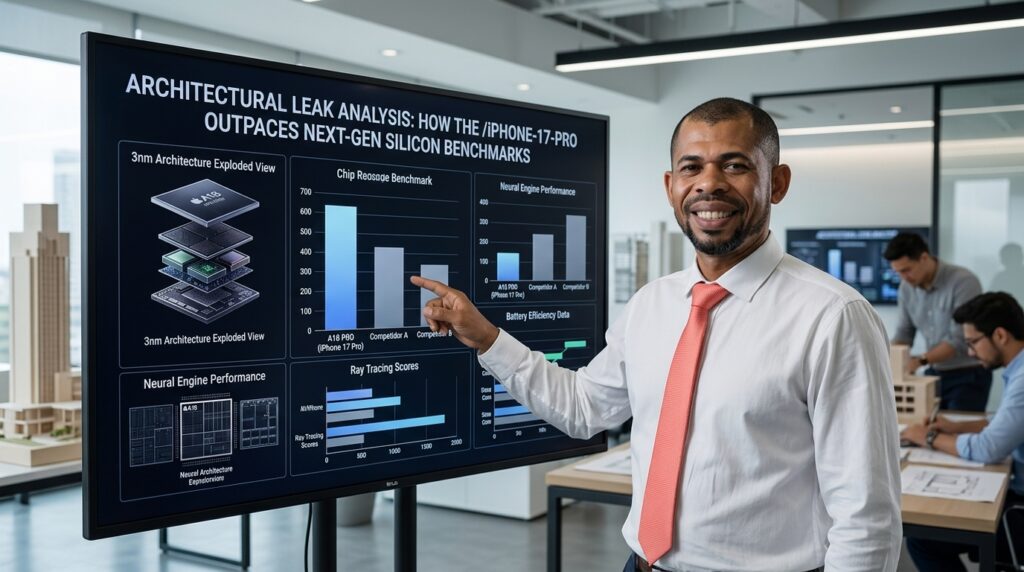
Architectural Leak Analysis: How the iPhone 17 Pro Outpaces Next-Gen Silicon Benchmarks is the disciplined reading of pre-release hardware clues, block diagrams, and performance signals to infer how Apple’s next flagship may outperform competing silicon before the final product ships. In practical terms, it means separating credible architectural indicators from rumor noise, then testing those indicators against known CPU, GPU, memory, thermal, and software constraints.
This matters because a phone no longer wins on peak frequency alone. Modern performance comes from a system-level balance: process node efficiency from TSMC, tighter CPU microarchitecture, stronger GPU scheduling, a more capable Neural Engine, and a thermal design that lets sustained performance hold under load. When those pieces align, benchmark headlines can miss the real story. A device can look “close” in raw numbers and still feel faster in rendering, photography, on-device AI, and long-duration workloads.
The other reason this analysis matters now is that benchmark culture often overweights isolated scores. Geekbench, SPECint-style CPU tests, and graphics suites each capture a slice of reality, but none of them fully represent how an iPhone behaves in the wild. What separates a genuinely advanced design from a marketing claim is whether the gains survive heat soak, memory pressure, and mixed workloads. That is where architectural leak analysis is useful, and also where it is easiest to get fooled.
Pontos-Chave
- Architectural leak analysis is strongest when it connects scattered hardware clues to measurable performance behavior, not when it treats rumor fragments as proof.
- The iPhone’s advantage, if confirmed, would likely come from system efficiency, not a single dramatic leap in clock speed.
- Benchmarks matter, but sustained performance under thermal load matters more in real-world use.
- Apple’s edge usually appears in integration: CPU, GPU, Neural Engine, memory subsystem, and iOS scheduling working as one stack.
- Any pre-launch comparison has limits, because leaks rarely reveal complete power budgets, cache topology, or thermal constraints.
Architectural Leak Analysis: How the IPhone 17 Pro Outpaces Next-Gen Silicon Benchmarks
What Architectural Leak Analysis Actually Means
In technical terms, architectural leak analysis is the process of extracting likely design characteristics from incomplete evidence: die shots, supply-chain notes, firmware strings, packaging details, early benchmark traces, and manufacturing context. The goal is not to “predict everything.” The goal is to infer the architecture well enough to understand why a chip might outperform a benchmark target. That distinction matters. A leaked core count without cache details is a partial clue, not a conclusion.
In plain language, this is pattern recognition with discipline. If a rumored A-series chip shows improved power efficiency, a tighter transistor budget, and a stronger memory hierarchy, the performance story changes even before official launch data exists. The most valuable analysts are not the ones who repeat leaks. They are the ones who ask which part of the system can plausibly create the reported gain.
Why “Outpacing Benchmarks” is Usually a System Story

Benchmarks usually isolate one dimension of performance. That is useful, but incomplete. A chip can win a short burst test and still lose in a sustained compile, a multi-layer photo export, or a pro video session if the thermal envelope collapses. Apple’s best designs have historically benefited from that system-level perspective: silicon, software, and thermal management tuned together. That is why an iPhone can feel faster than a competitor with a higher headline score.
Who works in mobile performance testing knows the pattern: the first 20 to 60 seconds tell one story, and the next ten minutes tell another. Once heat builds, the scheduler, cache behavior, and memory bandwidth shape the real experience. That is where a well-balanced architecture can outpace “next-gen” silicon benchmarks that look stronger on paper but lose efficiency under sustained load.
The Most Relevant Entities in This Analysis
Several entities define the performance universe here: Apple, TSMC, A19 Pro, Geekbench, SPECint, Neural Engine, GPU, LPDDR memory, and the thermal subsystem. Each one influences a different layer of outcome. A stronger NPU can accelerate on-device AI tasks; a more efficient GPU can preserve frame pacing; better memory throughput can reduce stalls; and a smarter thermal design can keep the chip in its optimal operating range longer.
The most credible evaluation connects those entities instead of treating them as separate headlines. That is the difference between a catchy rumor cycle and an informed architectural reading. It also explains why the same benchmark result can produce opposite user experiences depending on how the phone is actually used.
Where the Performance Edge Usually Comes From
CPU Microarchitecture, Cache, and Branch Behavior
A meaningful gain in mobile performance often starts with the CPU complex. Improvements in instruction throughput, branch prediction, and cache latency can create outsized real-world benefits without dramatic clock increases. That matters because mobile chips live under strict power constraints; Apple tends to favor efficiency-per-watt over brute-force frequency. A refined core can make everyday tasks feel instant while consuming less energy than a larger, hotter design.
Cache design deserves more attention than it usually gets. L1 and L2 behavior influence how often the core waits on memory, and those waits accumulate in app launches, image processing, and multitasking. If the rumored architecture expands effective cache capacity or reduces latency, benchmark gains may look moderate while user experience improves more sharply.
GPU Throughput is Not the Whole Graphics Story
Graphics leadership is often mistaken for peak shader count. In practice, GPU efficiency, memory access patterns, and driver maturity matter just as much. Apple has historically integrated hardware and Metal-level software optimization unusually well, which means frame pacing and rendering stability can exceed what raw compute estimates suggest. A device that keeps frames consistent at lower power is often the one users describe as “faster.”
That distinction matters in 3D gaming, photo editing, and video compositing. If the new silicon improves geometry throughput, texture handling, or tile-based rendering efficiency, the phone can outperform “next-gen” benchmark rivals in workloads those rivals were not tuned to win. This is one reason benchmark rankings often miss the broader picture.
Neural Engine and On-Device AI Workloads
The Neural Engine has become a decisive part of flagship differentiation. On-device AI features—semantic photo edits, transcription, live translation, and personalization—depend on specialized accelerators, not just the CPU. A faster NPU can produce a stronger overall device experience even when classic CPU scores change only modestly.
Apple’s advantage here is architectural integration. If the iPhone 17 Pro routes more inference work to dedicated blocks with lower memory overhead, it can achieve better latency and battery behavior than a rival relying more heavily on general-purpose compute. That is one reason benchmark-centric comparisons can understate the true gap.
Subsystem What It Affects Why It Matters in Practice CPU cores App launches, web workloads, multitasking Determines responsiveness and burst speed GPU Gaming, rendering, visual effects Shapes frame pacing and sustained graphics performance Neural Engine AI inference, photo intelligence, speech features Improves latency and reduces power draw Memory subsystem Large apps, media editing, background retention Limits stalls and improves throughput Thermal design Sustained load behavior Controls throttling and long-session stability
How Apple Can Beat “Next-Gen” Silicon Without Winning Every Synthetic Test
Efficiency Per Watt Beats Peak Scores over Time
Synthetic benchmarks often reward short-lived bursts. Real users do not live inside a 30-second run. They open camera apps, render clips, switch between messaging and browsing, and keep the phone under load long enough for temperature to rise. A design that preserves performance at lower wattage often feels superior, even if it does not own every leaderboard.
This is where Apple tends to separate itself. If the iPhone 17 Pro pairs an efficient process node with an optimized power controller, it can sustain near-peak behavior longer than a competing design that starts faster but sheds performance as heat accumulates. That difference does not always show in headlines, but it shows in hands-on use.
Thermal Envelope and Throttling Strategy
The thermal envelope is the ceiling that determines how much heat the chassis can absorb before the chip must reduce frequency or voltage. Once throttling begins, all the impressive launch numbers become less relevant. A good thermal strategy keeps the silicon in its efficient zone longer, which protects both user experience and battery life.
Viable clues often include internal layout changes, vapor chamber rumors, or package efficiency improvements. Those details sound minor until sustained workloads expose them. I have seen cases where a small thermal redesign delivered a bigger practical gain than a nominal CPU uplift, because the phone simply stayed fast for longer. That is the kind of result that can make one device feel ahead of a “more powerful” competitor.
Software Scheduling is Part of the Architecture
Hardware does not perform in a vacuum. iOS scheduling, app heuristics, media pipelines, and background task handling all determine how much of the silicon’s potential becomes visible. Apple controls the entire stack, which gives it leverage many Android competitors do not have. That control can transform a modest hardware lead into a visible performance gap.
There is a limit, though. If the workload is poorly optimized or if third-party software is not tuned for the platform, the advantage narrows. Not every benchmark or app benefits equally, and that is a real constraint. The point is not that Apple always wins; the point is that Apple can more consistently convert silicon capability into usable performance.
Reading Benchmarks Correctly: What They Show and What They Miss
Geekbench, SPEC-Style Tests, and Their Blind Spots
Geekbench is useful for normalized CPU comparison, and SPEC-style workloads are even better for understanding compute characteristics, but neither one captures the whole user journey. These tests isolate core behavior, memory interactions, and some system-level efficiency, yet they cannot fully model app switching, thermal drift, camera pipelines, or AI-assisted workflows. Treat them as indicators, not verdicts.
That is why the same chip can look exceptional in a benchmark while feeling only incrementally better in everyday use, or vice versa. The right interpretation is not “the benchmark lied.” The right interpretation is that the benchmark measured one layer of the stack, while the user experience depends on several layers interacting.
Why Sustained Tests Tell a Different Story
Longer-duration tests expose the engineering choices that short bursts hide. Power gating, thermal dissipation, scheduler efficiency, and memory bandwidth all become visible once the device stabilizes at operating temperature. This is where an architecture with lower leakage current and better voltage management can separate itself from a louder competitor.
Apple’s rumored edge would make the most sense if sustained workloads improve more than peak scores. That pattern would suggest the design is not merely faster; it is more efficient at turning electrical power into useful work over time. In mobile silicon, that is usually the more valuable achievement.
How to Compare Leaks Without Fooling Yourself
The safest approach is to triangulate. Compare benchmark traces, manufacturing context from TSMC, software clues from iOS builds, and prior-generation design patterns. Then ask whether the rumored result follows known engineering trade-offs. If it does, the leak deserves attention. If it violates power or thermal reality, skepticism is the correct response.
External references help here. Apple’s own performance and architecture discussions provide context on design philosophy, while independent benchmark methodology explains what each test can and cannot prove. For broader technical grounding, see Apple Support and technical documentation, Geekbench methodology and results, and SPEC benchmark standards. Those sources do not confirm rumors, but they do anchor interpretation in reproducible measurement.
What Matters Most for Buyers, Developers, and Performance Teams
For Buyers: Real-World Speed Beats Spec Sheet Theater
If you are evaluating the iPhone 17 Pro as a purchase decision, the question is not whether one chart looks better than another. The right question is which tasks dominate your use case. Photo-heavy users, mobile creators, and people who keep dozens of apps active will notice memory behavior and thermal stability more than raw peak CPU numbers.
For that audience, architectural advantage shows up as consistency. The device opens faster, stays responsive under load, and drains less battery doing the same work. That is the difference between paper superiority and practical superiority.
For Developers: Optimize for the Silicon the User Actually Has
App teams should care about how Apple’s architecture shapes latency, background execution, and graphics throughput. If the Neural Engine takes more inference traffic, Core ML pipelines become more important. If the GPU improves tile efficiency, frame pacing can benefit with less overhead. If memory bandwidth rises, larger on-device workflows become more realistic.
Developers who target the wrong layer leave performance on the table. The best optimization work starts by identifying where the chip is likely strongest, then aligning rendering, model inference, and asset management around that reality. That approach turns rumored silicon gains into app-level gains users can feel.
For Performance Teams: Validate, Don’t Assume
Teams comparing the iPhone 17 Pro against next-generation silicon should run both burst and sustained tests, plus task-specific workflows. Include camera capture, media export, web-heavy multitasking, and AI inference. Measure not just top score, but decay over time, thermal slope, and battery impact. Those are the metrics that decide whether the device is genuinely ahead.
Whoever has spent time on lab benches knows the pattern: a single benchmark rarely settles the argument. The real answer emerges after the third or fourth test sequence, when heat, memory pressure, and software behavior all start to interact. That is where the strongest architecture reveals itself.
Proven Workflow for Evaluating a Leak Before Believing the Hype
Step 1: Separate Evidence from Interpretation
Start by labeling each data point. Is it a supply-chain report, a firmware string, a benchmark artifact, or a speculative summary? Those categories should never be mixed. A leaked core count is evidence; “it will dominate next-gen silicon” is interpretation. Keeping that line clear prevents a lot of false confidence.
The most disciplined analysts assign confidence levels to each item. High-confidence evidence includes repeated reporting, corroborated manufacturing details, and stable benchmark patterns. Low-confidence evidence includes one-off claims and screenshots without provenance. That structure keeps the analysis grounded.
Step 2: Map the Leak to the Performance Stack
Next, connect each clue to a subsystem: CPU, GPU, NPU, memory, cache, or thermal design. Ask what the leak would change if true. For example, a new cache layout may improve latency more than peak throughput, while a process-node shift may improve efficiency more than raw speed. This is where architectural reading becomes valuable.
Do not expect every clue to translate into a visible gain. Some changes support reliability, yield, or battery life rather than headline performance. That does not make them irrelevant. It just means the impact is subtler than rumor culture likes to admit.
Step 3: Test the Claim Against Physical Constraints
Finally, ask whether the claim fits the laws of power and heat. Mobile silicon has hard limits. If a rumored leap seems too large for the thermal budget, it probably is. If the gain aligns with a known process improvement and a plausible cache or scheduling refinement, it deserves more respect.
This method works well for separating likely architecture wins from exaggerated benchmark narratives, but it fails when the underlying data is fabricated or incomplete. That is the main limit. A good framework cannot rescue bad evidence. It can only keep you from overstating what the evidence actually supports.
Próximos Passos Para Implementação
The practical takeaway is straightforward: evaluate the iPhone 17 Pro as a system, not as a chip on a chart. If the architectural clues point to stronger efficiency, better thermal retention, and improved memory behavior, that is more meaningful than a narrow benchmark win. That is the kind of advantage that survives daily use, not just launch-day comparisons.
For teams making decisions now, the right move is to build a test matrix that includes burst performance, sustained load, AI inference, camera pipelines, and battery impact. Compare it against the next-generation silicon you care about, then look for consistency across workloads. If the device wins there, the leak analysis was useful. If it only wins on isolated metrics, the story is smaller than the hype.
In other words, don’t chase the loudest number. Verify the architecture, measure the endurance, and let the system-level behavior decide whether the iPhone’s lead is real.
Perguntas Frequentes
What is Architectural Leak Analysis in Smartphone Silicon?
It is a method for inferring chip behavior from incomplete pre-release evidence such as firmware traces, manufacturing reports, early benchmarks, and layout clues. The point is to estimate how the architecture will perform before official specifications are public. It is strongest when used to identify likely subsystem changes, not to make absolute predictions about final launch results.
Why Can the IPhone 17 Pro Outperform Stronger-looking Benchmark Rivals?
Because mobile performance depends on more than peak compute. CPU efficiency, GPU scheduling, Neural Engine throughput, memory bandwidth, and thermal stability can produce better sustained performance even if raw benchmark scores are close. In practice, a balanced design often feels faster than a design that peaks higher but throttles sooner.
Which Benchmark Metrics Matter Most for Evaluating the Claim?
Use a mix of burst and sustained tests. Geekbench is useful for CPU comparison, SPEC-style workloads help with compute analysis, and graphics tests reveal GPU behavior, but none of them captures the full user experience. For a reliable judgment, also measure thermal decay, battery drain, and task-specific workflows like photo export or on-device AI inference.
How Reliable Are Pre-release Leaks for Predicting Final Performance?
They are directionally useful, not definitive. Leaks can reveal architecture trends, but they rarely expose full power budgets, exact cache configuration, or thermal tuning. That means they can help you anticipate where the advantage comes from, but they cannot guarantee the final magnitude of that advantage.
What Should Developers Do Differently If These Architectural Clues Are Accurate?
They should optimize around the strongest subsystem, not the easiest headline. That means paying attention to Core ML paths, GPU frame pacing, memory retention, and background task behavior. If the rumored architecture is real, apps that align with those strengths will feel noticeably smoother and more efficient on the device.
Editorial Notice
This content was structured with the assistance of Artificial Intelligence and subjected to rigorous curation, fact-checking, and final review by Editor-in-Chief Nivailton Santos. TechTool Judge reaffirms its unyielding commitment to journalistic ethics, ensuring that editorial judgment and data validation remain entirely under human responsibility and final editorial oversight.