
It's Not Just Nvidia: The AI Boom Has Ignited Asia's Chip Companies


Asia’s chip industry is no longer riding Nvidia’s coattails; it is becoming one of the clearest second-order winners of the AI buildout. The surge in demand for advanced packaging, memory, foundry capacity, and high-bandwidth components has pulled companies in Taiwan, South Korea, Japan, and beyond into the center of the AI supply chain. That is the real story behind It’s Not Just Nvidia: The AI Boom Has Ignited Asia’s Chip Companies: the bottlenecks are now spreading revenue well beyond the most famous GPU maker.
What matters here is not hype, but manufacturing reality. AI systems need more than accelerators; they need HBM memory, CoWoS-style advanced packaging, leading-edge wafers, and enough power and cooling support to keep dense clusters running. This article breaks down who is benefiting, why the gains are uneven, and where the market may still be overestimating the durability of the boom.
O Que Você Precisa Saber
- AI demand has shifted profit pools toward suppliers of memory, packaging, and contract manufacturing, not just GPU designers.
- Companies with direct exposure to TSMC, SK Hynix, Samsung Electronics, and ASE are seeing the strongest AI-linked pull.
- The bottleneck is now capacity, not just design, which gives Asian manufacturers pricing power in specific segments.
- Not every chip company is an AI winner; legacy consumer electronics exposure can dilute the upside fast.
- The trade is powerful, but it is still cyclical, and supply additions can cool margins faster than investors expect.
It’s Not Just Nvidia: Why the AI Boom Has Ignited Asia’s Chip Companies
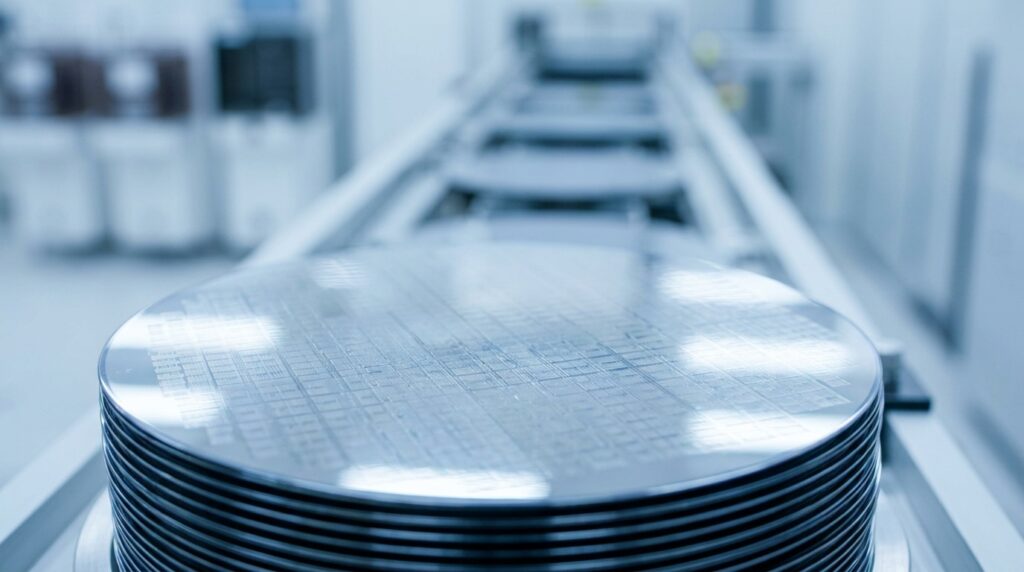
At a technical level, the AI boom has increased demand for the full stack of semiconductor production: wafers, interconnects, memory, packaging, and testing. A GPU may get the headlines, but the system-level economics often favor the companies that make it possible to ship thousands of those chips in usable form. In practice, the money tends to move toward whoever controls the scarcest step in the chain.
That is why Asia matters so much. Taiwan Semiconductor Manufacturing Company, or TSMC, sits at the center of advanced foundry production. SK Hynix and Samsung Electronics dominate the high-bandwidth memory race. ASE Technology and other outsourced semiconductor assembly and test players handle advanced packaging and final integration. When AI datacenter orders accelerate, these firms do not just get busier; they often gain leverage on price, allocation, and long-term capacity planning.
In the AI hardware stack, the real bottleneck is rarely the most famous chip; it is the component that the entire system cannot function without.
If you want a single definition, here it is: the AI semiconductor boom is a supply-chain profit cycle triggered by demand for inference and training hardware, with value concentrating in the companies that control constrained manufacturing nodes. That is a narrower and more precise story than “AI is good for chips.” It explains why some firms rally hard while others barely move.
The Entities Investors Keep Watching
- TSMC for advanced foundry capacity and process leadership.
- SK Hynix for high-bandwidth memory, which is essential in AI servers.
- Samsung Electronics for memory scale, foundry ambitions, and a broad semiconductor base.
- ASE Technology for advanced packaging and OSAT exposure.
- MediaTek for edge AI and mobile silicon, though its sensitivity differs from datacenter names.
- Tokyo Electron for semiconductor equipment, which benefits when fabs expand.
Where the Real Revenue is Flowing: Memory, Packaging, and Foundries
The strongest AI tailwinds are showing up in three places. First, high-bandwidth memory: AI accelerators need enormous data throughput, and HBM stacks solve that problem by placing memory dies close to the compute die. Second, advanced packaging: technologies like CoWoS and other 2.5D/3D integration methods let chipmakers assemble more complex systems without waiting for a single monolithic die to do everything. Third, foundries: every additional accelerator eventually needs wafers, and the most advanced nodes remain scarce.
That scarcity is what turns volume into margin. When capacity is tight, the vendors with qualified output can defend pricing better than in a normal handset or PC cycle. This is also why the AI rally has not been evenly distributed across Asia. If your product sits close to HBM, interposer packaging, or leading-edge logic, you are in the strongest lane. If your exposure is mostly older consumer electronics, the uplift is weaker and often delayed.
For a broader industry view, the Semiconductor Industry Association tracks how capital spending and demand cycles move through the sector, while the International Energy Agency has documented how AI data centers are reshaping electricity demand and infrastructure planning. That matters because chip demand is no longer just a product story; it is a capacity and utility story too.
Why HBM Became the Center of Gravity
HBM, or high-bandwidth memory, is stacked DRAM designed to move data fast enough for AI workloads. Traditional memory was fine for older workloads, but large models need much higher bandwidth and tighter integration. That is why SK Hynix has become such a closely watched name. Viable supply can move from “good business” to “strategic chokepoint” very quickly when hyperscale customers scale orders aggressively.
Advanced Packaging is No Longer a Back Office Function
Packaging used to be seen as a lower-value step. That view is obsolete. Once AI chips became bigger, hotter, and harder to interconnect, packaging turned into a performance constraint. A strong packaging house can now influence what gets shipped, how fast, and at what gross margin. Who works in this space knows that capacity scheduling can be as important as the silicon design itself.
What separates an AI beneficiary from a cyclical chip rebound is not just demand growth — it is whether the company controls a bottleneck that customers cannot easily replace.
Why Taiwan and South Korea Are Capturing So Much of the Upside
Taiwan and South Korea sit in the sweet spot because their companies are positioned across the highest-value parts of the chain. Taiwan dominates leading-edge foundry production and advanced packaging infrastructure. South Korea owns much of the memory stack that AI systems need in massive quantity. Together, they are getting hit with orders from both sides of the AI market: the compute side and the memory side.
TSMC’s Role is Bigger Than a Single Chip
TSMC does not just fabricate chips; it enables the ecosystem around the most advanced AI accelerators. If one leading customer needs more wafers, more reticle capacity, or tighter process integration, the effects ripple into suppliers, testers, and equipment vendors. That is why a strong AI cycle can raise expectations for the entire Taiwan chip complex, not just one headline stock.
South Korea’s Memory Advantage is Structural
Samsung Electronics and SK Hynix benefit because AI servers consume memory in large, expensive bundles. This is not a one-off device upgrade; it is repeated infrastructure spending. The constraint is partly technical and partly industrial. Building enough qualified HBM capacity takes time, capital, and yield discipline, and those are not things the market can conjure overnight.
Here is the catch: this thesis works well during a period of supply scarcity, but it can weaken if capacity additions outpace demand. A wave of new fabs or memory output can compress margins faster than investors anticipate. That does not invalidate the boom; it just means the best trades are often about timing and positioning, not blind enthusiasm.
Segment Why AI Helps Typical Risk Foundries More wafers for leading-edge AI chips Heavy capex and cyclical pricing HBM Memory Higher content per AI server Yield and capacity ramp risk Advanced Packaging Essential for integrating large accelerators Shortage can reverse into oversupply later Equipment Fab expansion drives tool orders Orders can slow if capital spending cools
How to Read the Rally Without Getting Trapped by the Hype
Investors often make the same mistake with chip booms: they assume every company in the supply chain wins equally. That is rarely true. The winners are usually the firms closest to a bottleneck, the ones with the highest technical barriers, or the ones where customers cannot swap suppliers without redesigning the product. Everything else is just beta to the cycle.
A real-world example: a server OEM may announce a large AI buildout, and the market immediately bids up half a dozen semiconductor names. But only one or two actually capture the incremental margin because they supply the scarce part. The rest get volume, not pricing power. That difference matters a lot when the market starts pricing 12 to 24 months of future growth into current valuations.
- Check whether the company sells into datacenter AI or just broad electronics.
- Look for evidence of capacity constraints, not just revenue growth.
- Separate temporary order spikes from multi-quarter supply commitments.
- Watch capex and yield trends, because they tell you whether margins can hold.
For investors and analysts, filings matter more than headlines. Public disclosures, earnings-call commentary, and regulator filings from market authorities such as the U.S. Securities and Exchange Commission help separate narrative from actual shipment and capacity trends. The names change by region, but the discipline is the same: follow what the company can produce, not only what the market hopes it can sell.
What Happens Next for Asia’s Chip Supply Chain
The next phase is likely to be less about pure demand surprise and more about execution. If AI spending stays strong, Asian chip companies with the right exposure can keep compounding on better utilization, improved mix, and pricing discipline. If spending slows, the same names can cool fast. That is the nature of the sector: high-quality exposure is powerful, but it still sits inside a cyclical industry.
The strategic move is to track which companies own indispensable steps in the chain and which ones are just riding the headline. If you want the cleanest read on the boom, watch HBM supply, advanced packaging capacity, and leading-edge wafer allocation. That is where the market stops being a story and becomes a numbers game.
Next step: review company earnings, capex plans, and customer concentration before treating any Asia chip name as an AI winner. The best signal is not the sharpest stock move; it is whether the firm controls a constraint that AI builders cannot easily bypass.
Frequently Asked Questions
Why Are Asian Chip Companies Benefiting from AI More Than Many U.S. Suppliers?
Because much of the hardest manufacturing work in AI hardware sits in Asia. Taiwan leads advanced foundry and packaging capacity, South Korea dominates key memory supply, and Japan remains important in equipment and materials. Nvidia may design the most visible accelerator, but the surrounding manufacturing stack determines whether that chip can be produced, integrated, and shipped at scale. The profit pool naturally spreads to the companies that control those bottlenecks.
What is High-bandwidth Memory, and Why Does It Matter So Much?
High-bandwidth memory, or HBM, is stacked DRAM built to move data much faster than conventional memory. AI models need fast access to large datasets, so HBM improves throughput and system performance. That makes it a critical component in AI servers and accelerators. It also creates a supply constraint, which is why makers such as SK Hynix and Samsung Electronics have become central to the AI supply chain.
Is TSMC the Biggest Beneficiary of the AI Boom?
TSMC is one of the biggest beneficiaries, but not the only one. It has outsized importance because it manufactures advanced chips at scale and supports the packaging ecosystem around them. Still, memory suppliers and advanced packaging firms can see even sharper near-term margin gains when capacity is tight. The answer depends on whether you define “biggest” by revenue, profit growth, or strategic leverage.
Could This AI Chip Rally Fade Quickly?
Yes. The rally can cool if supply catches up faster than demand, if hyperscalers slow capital spending, or if pricing power weakens as new capacity comes online. Chip cycles are famous for turning before the market expects. The best way to think about this theme is as a strong but still cyclical uptrend, not a permanent straight line.
What Should Investors Watch to Judge Whether the Boom is Still Healthy?
Track three things: memory pricing, advanced packaging capacity, and foundry utilization at leading-edge nodes. Those indicators show whether demand is translating into real bottlenecks and sustained profitability. Earnings guidance also matters, especially commentary on capex, lead times, and customer mix. If those measures stay tight, the AI-driven upswing in Asia’s chip sector is probably still intact.
Editorial Notice
This content was structured with the assistance of Artificial Intelligence and subjected to rigorous curation, fact-checking, and final review by Editor-in-Chief Nivailton Santos. TechTool Judge reaffirms its unyielding commitment to journalistic ethics, ensuring that editorial judgment and data validation remain entirely under human responsibility and final editorial oversight.