
AI Chips: Complete and Practical Guide

AI Chips: Why Taiwan and South Korea Are Racing to Produce More GPUs is really a story about control.
The raw model may be written in Silicon Valley, but the physical power behind it is still forged in a handful of Asian factories.
And that’s why the race feels so urgent right now: if you can make the chips that train AI faster, cooler, and at scale, you don’t just sell hardware — you shape the pace of the entire industry.
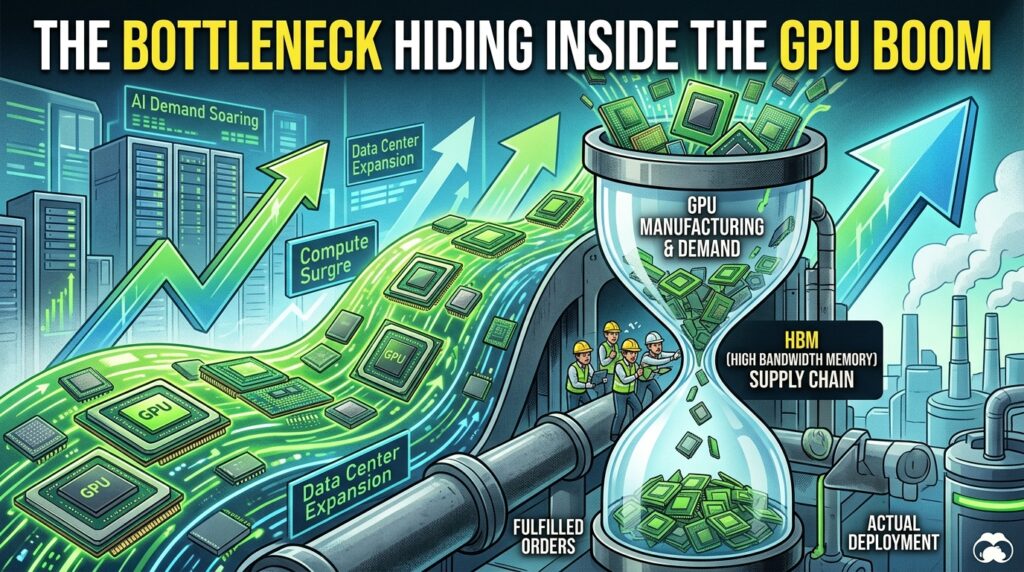
The Bottleneck Hiding Inside the GPU Boom
A GPU is a graphics processing unit, but in AI it acts like a parallel math engine built to chew through huge matrix operations. That’s the technical definition. In plain English: it’s the engine that lets modern AI learn without taking forever.
That’s why AI Chips: Why Taiwan and South Korea Are Racing to Produce More GPUs matters so much. Demand is no longer just about gaming or data centers. It’s about training foundation models, running inference, and keeping cloud providers from waiting months for the next shipment.
Here’s the part people miss: the shortage is not only about chip design. It’s about advanced packaging, memory, yields, and supply-chain timing. One weak link and the whole stack slows down.
The world does not have a GPU problem alone. It has a capacity problem. And once you see that, Taiwan and South Korea stop looking like rivals and start looking like the two countries holding the gate.
Why Taiwan Still Owns the Sharp End of the Chain
Taiwan’s advantage is not magic. It is manufacturing discipline at a level most countries can’t copy fast enough. In AI Chips: Why Taiwan and South Korea Are Racing to Produce More GPUs, Taiwan matters because it sits near the top of the food chain: leading-edge foundry capacity, tight supplier networks, and packaging know-how that can turn a hot design into a shippable product.
TSMC is the obvious name, but the bigger story is the ecosystem around it. Equipment vendors, substrate makers, precision testing, logistics — all of it is stacked close together. That proximity shaves time. Time is everything when AI buyers are ordering in waves.
Viable chips do not emerge from one clean room and one genius engineer. They emerge from thousands of invisible steps, most of them boring, some of them brutally hard. Taiwan has spent years making those steps look routine.
The real moat is not just making chips. It’s making them again, faster, with fewer surprises.
That’s also why expansion is so difficult. You can buy a machine. You can even hire talent. But you cannot instantly buy industrial memory, process discipline, and the scar tissue that comes from fixing a thousand tiny failures. For a broader view of how chip policy has become a geopolitical issue, the U.S. Bureau of Industry and Security explains the export-control environment that is shaping the market.
And this is where the next piece comes in: Taiwan may dominate fabrication, but South Korea has a very different weapon. It’s not the same one — and that difference is the whole point.
Why South Korea is Betting on Memory, Packaging, and Speed
South Korea is not trying to win the same race with the same tool. In AI Chips: Why Taiwan and South Korea Are Racing to Produce More GPUs, South Korea’s edge comes from memory, especially HBM, or high bandwidth memory — the fast memory stacked close to the GPU so data doesn’t crawl across the system like traffic on a bad Monday.
That matters because a GPU without enough memory bandwidth can look powerful on paper and sluggish in real workloads. If Taiwan makes the engine, South Korea helps decide whether the car actually moves.
SK hynix and Samsung have poured energy into memory that can keep up with AI acceleration, and that has changed the bargaining power in the supply chain. Whoever controls the memory stack can influence performance, availability, and price.
Viable AI chips are no longer a one-country story. They are a coordination story. Taiwan, South Korea, the U.S., and Japan all touch different layers of the same machine.
- Taiwan: leading-edge manufacturing and advanced packaging
- South Korea: HBM and memory capacity
- U.S.: chip design, cloud demand, and export policy
- Japan: materials, equipment, and precision inputs
According to the Stanford AI Index Report, AI adoption and model scale have continued to intensify the need for specialized hardware. That tracks with what chipmakers are seeing on the ground: demand is not cooling off, it is becoming more specialized.
Here’s the surprising part: the fastest way to build more GPUs is often to build everything around the GPU first. That is why South Korea’s move looks so smart. It doesn’t try to replace Taiwan; it tries to remove friction from the whole stack.
The Hidden Constraint Nobody Likes to Talk About

When people imagine chip production, they picture robots and clean rooms. They don’t picture electricity contracts, water systems, export approvals, or the ugly math of yield rates. But those are the numbers that decide whether expansion works.
In AI Chips: Why Taiwan and South Korea Are Racing to Produce More GPUs, the slowest parts are often not the most glamorous. Advanced fabs drink enormous amounts of water, need stable power, and depend on a labor force that can keep tolerances microscopic. One supplier delay can echo for weeks.
Mini-story: a fab line gets expanded on schedule, the design is ready, and orders are waiting. Then a packaging step bottlenecks because one input is late by days, not months. The line does not “fail” in the dramatic sense. It just leaks time. In this business, time is revenue.
That’s the real conflict: demand can grow in a straight line, but manufacturing capacity grows in painful little steps. And that’s why every country in the race is trying to control the least sexy part of the chain.
There’s also a trust issue. Some of these strategies work beautifully when markets are stable, but they get shaky when geopolitics, energy prices, or export rules shift. Not every plan survives contact with reality — and chipmakers know it.
What This Race Changes for AI Prices, Startups, and You
AI Chips: Why Taiwan and South Korea Are Racing to Produce More GPUs is not just industrial trivia. It affects what cloud services cost, how fast startups can train models, and whether the next wave of AI tools arrives to everyone — or only to companies with deep pockets.
More GPU supply can ease pressure, but it does not erase scarcity overnight. High-end chips still need scarce inputs, and buyers with giant contracts usually get first call. That means smaller companies often feel the pinch longest.
One comparison makes it clearer: before, chip scarcity looked like a temporary shipping delay. Now it looks more like a permanent sorting mechanism. The companies with access keep moving; everyone else waits in line.
When GPUs are scarce, innovation becomes a capital problem as much as a technical one. That is the part founders feel in their bones, because the difference between “we have a prototype” and “we can scale” often comes down to hardware access.
And this is where the human side shows up. If you work near AI products, you’ve probably seen teams redesign roadmaps around chip availability. They don’t say it loudly, but it happens all the time. The roadmap bends around the fabs.
The bigger question is not whether Taiwan and South Korea can make more GPUs. They can. The question is whether the rest of the world can adapt fast enough to a future where chip supply is a strategic lever, not a commodity shelf.
When hardware becomes destiny, the countries that can move wafers and memory at scale quietly set the tempo for everyone else.
FAQ
Why Are Taiwan and South Korea So Important in GPU Production?
Taiwan leads in advanced semiconductor fabrication and packaging, while South Korea dominates key memory technologies like HBM. Together, they supply different parts of the same AI hardware stack, which makes them central to GPU production. In AI Chips: Why Taiwan and South Korea Are Racing to Produce More GPUs, that division of labor is the whole story.
What Does HBM Do in an AI Chip?
HBM, or high bandwidth memory, gives the GPU rapid access to large amounts of data without slowing down. Think of it as the chip’s short-term memory on steroids. Without it, even a powerful GPU can lose performance in AI workloads.
Why Can’t Other Countries Just Ramp Up GPU Production Quickly?
Because chip manufacturing depends on a dense ecosystem: equipment, materials, advanced packaging, skilled labor, and years of process tuning. A new fab is not enough on its own. The hard part is getting all the pieces to work together at yield.
Do Export Controls Affect This Race?
Yes. Export rules can limit where advanced chips, tools, or manufacturing inputs go, and they can reshape investment plans overnight. That is why companies watch policy as closely as they watch demand forecasts. The technical race and the political race are now tied together.
Will More GPU Supply Make AI Cheaper for Everyone?
It can help, but not evenly or immediately. Large buyers often secure supply first, and the most advanced chips remain expensive to produce. Over time, better supply should reduce pressure, but scarcity will still favor the biggest players for a while.
Editorial Notice
This content was structured with the assistance of Artificial Intelligence and subjected to rigorous curation, fact-checking, and final review by Editor-in-Chief Nivailton Santos. TechTool Judge reaffirms its unyielding commitment to journalistic ethics, ensuring that editorial judgment and data validation remain entirely under human responsibility and final editorial oversight.