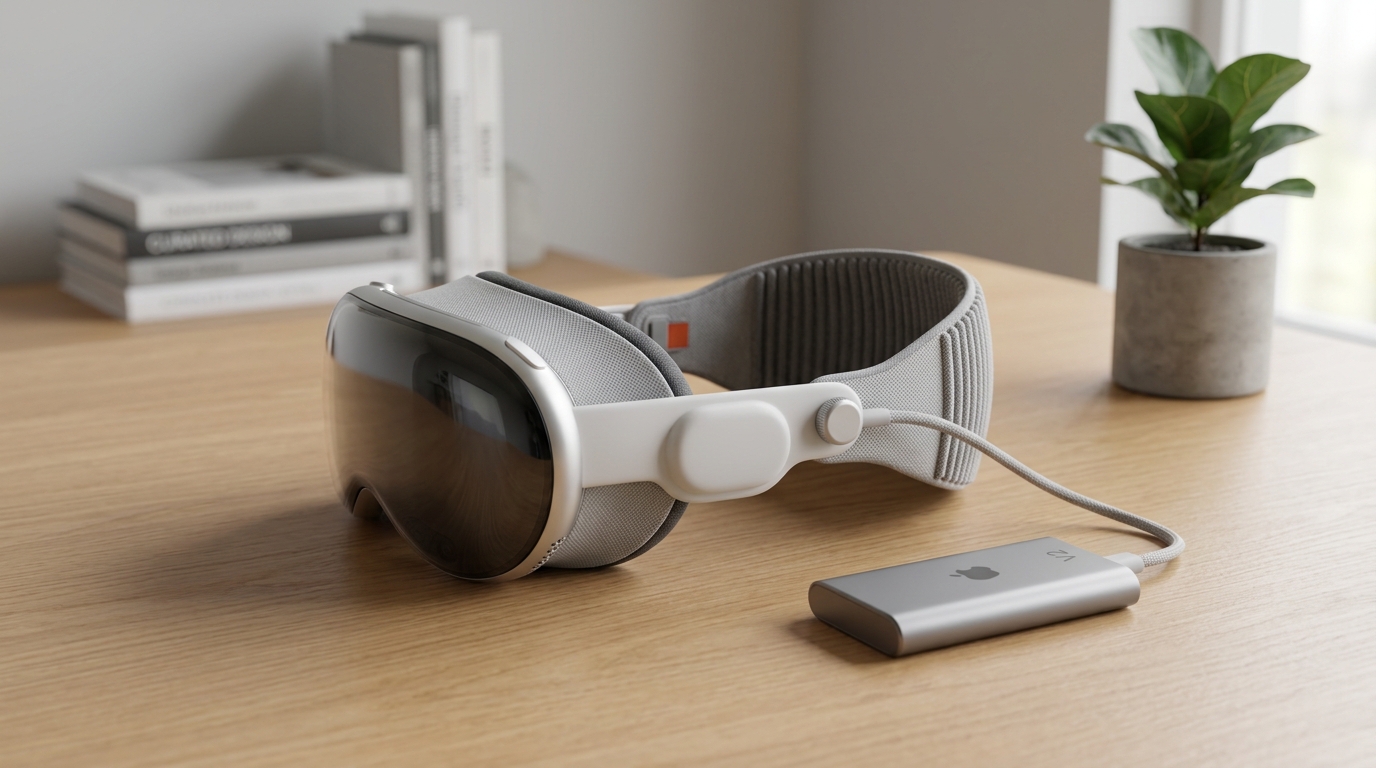
Apple Vision Pro 2 rumors refer to the credible but unconfirmed reporting, supply-chain signals, and product-line analysis surrounding Apple’s next mixed-reality headset. In practical terms, this is the process of separating plausible product-direction clues from wishful thinking, because most of what circulates online mixes real sourcing with speculation. The useful question is not “will Apple improve the headset?” Apple will. The real question is which parts are likely to change, and which rumored changes fit Apple’s hardware cadence, manufacturing constraints, and software roadmap.
This matters now because Vision Pro is not a normal consumer gadget launch. It sits at the intersection of display technology, on-device AI, thermal limits, optics, and a software ecosystem that still needs time to mature. A second-generation model would not just be a speed bump; it would signal whether Apple is pushing the product toward lighter mass adoption or refining a premium developer platform. That distinction changes how buyers, app teams, and investors should interpret every leak.
There is also a timing issue. Apple tends to iterate slowly on category-defining hardware, but the market often expects yearly upgrade logic. That mismatch creates noise. When reading Apple Vision Pro 2 rumors, the right filter is engineering reality: battery density, chip thermals, micro-OLED supply, headset weight, and how quickly Apple can improve comfort without compromising display quality.
Pontos-Chave
- The most credible rumors point to an incremental second-generation Vision Pro, not a complete redesign, because Apple is still working through weight, heat, and cost constraints.
- Processor upgrades matter, but the larger story is whether Apple can reduce latency, improve battery behavior, and make long sessions less fatiguing.
- Display and optics improvements are likely to be constrained by supply-chain realities, especially around micro-OLED panels and lens assemblies.
- Launch timing remains the biggest uncertainty: Apple may prioritize a cheaper companion model or a late-cycle refresh before a true “Vision Pro 2” arrives.
- The smartest way to read rumors is by checking whether they align with Apple’s manufacturing, software, and ecosystem strategy rather than with fan expectations.
Apple Vision Pro 2 Rumors: What the Most Credible Reports Actually Suggest
Separate Confirmed Signals from Internet Noise
The formal definition here is simple: a product rumor is a non-public claim about unreleased hardware, usually sourced from supply-chain reporting, analyst notes, regulatory filings, or trade publication coverage. In plain English, the best rumors are the ones that can be cross-checked against manufacturing behavior. That is why the most useful reporting on Vision Pro comes from a narrow set of outlets and analysts, not social posts or recycled summaries.
One reason this topic attracts weak reporting is that Apple’s headset strategy is still evolving. A company can change display suppliers, pivot toward a lighter form factor, or delay a refresh without announcing any of it publicly. That means even accurate reporting can go stale quickly. The discipline is to ask whether a claim fits known hardware roadblocks. If it does, it deserves attention. If it promises dramatic changes with no cost tradeoff, it probably does not.
For baseline product context, Apple’s own Vision Pro overview is still the best reference point for what the first-generation device actually is, not what rumor culture imagines it to be: Apple Vision Pro product information. For regulatory awareness around hardware testing and filings, the FCC remains a useful institutional source when devices move through compliance stages: FCC official site.
The Rumor Pattern is More Conservative Than Social Media Suggests
Most credible coverage has consistently leaned toward refinement, not reinvention. That means better silicon, possible comfort improvements, and tighter integration with Apple’s software stack. It does not mean Apple has solved the core ergonomic problem overnight. Mixed-reality headsets still fight gravity, heat, and battery packaging. Those are physical limits, not branding issues.
In practice, the strongest rumors usually cluster around predictable engineering targets: smaller packaging, better performance per watt, and a lighter headset shell. Who works in hardware knows this pattern well. First-generation products prove the category; second-generation products try to repair the pain points that reviews and field use expose.
Why Supply-chain Reporting Matters More Than Leaks
When reporting mentions panel suppliers, camera modules, or enclosure changes, that information is more meaningful than vague “game-changing” claims. Supply-chain moves leave footprints. A component ramp, an order change, or a tooling adjustment can reveal Apple’s intent months before launch. That is the kind of evidence that deserves weight.
There is a limit, though. Supply-chain sources can confirm a component class, but they cannot always explain Apple’s final product strategy. A supplier may know that a lighter lens assembly is in testing, yet not know whether Apple keeps it for the premium headset or saves it for a lower-cost model. That uncertainty matters, and any serious analysis should admit it.
Design, Displays, and Comfort: The Most Likely Areas for Change
Weight Reduction is the Real Upgrade Customers Will Feel First
Formally, headset comfort is a systems problem: it depends on mass distribution, facial interface design, thermal output, and how long the device can operate before the user gets pressure fatigue. In everyday language, the headset can have a fantastic screen and still feel like too much after an hour. That is why most meaningful improvements for Vision Pro 2 are likely to be physical, not just visual.
Apple has already shown that it can build premium optical hardware. The harder task is reducing the burden of wearing it. A modest drop in weight can matter more than a raw spec bump because it changes how people actually use the device: longer sessions, fewer adjustments, less neck strain, and more willingness to bring it into work routines.
That said, no rumor should be treated as a guarantee of dramatic slimming. Micro-OLED displays, advanced lens stacks, and high-end aluminum construction all carry costs. If Apple trims weight too aggressively, it may have to sacrifice battery life, thermals, or panel brightness. The tradeoffs are real.
Micro-OLED Supply is Likely to Remain a Bottleneck
Display quality is one of the strongest differentiators in high-end mixed reality, and Apple’s choice of micro-OLED panels is part of why Vision Pro stands apart. The challenge is that premium panels are not interchangeable commodity parts. Supply, yield, and price all influence whether Apple can scale a second-generation headset or hold its position at the top end of the market.
Reports from outlets like Bloomberg have repeatedly framed Apple’s headset roadmap as a balancing act between advanced components and cost pressure. That is credible because this is how Apple has behaved in other product lines: it launches at the technical frontier, then spends several cycles making the design easier to produce at volume. A second Vision Pro would likely follow that same logic.
Area Most Likely Direction Why It Matters Headset weight Moderate reduction Improves wear time and comfort more than a small spec bump Display stack Higher efficiency, same premium class Preserves image quality while reducing power draw Facial interface Refined fit options Can reduce pressure points without changing the core chassis Thermals Better heat management Supports longer sessions and more stable performance
Chipset, Battery, and VisionOS: Where Performance Will Actually Move
New Silicon is Necessary, but Not Sufficient
Apple silicon in this category does three jobs at once: renders immersive scenes, processes sensors, and keeps latency low enough to avoid discomfort. That makes chipset upgrades important, but not miraculous. A faster chip can improve frame stability and background multitasking, yet it will not solve every annoyance if the headset still runs hot or the battery remains external and limited.
The most rational expectation is a newer Apple silicon generation with better performance per watt. That would support smoother pass-through, faster app switching, and more headroom for complex spatial experiences. It could also help Apple run more advanced machine learning features on-device, which matters as the company pushes deeper into AI-assisted interactions.
Whoever follows hardware launches closely knows this pattern: the chip upgrade headlines get attention, but the user experience changes are often hidden in thermal consistency and response time. Those are the details professionals care about.
Battery Life is Tied to Design Decisions, Not Just Capacity
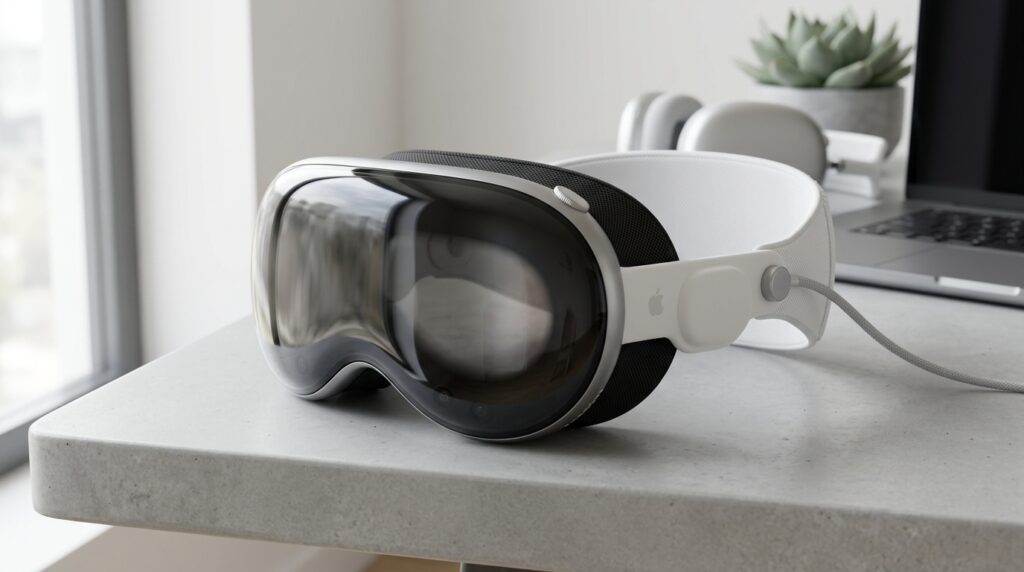
The battery story is easy to oversimplify. More capacity sounds like the answer, but a heavier battery can worsen the same ergonomic complaints that made the first model difficult to wear for long stretches. That is why Apple may pursue a combination of efficiency gains, power-management tuning, and incremental battery improvements rather than a dramatic battery redesign.
This is where rumor analysis needs discipline. If a claim says Apple will deliver much longer runtimes without changing the external battery concept, that claim should be treated carefully. There are physics constraints here. Apple can optimize, but it cannot rewrite the energy density curve. Any meaningful improvement has to come from the whole system, not from one component.
VisionOS Maturity May Matter More Than Raw Hardware Gains
visionOS is the software layer that determines whether Vision Pro feels like a platform or just a display. New hardware will help, but app density, interface conventions, and Apple’s own first-party experiences will shape adoption more. If the software feels sparse, even excellent hardware can feel underused.
Apple’s likely strategy is to pair hardware refreshes with software improvements that reduce friction in everyday use. That could include better hand tracking, faster window placement, stronger continuity with Mac workflows, and more reliable enterprise tools. For a professional audience, that is the more important signal: hardware alone rarely creates a category. Software turns it into one.
Launch Timing, Product Strategy, and What Apple is Probably Optimizing For
The Next Release May Be About Segmenting the Lineup
One of the most plausible strategies is that Apple does not use the next move to define a pure “Vision Pro 2” story at all. Instead, it may work on a broader lineup: a premium headset at the high end and a more affordable model positioned for larger adoption. That would fit Apple’s historical playbook across Mac, iPad, and iPhone.
If that is the direction, then some rumored features may belong to different products. A lighter headset could arrive in a cheaper model, while a more advanced processor or better display stack stays reserved for the premium tier. This is where speculation often goes wrong: it assumes a single roadmap when Apple may be building a product family.
Timeline Claims Are the Least Reliable Part of the Rumor Cycle
Launch dates are the hardest thing to trust because they change with panel supply, manufacturing yield, and internal prioritization. A headset refresh can slip for reasons that never show up in public reporting. That is why confident release-date predictions should be read as probabilities, not plans.
There is no serious way to treat a single date as settled until component sourcing, regulatory steps, and Apple’s own messaging line up. Even then, Apple can adjust. The useful question is not when the headset ships on paper, but whether the product is close enough to Apple’s desired comfort and cost profile to justify a launch.
How to Read the Rumor Field Without Getting Misled
Start with source quality. A claim that appears in a respected publication with a track record in Apple supply-chain reporting deserves more weight than a reposted summary account. Then ask whether the claim fits Apple’s incentives. Apple wants premium margins, strong user experience, and a path to broader adoption. Rumors that ignore one of those goals are usually weak.
Also compare the claim against known hardware constraints. A thinner shell, a brighter display, and a longer battery all sound good, but they compete for the same physical budget. If the rumor does not acknowledge tradeoffs, it is probably written for clicks rather than accuracy.
How to Use These Rumors for Buying, Planning, or Product Strategy
Buyers Should Optimize for Use Case, Not Speculation
If you are deciding whether to wait, the correct frame is utility. The first-generation Vision Pro is already a premium developer and early-adopter device, while the next model is still uncertain in timing and scope. If your work depends on spatial computing now, delaying for rumors can become a form of avoidance. If comfort and long-session use are your top priorities, waiting may be rational.
The key distinction is between curiosity and dependency. Curiosity can wait for another product cycle. Dependency cannot. That is the simplest way to separate consumer interest from actual operational need.
Teams Should Treat the Rumors as a Roadmap Signal, Not a Promise
For app teams, enterprise buyers, and UX designers, the important takeaway is how Apple appears to be prioritizing the platform. A refined headset suggests Apple wants to improve daily usability. A broader model lineup suggests it wants to scale beyond enthusiasts. Either way, visionOS remains the place to invest attention because software maturity will likely determine adoption more than any single hardware revision.
That also means building flexible interfaces and testing on multiple device assumptions. If Apple releases a lighter headset, a cheaper headset, or a refreshed premium model, the core interaction model could stay similar while the ergonomics shift. Good spatial software should survive that change.
For strategic planning, the most reliable signal is not the loudest rumor. It is the cluster of rumors that all point to the same constraint: Apple is trying to make mixed reality lighter, more efficient, and more scalable without giving up the display quality that made Vision Pro notable in the first place.
Próximos Passos Para Implementação
The smartest approach is to treat Apple Vision Pro 2 rumors as a decision-support layer, not a prediction engine. For buyers, that means anchoring the decision in current needs, comfort tolerance, and budget. For product teams, it means using the rumor direction to anticipate Apple’s platform priorities: reduced friction, better efficiency, and more mainstream usability. The strategic value is in trend recognition, not in chasing every speculative headline.
There is a reasonable middle ground between skepticism and overreaction. Trust the pattern when multiple high-quality sources converge on the same engineering theme. Ignore the rest. In mixed reality, the winning products are usually the ones that solve physical discomfort, not the ones that merely add more features. Apple understands that tradeoff, and every credible signal suggests the company is still working through it.
For a deeper verification pass, compare rumor claims against Apple’s own product page, regulatory activity, and high-quality supply-chain reporting before making any purchase or roadmap decision. That is the discipline professionals use when the market is still in motion.
Perguntas Frequentes
Is “Vision Pro 2” Definitely the Next Headset Apple Will Ship?
No. The most credible reporting suggests Apple is iterating on the platform, but the next release may not be a straightforward “Vision Pro 2” in the consumer sense. Apple could ship a refined premium model, a lower-cost variant, or both on separate timelines. The product family matters more than the label. That is why any hard claim about naming should be treated as provisional until Apple actually announces the device.
What Upgrade Would Matter Most to Real Users?
Weight reduction and better balance would likely matter more than a headline chip upgrade. A faster processor improves responsiveness, but if the headset still feels tiring after an hour, adoption remains limited. In spatial computing, comfort changes usage frequency. That is why many experienced reviewers focus on ergonomics first and raw benchmark gains second. The best hardware is the one people can keep on their face longer.
Are Display Improvements Likely, or is Apple Constrained by Suppliers?
Both are true. Apple will likely push for better efficiency and possibly brighter or more refined panels, but micro-OLED supply is not unlimited and advanced displays are expensive. Any improvement has to fit Apple’s cost and yield targets. That is a major reason rumors tend to emphasize incremental upgrades rather than a dramatic visual leap. Supply chain reality shapes the final spec sheet.
How Should Enterprise Teams Interpret the Current Rumor Cycle?
As a roadmap signal, not a commitment. If rumors point toward lighter hardware and better battery efficiency, that suggests Apple is taking the comfort problem seriously, which matters for workplace deployment. But enterprise planning should still rely on current devices, current software support, and current procurement needs. Waiting for an unannounced model is usually a bad operating assumption unless the next purchase is not urgent.
Which Sources Are Most Useful for Tracking Credible Developments?
Apple’s own product pages and newsroom updates provide the baseline for what is confirmed, while regulatory bodies like the FCC can reveal compliance activity when hardware moves closer to market. For market-moving supply-chain and strategy reporting, outlets with a long track record on Apple hardware, such as Bloomberg, are more useful than rumor aggregators. Cross-checking across those layers reduces the risk of treating speculation as fact.
Editorial Notice
This content was structured with the assistance of Artificial Intelligence and subjected to rigorous curation, fact-checking, and final review by Editor-in-Chief Nivailton Santos. TechTool Judge reaffirms its unyielding commitment to journalistic ethics, ensuring that editorial judgment and data validation remain entirely under human responsibility and final editorial oversight.