Best Tech Stack to Learn in 2026: The Frameworks Developers Are Actually Getting Hired For

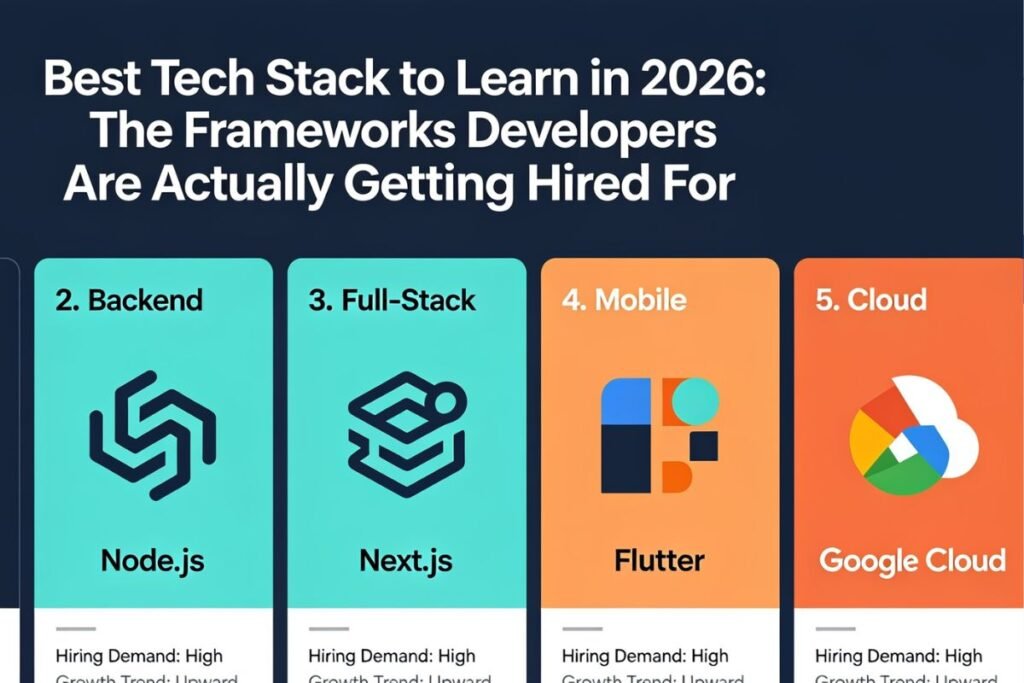
Best Tech Stack to Learn in 2026: The Frameworks Developers Are Actually Getting Hired For is the practical answer to a hiring question, not a trend report. Technically, a tech stack is the combination of runtime, framework, data layer, tooling, and deployment practices used to build and operate software. In plain English: it is the set of technologies employers expect you to be productive with on day one, not just the tools that look impressive on a portfolio.
That matters now because hiring has shifted from “who knows the most syntax” to “who can ship reliable products in a real codebase.” Teams are optimizing for speed, maintainability, and AI-assisted delivery, which means the most valuable stacks are the ones with strong ecosystems, clear conventions, and enough market demand to justify the learning curve. If you choose poorly, you can spend months learning a framework that looks modern but rarely appears in job descriptions.
There is also a practical market reality: recruiters do not hire abstractions, they hire stack compatibility. The best choices in 2026 are the technologies that sit at the intersection of adoption, community depth, cloud readiness, and production maturity. That is why this article focuses on frameworks developers are actually getting hired for, not the ones generating the loudest social media noise.
Pontos-Chave
- The safest career bet in 2026 is a stack centered on TypeScript, React, Node.js, and PostgreSQL, because it maps cleanly to full-stack hiring across startups and product teams.
- Backend specialists should prioritize Python with FastAPI or Java with Spring Boot, since both appear in high-trust production environments where reliability matters more than novelty.
- Cloud fluency is no longer optional; Docker, Kubernetes, AWS, and CI/CD pipelines now influence hiring decisions as much as framework knowledge.
- Choosing a stack should be based on market demand, ecosystem maturity, and your target role, not on what feels easiest in a tutorial.
- The strongest candidates can explain tradeoffs: why React over Vue for one role, why FastAPI over Django for another, and when not to use a framework at all.
Best Tech Stack to Learn in 2026: The Frameworks Developers Are Actually Getting Hired For
What Employers Mean by a “hireable” Stack
A hireable stack is a set of tools that reduces onboarding risk. Employers want technologies with stable APIs, active maintenance, large talent pools, and predictable architecture patterns. That is why React, Next.js, Node.js, PostgreSQL, Python, FastAPI, Spring Boot, Docker, and AWS keep showing up in job descriptions: they are not just popular, they are operationally safe.
In hiring, “safe” does not mean boring. It means the team can expect a developer to navigate existing code, contribute quickly, and avoid fragile choices that create maintenance debt. A framework earns this status when it has mature documentation, broad third-party support, and enough production usage that common failure modes are already understood.
The Stack Families That Dominate Job Descriptions
The market in 2026 still clusters around a few families. On the frontend, React remains the default choice for most web product teams, with Next.js increasingly used for server-side rendering, routing, and full-stack workflows. On the backend, Node.js remains strong for JavaScript-first teams, while Python powers data-heavy products and APIs. Java with Spring Boot stays dominant in enterprise environments, and .NET remains relevant in regulated or Microsoft-centric organizations.
Who works with this knows the real pattern: employers rarely post for “framework-only” skills. They hire for a stack shape. A frontend engineer is expected to know TypeScript, React, state management, testing, and some server interaction. A backend engineer is expected to understand APIs, authentication, databases, and deployment. The stack is the package.
Why Some Frameworks Get Hired and Others Get Admired
Many frameworks are elegant but shallow in market penetration. That creates a trap for learners who optimize for developer experience instead of employability. A framework can be technically excellent and still appear in too few production systems to make job searches easier. Svelte is a good example: it is respected, but the volume of roles is still smaller than React-based openings. The same logic applies to newer backend tools that have great ergonomics but limited enterprise adoption.
The hiring filter is not whether a framework is “best” in the abstract. It is whether it lets a team recruit, scale, and maintain systems without paying a tax in staffing or retraining. That is why mature ecosystems beat cleverness.
Frontend Choices That Keep Showing Up in Interviews
React and Next.js Remain the Most Transferable Pair
React is still the most transferable frontend skill because it maps to the largest number of product teams, SaaS companies, and agency environments. Next.js extends that advantage by adding routing, server components, data fetching patterns, and deployment-friendly conventions. For a candidate, that combination signals you can build production interfaces, not just isolated components.
The practical value of Next.js in 2026 is that it reduces architectural friction. Teams want server-side rendering, SEO support, and faster initial loads without building a custom framework layer. If you know React well and can explain how Next.js changes rendering strategy, caching, and API integration, you are already ahead of many applicants.
TypeScript is the Baseline, Not the Bonus
TypeScript has moved from “nice to have” to hiring baseline in many frontend and full-stack roles. The reason is simple: type safety lowers bug rates, improves refactoring confidence, and makes large codebases easier to navigate. In modern hiring, knowing JavaScript alone can still get you in the door, but knowing TypeScript often determines whether you are seen as ready for a serious codebase.
It also changes how you are evaluated. Interviewers want to see whether you can model data correctly, define props and interfaces cleanly, and avoid type abuse that hides design problems. A candidate who understands generics, discriminated unions, and strict null checks reads as someone who can maintain production software.
Vue, Svelte, and Angular: Where They Still Make Sense
Vue remains a strong choice in teams that value a gentle learning curve and clean component structure. Angular still holds weight in large enterprise shops that need conventions and long-term stability, especially where internal tooling and regulated workflows are common. Svelte is compelling for performance and developer experience, but the market remains narrower.
That does not make these frameworks inferior. It means the career strategy is different. If your target employers are specific companies or regions that already use Vue or Angular, learning the local stack can be a smart move. If your goal is broad employability, React usually gives you a wider funnel.
Backend Stacks with the Strongest Hiring Signal
Python with FastAPI for Modern APIs
Python remains one of the strongest backend languages because it connects web development, automation, analytics, and AI-adjacent workflows. FastAPI has become particularly attractive for teams building APIs that need speed, type hints, and automatic OpenAPI documentation. In practice, that makes it a strong fit for startups, data products, and internal platforms.
The hiring advantage comes from versatility. A developer who knows Python, FastAPI, PostgreSQL, and container basics can contribute to application logic, integration work, and lightweight platform services. That combination is especially valuable where engineering teams collaborate with data science or machine learning groups.
Java with Spring Boot for Enterprise Reliability
Spring Boot continues to dominate serious enterprise hiring because it offers structure, security, and a large ecosystem. Companies with payment systems, internal platforms, logistics workflows, or long-lived business software often choose Spring Boot because it scales predictably and supports strong architectural discipline. Employers know what they are getting.
This is not a stack for people who want the shortest path to a demo. It is a stack for environments where observability, dependency management, transaction safety, and long-term maintenance matter. If your target is large organizations, consulting firms, or regulated sectors, Spring Boot remains one of the strongest signals on a résumé.
Node.js and NestJS for TypeScript-first Teams
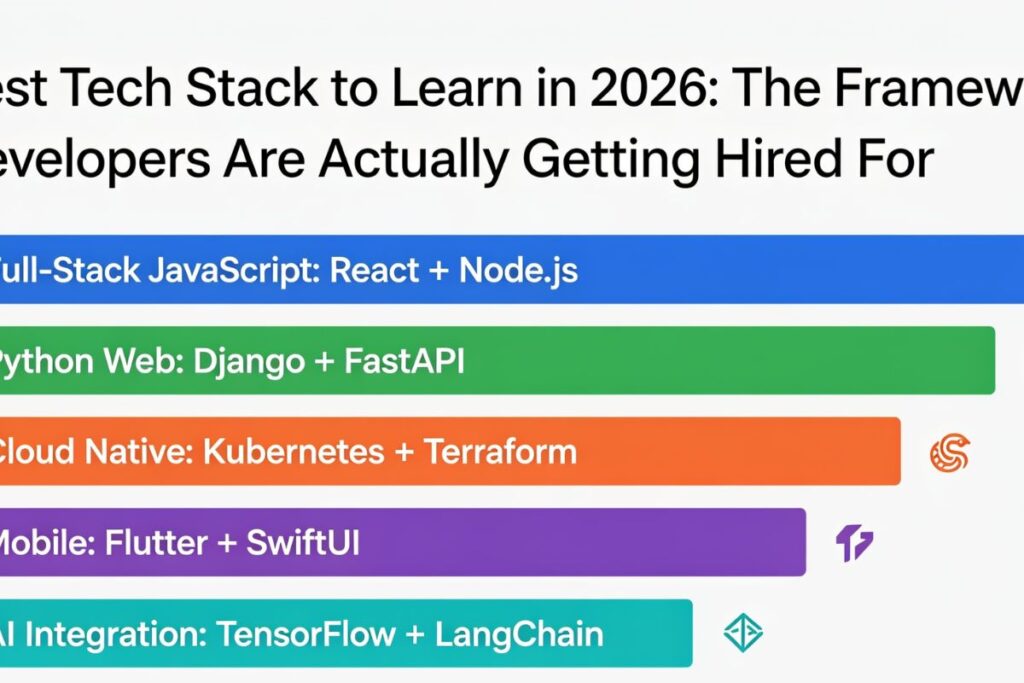
Node.js stays relevant because it allows frontend-heavy teams to keep one language across the stack. That reduces context switching and improves hiring flexibility. NestJS has become a strong option for teams that want Node.js with more opinionated structure, dependency injection, and enterprise-friendly patterns.
There is a tradeoff here. Node.js is excellent for I/O-heavy services and rapid product iteration, but it is not always the best choice for every backend workload. Teams with heavy computational logic or strict transactional requirements may prefer Python, Java, or .NET. The smart candidate understands when Node.js is the right fit rather than treating it as universal.
Stack Best For Hiring Signal Main Tradeoff React + Next.js + TypeScript Product frontend and full-stack web apps Very high Competitive talent pool Python + FastAPI + PostgreSQL APIs, data products, automation-heavy systems High Less standardized than Spring in large enterprises Java + Spring Boot + PostgreSQL Enterprise software and regulated systems Very high Heavier learning curve Node.js + NestJS + PostgreSQL TypeScript-first product teams High Requires discipline to stay maintainable
The Infrastructure Layer Employers Now Expect
Docker, Kubernetes, and Deployment Literacy
In 2026, application knowledge alone is no longer enough for many roles. Employers expect developers to understand how code moves from laptop to production, which means Docker is often treated as a baseline and Kubernetes as a serious differentiator. Even when a candidate is not managing clusters directly, they should understand containers, images, services, and deployment environments.
That expectation exists because modern teams ship through automated pipelines. A developer who can debug container issues, interpret logs, and understand environment configuration saves the team time immediately. This is one of those areas where theory falls apart fast if you have never dealt with a broken build at 11 p.m.
AWS Remains the Default Cloud Language
AWS is still the cloud platform most likely to appear in job requirements because it covers storage, compute, databases, messaging, identity, and observability in a way employers trust. You do not need to memorize every service. You do need enough fluency to understand EC2, S3, RDS, IAM, Lambda, and basic networking concepts.
That fluency changes how you are perceived. A developer who can explain deployment, permissions, storage, and managed databases is far more hireable than one who only knows how to run code locally. Cloud knowledge turns framework skills into production skills.
CI/CD and Testing Are Part of the Stack, Not Extras
Teams increasingly evaluate candidates on whether they understand continuous integration, continuous delivery, and automated testing. GitHub Actions, GitLab CI, and similar systems have become common because they keep releases predictable. Unit tests, integration tests, and end-to-end tests are now core engineering habits, not polish.
The hiring implication is direct: if you can write code but cannot ship it safely, your stack knowledge is incomplete. Employers want developers who understand that quality is built into the pipeline. That is one reason stacks with strong testing ecosystems keep winning in interviews.
How to Choose the Right Stack for Your Career Path
Match the Stack to the Job Market You Want
The best choice depends on the roles you want to win. If you want broad front-end or full-stack opportunities, React, Next.js, TypeScript, Node.js, and PostgreSQL are the most flexible path. If you want data-heavy backend work or AI-adjacent products, Python with FastAPI is stronger. If your target is enterprise software, Spring Boot and Java deserve serious attention.
This is where many learners waste time. They pick a stack based on online popularity instead of actual job titles in their region or remote market. A more reliable method is to analyze 30 to 50 postings for roles you want, then count repeated tools. Patterns matter more than opinions.
Use Ecosystem Maturity as the Deciding Factor
Ecosystem maturity is the difference between a stack that helps you ship and a stack that makes you fight the tooling. Mature ecosystems have documentation, debugging resources, community support, mature libraries, and people who have already solved the same problems you are facing. That shortens the path from beginner to employable.
There is a limit here, though. Mature does not always mean ideal for every product. A team building a small internal tool may benefit from a lighter stack, while a large company may need the stricter constraints of an enterprise framework. The point is to choose the stack that matches your hiring target and the operating reality behind it.
A Practical Decision Matrix for 2026
If your goal is to maximize job opportunities quickly, a full-stack path built around TypeScript is the most pragmatic route. If your goal is backend depth, choose between Python and Java based on the type of companies you want. If your goal is platform or DevOps-adjacent work, invest early in containers, cloud services, and automation.
For developers already employed, the smarter move is often not a full replatforming. It is adding one adjacent layer that increases your value: React engineers learn Next.js and testing, backend engineers learn Docker and AWS, and generalists learn how to reason about architecture tradeoffs. That combination tends to outperform raw framework count.
For market context, industry and labor data are useful. The U.S. Bureau of Labor Statistics tracks growth and demand across software-related roles, while the Software Developers occupational outlook shows why broad web and cloud skills continue to hold value. For education and applied computing trends, NIST remains a useful reference for standards and systems thinking, and Stack Overflow’s developer surveys help reveal what tools remain common in real teams.
How to Build a Hireable Learning Plan in 2026
Start with One Stack, Then Add One Layer at a Time
The fastest path to employability is not learning everything at once. It is mastering one coherent stack and then extending it with adjacent skills. For example, a React developer should add TypeScript, Next.js, testing, and a backend API layer before jumping into a second frontend framework. A Python developer should add FastAPI, PostgreSQL, Docker, and deployment basics before moving into advanced infrastructure.
This sequence matters because employers do not hire isolated tool knowledge. They hire the ability to move from feature request to production. If your learning path mirrors that flow, your portfolio and interviews will sound credible.
Build Projects That Resemble Production Work
Personal projects only help when they resemble how software is built in companies. That means authentication, database design, error handling, logging, tests, deployment, and readable structure. A polished todo app teaches less than a medium-sized app with real state, external APIs, and an actual deployment pipeline.
Vi cases em que candidates had impressive GitHub profiles but could not explain why they chose a certain data model or how they handled deployment secrets. That gap is obvious in interviews. Employers want evidence that you understand the constraints of production, not just the syntax of a framework.
Track Hiring Signals, Not Hype Cycles
If a stack gets discussed constantly but rarely appears in the roles you want, it is not a career priority. Track job boards, recruiter messages, and company engineering blogs. Look for repeated mentions of the same frameworks, databases, and cloud services. Those repetitions are stronger signals than social media enthusiasm.
Use the market as a filter. Learn enough to be useful in real companies, then deepen based on the kinds of teams you want to join. That approach produces a more durable career than chasing whatever trend is having its moment.
Próximos Passos Para Implementação
The most defensible choice in 2026 is a stack that balances employability with depth: TypeScript, React, Next.js, Node.js or FastAPI, PostgreSQL, Docker, and AWS. That combination covers a large share of product engineering roles and gives you enough breadth to switch companies without relearning your entire toolchain. If you want enterprise roles, pivot toward Java and Spring Boot; if you want data-heavy backend work, make Python your anchor.
Do not optimize for novelty. Optimize for the overlap between what companies repeatedly hire for and what you can grow into without wasting months. The frameworks that win are the ones that help you produce maintainable software under real constraints. That is the standard that matters in interviews, on probation, and after the honeymoon period ends.
The next move is operational: pick one target role, map ten job postings, extract the repeated tools, and build one production-like project around that pattern. Then close the gaps one by one. That is how a stack becomes a career advantage instead of a collection of tutorials.
Perguntas Frequentes
Is React Still Worth Learning in 2026?
Yes, because React still dominates product frontend hiring and remains the most transferable skill across companies. The bigger advantage is not React alone, but React plus TypeScript and Next.js, which together match the way modern teams actually build web apps. If you want broad employability, it is still one of the safest bets.
Should I Learn Python or Java First for Backend Jobs?
Choose Python if you want faster entry into API work, automation, analytics, or AI-adjacent teams. Choose Java if you are targeting enterprise environments, large organizations, or systems that value long-term structure and strict conventions. Both are hireable; the right choice depends on the companies you want to join.
Do I Need Kubernetes to Get Hired as a Developer?
Not for every role, but you should understand the basics. Many employers expect developers to know containers, deployment concepts, and how services move through environments, even if a dedicated platform team manages the cluster. Kubernetes becomes more important as you move into senior, full-stack, or platform-adjacent roles.
Is Next.js Better Than Plain React?
Next.js is not “better” in every case, but it is often more relevant for hiring because it adds routing, server-side rendering, and deployment-friendly patterns. Plain React is still useful, especially for foundational learning and smaller apps. In practice, most teams prefer candidates who understand React first and Next.js second.
What Stack Gives the Best Chance of Getting Hired Fast?
A TypeScript-centered stack is usually the fastest route: React, Next.js, Node.js, PostgreSQL, Docker, and basic AWS. That combination aligns with a wide range of full-stack and frontend roles while still signaling production readiness. It also gives you enough depth to discuss architecture, testing, and deployment in interviews without sounding shallow.
Editorial Notice
This content was structured with the assistance of Artificial Intelligence and subjected to rigorous curation, fact-checking, and final review by Editor-in-Chief Nivailton Santos. TechTool Judge reaffirms its unyielding commitment to journalistic ethics, ensuring that editorial judgment and data validation remain entirely under human responsibility and final editorial oversight.