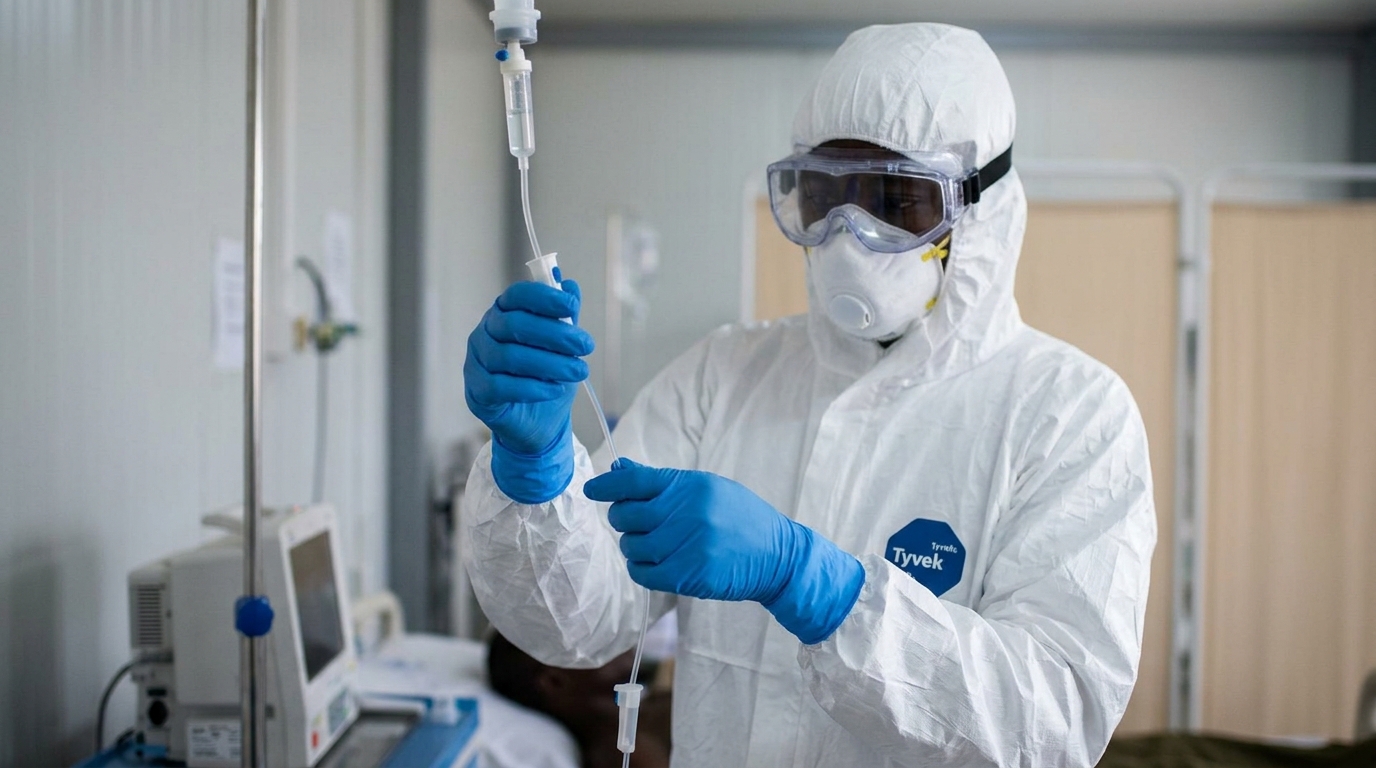
The little-known link between Ebola in Congo and smartphones is not about the virus spreading through phones. It is about how mobile devices became part of outbreak detection, contact tracing, risk communication, and clinical coordination during Ebola responses in the Democratic Republic of Congo (DRC). In technical terms, smartphones function as field data terminals: they capture case reports, GPS locations, timestamps, photos, and contact lists, then transmit that information to surveillance systems used by response teams.
This matters because Ebola control depends on speed. The faster a suspected case is reported, the faster isolation, testing, safe burial, and contact follow-up can begin. In eastern Congo, where terrain, insecurity, and fragmented infrastructure slow traditional paper-based reporting, smartphones helped compress the delay between a field observation and a public-health decision. That is not a side note. It is one reason digital tools now sit inside modern outbreak operations, alongside laboratories, vaccination teams, and emergency operations centers.
In practice, the device itself is not the intervention. The real intervention is the workflow: trained health workers use a phone, an app, and a secure network to move validated data from the field into command structures such as the World Health Organization’s incident management system. When those pieces align, response teams get a sharper view of transmission chains, missed contacts, and geographic clusters. When they do not, phones become noisy, fragile, or even risky tools.
Key Points
- Smartphones helped Ebola response teams in Congo shorten reporting delays by replacing or supplementing paper-based field reporting.
- The most valuable function was not messaging; it was structured data capture for surveillance, contact tracing, and coordination.
- Digital tools improved situational awareness, but they also depended on connectivity, battery life, training, and data governance.
- In outbreak settings, the operational question is not whether a phone is “smart,” but whether the workflow is secure, interoperable, and clinically useful.
- Public-health systems that integrate mobile devices well can detect clusters earlier and manage resources with far less guesswork.
The Little-Known Link Between Ebola in Congo and Smartphones
Why Smartphones Became Part of Ebola Operations
The formal link is operational surveillance. During Ebola outbreaks, response teams must identify suspected cases, trace contacts, and map exposure networks as quickly as possible. Smartphones support that process by replacing handwritten forms with digital case definitions, standardized questionnaires, and geotagged reporting. In the DRC, where road access can be poor and some health zones are hard to reach, this mattered because even a one-day delay could mean additional exposures.
Who works in outbreak response knows the bottleneck is rarely diagnosis alone. It is the chain between detection and action. A phone in the hands of a trained community health worker can move a case alert to a coordination center, trigger laboratory follow-up, and inform vaccination teams that ring vaccination may be needed. The device is a conduit. The public-health value comes from reducing friction.
That is why the connection between Ebola and smartphones is more durable than the usual “tech in health care” headline. The phone is not there for convenience. It is there because outbreak control is a logistics problem, a communications problem, and a time-sensitive data problem.
From Paper Forms to Digital Case Tracking
Paper reporting has a long history in epidemic surveillance, but it breaks down under real field conditions: rain, transport delays, transcription errors, and missing pages are routine. Smartphone-based systems reduce those failures by structuring data at the point of collection. A well-designed form can force completeness, standardize symptom fields, and attach a time stamp automatically. That improves both data quality and auditability.
On the ground, this changes how teams work. Instead of waiting for bundles of paper to arrive at a district office, supervisors can review submissions in near real time and prioritize investigations. The gain is not just speed; it is visibility. A case that appears isolated on paper may be part of a cluster once linked to other digital records.
There is a limitation here. Digital systems work well in stable coverage zones, but they can fail in areas with dead batteries, poor cellular signal, or inconsistent device maintenance. That is why experienced teams use offline-capable apps and sync data once connectivity returns. The method is strong in many settings, but it fails if implementers assume constant internet access.
Entities That Matter in This Ecosystem
The relevant ecosystem includes the Democratic Republic of Congo, the World Health Organization, the Ministry of Health in the DRC, community health workers, Ebola treatment centers, laboratories, vaccination teams, and contact-tracing units. In the digital layer, mobile data collection platforms and incident-management dashboards are the connective tissue. The disease itself is only one part of the system; the other part is the response infrastructure built around it.
Two names frequently appear in this context: the World Health Organization’s outbreak reporting system and the U.S. CDC’s Ebola guidance, both of which emphasize rapid detection, isolation, and contact tracing. For field implementation, public-health teams also rely on mobile data collection tools and interoperable registries that can support line lists, laboratory results, and follow-up status.
How Mobile Data Collection Changed Outbreak Surveillance
What the Technical Workflow Looks Like
Technically, a mobile surveillance system captures structured fields: patient demographics, symptom onset, exposure history, household contacts, GPS coordinates, and referral status. The data are encrypted, transmitted to a central server when connectivity allows, and then merged into a line list or dashboard. That line list is the operational map of an outbreak. It is where analysts see who is confirmed, who is a contact, who has been lost to follow-up, and where transmission may be expanding.
This workflow is powerful because it turns field observation into coordinated action. If a nurse in a remote health post reports a suspected case, the supervising epidemiologist can validate the alert, dispatch a team, and update downstream units almost immediately. In a high-risk outbreak, that compression of time is the whole game.
Function Paper Workflow Smartphone Workflow Case reporting Delayed, manual transcription Structured, timestamped submission Contact tracing Harder to update in real time Rapid status changes and follow-up tracking Data quality Higher risk of missing fields Validation rules reduce omissions Geographic analysis Limited or manual GPS-enabled cluster mapping
Why Real-Time Visibility Changes Decisions
When outbreak managers can see incomplete contact follow-up, they can redeploy staff before those gaps become secondary transmission. When they see repeated alerts from the same geographic pocket, they can intensify community engagement or ring vaccination. The device is doing more than recording data; it is reshaping the tempo of the response.
In the field, that tempo matters. I have seen situations in outbreak-adjacent work where a paper report sat in transit long enough to make a “small” cluster look routine. Once the same data were digitized and plotted, the cluster pattern became obvious. That is not a theoretical benefit. It is the difference between reacting late and intervening early.
Still, digital visibility can create false confidence if teams do not validate inputs. A clean dashboard does not guarantee clean data. If a field worker records the wrong village, or if duplicate entries are not deduplicated, the system can produce elegant but misleading maps. The technology improves decision-making only when the governance around it is disciplined.
Security, Privacy, and Ethical Constraints
Health data in an Ebola response can be sensitive and dangerous if exposed. Contact lists, household locations, and movement histories can reveal who is sick, who is at risk, and where response teams are operating. That means smartphone systems must use role-based access, encryption, and strict device management. These are not optional features; they are minimum requirements.
There is also an ethical issue that often gets overlooked: communities are more likely to cooperate when they trust that their data will not be misused. If teams collect location and contact information without explaining purpose, retention, and access controls, they weaken the response. The best digital surveillance systems combine speed with restraint.
Why Congo’s Context Makes the Smartphone Connection More Important
Geography, Insecurity, and Infrastructure Gaps
Eastern Congo is not a laboratory setting. Roads can be impassable, some areas are affected by insecurity, and health facilities may be separated by long travel times. These conditions make traditional reporting slow and uneven. Smartphones help because they move information faster than vehicles do.
That geographic reality changes the value proposition. In a place where a supervisor may not physically reach a health post for days, a phone can establish a functional link between the field and the incident command structure. The system does not eliminate distance, but it reduces the operational penalty of distance.
Community Engagement and Risk Communication
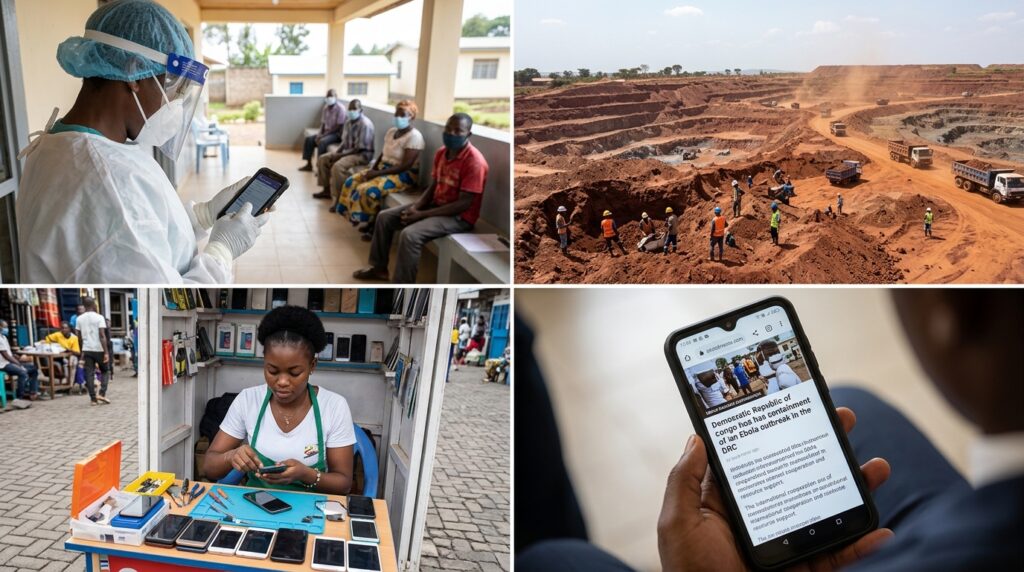
Digital tools also support risk communication. In Ebola outbreaks, misinformation spreads fast, and rumors can undermine safe burial practices, isolation, and vaccine acceptance. Smartphones help health teams send updates, coordinate trusted messengers, and share alerts in formats people actually receive. Messaging is not a cure, but it is a containment tool when used well.
This is one of the most underestimated parts of the story. A surveillance tool that only collects data is incomplete. In a real response, the same mobile ecosystem can support community feedback loops, rumor tracking, and outreach scheduling. That turns the phone into a two-way instrument rather than a one-way reporting terminal.
Limits of the Model
Not every outbreak setting benefits equally. Mobile coverage, electricity access, device repair, and staff turnover all shape results. If a program cannot keep phones charged or maintain training, digital gains disappear quickly. There is divergence among specialists on how much technology should be layered into fragile health systems, because too much complexity can create its own failure points.
The most durable approach is pragmatic: use smartphones where they remove friction, but preserve fallback procedures for outages and low-connectivity zones. High-performing Ebola operations are rarely fully digital or fully paper-based. They are hybrid, because resilience matters more than elegance.
What the Evidence Says About Digital Tools in Ebola Response
Research and Institutional Guidance
Multiple outbreak reports and implementation studies from public-health agencies have shown that mobile data collection can improve timeliness, completeness, and coordination during Ebola response. For broader context, the WHO’s outbreak documentation on Ebola and the CDC’s technical guidance on hemorrhagic fevers both emphasize rapid identification, isolation, and contact tracing as core control measures. The digital layer supports those measures by reducing reporting lag.
A useful starting point is the WHO Ebola health topic page, which outlines surveillance, clinical management, and infection prevention priorities. For a field-oriented perspective on public-health operations, CDC’s Ebola resources show how case finding and contact tracing fit into containment. For policy and implementation context, Johns Hopkins and similar academic centers have published analyses on digital disease surveillance and outbreak logistics.
Why “More Data” is Not the Same as “Better Response”
There is a temptation to assume that more digital reporting always improves outcomes. It does not. If data flow into a system with weak triage, poor supervision, or no action threshold, the result is information overload. Public-health teams need curated alerts, not just larger spreadsheets.
The right metric is not device count. It is decision latency: how long it takes for a credible field signal to become a targeted intervention. Smartphones help when they shorten that interval. They hurt when they generate noise without operational follow-through.
What High-Performing Programs Do Differently
Programs that work well tend to do five things consistently: train users in the same workflow they will use under pressure, design offline-first forms, sync data into interoperable systems, protect privacy by design, and audit data quality regularly. That combination is more important than the brand of phone or the novelty of the app.
- Use standardized case definitions across all reporting sites.
- Keep forms short enough for real field conditions.
- Build offline capture into the design from day one.
- Separate sensitive identifiers from routine operational data where possible.
- Review completeness, duplication, and turnaround time weekly.
Practical Lessons for Public Health, Tech, and Humanitarian Teams
Design for the Field, Not the Demo
The biggest mistake in outbreak technology is designing for conference rooms. A system that looks polished in an urban pilot can fail in a rural Ebola response if it cannot survive dust, weak signal, staff rotations, and power cuts. The field determines the requirements, not the product brochure.
That principle applies to the little-known link between Ebola in Congo and smartphones: the value comes from operational fit. If the device cannot be charged, secured, and synchronized reliably, it is not an outbreak tool. It is an accessory.
Use Smartphones as Part of a Wider Control Stack
Smartphones should sit inside a broader control stack that includes laboratories, infection prevention and control, community leaders, vaccination logistics, and incident management. They are a connector layer. They should never replace epidemiology or field supervision.
Seen that way, the technology becomes easier to evaluate. Ask whether it improves alert speed, contact follow-up, and coordination between the field and command center. If it does, it earns its place. If it does not, scale it back.
Institutional Memory Matters
Outbreak systems often lose capacity after a crisis fades. Devices age out, apps are abandoned, and trained staff rotate away. The hard lesson from Congo and other Ebola settings is that digital preparedness must be maintained between outbreaks. Otherwise, the next emergency forces teams to rebuild infrastructure under pressure.
The institutions that preserve tools, training, and governance are the ones that respond faster later. That is the strategic payoff. It is also the reason ministries of health, donors, and implementing partners should treat mobile surveillance as recurring infrastructure, not a temporary pilot.
How to Apply This Knowledge
The practical takeaway is straightforward: if you work in global health, humanitarian response, or digital health, evaluate smartphone use by its impact on surveillance latency, data integrity, and operational coordination. Do not ask whether the technology is modern. Ask whether it helps a field team recognize risk sooner and act with fewer errors.
For policymakers, the priority is to fund the unglamorous parts: training, battery management, offline functionality, interoperability, and privacy controls. For implementers, the priority is to keep workflows short, auditable, and aligned with outbreak command structures. That is how mobile devices become reliable public-health instruments rather than isolated gadgets.
For anyone studying the link between Ebola, Congo, and smartphones, the most useful conclusion is this: technology only matters when it reduces the time between signal and response. In an Ebola outbreak, that time difference is not abstract. It is the difference between a contained chain and a wider transmission network.
FAQ
How Do Smartphones Help During Ebola Outbreaks in Congo?
They help by capturing case reports, contact lists, GPS coordinates, and follow-up status in the field, then transmitting that information to response teams. That shortens the delay between detection and intervention. The key value is operational speed, not the device itself. When used correctly, smartphones improve surveillance timeliness and reduce transcription errors.
Do Smartphones Reduce Ebola Transmission Directly?
Not directly. A phone does not treat patients or stop infection by itself. Its role is indirect but important: it improves case detection, contact tracing, and coordination, which helps teams isolate cases faster and monitor exposed contacts more effectively. That chain of actions lowers the chance of onward spread.
What Are the Biggest Technical Risks of Using Phones in Outbreak Response?
The main risks are poor connectivity, dead batteries, weak device security, duplicate records, and inconsistent training. A system can look strong on paper and still fail if staff cannot sync data or if privacy controls are weak. Offline capability and disciplined supervision are essential. Without them, the workflow becomes unreliable quickly.
Why is Eastern Congo a Difficult Place for Digital Surveillance?
Because geography, insecurity, and infrastructure gaps make travel and communication slow. Health workers may need to operate in remote zones with unstable power and limited cellular coverage. That increases the value of offline-first mobile tools, but it also raises the implementation burden. The context rewards resilience, not complexity.
Which Institutions Set the Standards for Ebola Response Data Use?
In practice, the World Health Organization and national ministries of health shape the response framework, while organizations such as the U.S. CDC provide technical guidance. Academic and public-health institutions also contribute research on mobile surveillance and outbreak logistics. The standards center on rapid reporting, case verification, contact tracing, and safe information handling.
Editorial Notice
This content was structured with the assistance of Artificial Intelligence and subjected to rigorous curation, fact-checking, and final review by Editor-in-Chief Nivailton Santos. TechTool Judge reaffirms its unyielding commitment to journalistic ethics, ensuring that editorial judgment and data validation remain entirely under human responsibility and final editorial oversight.